The Nigeria Labour Congress, NLC, has rejected any proposal to impose tax on the national minimum wage, insisting that Nigerian workers deserve a living wage that reflects current economic realities.
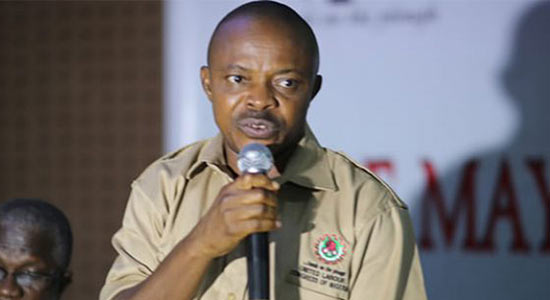
NLC President, Joe Ajaero, stated this on Tuesday while speaking with journalists on the sidelines of the ongoing 114th Session of the International Labour Conference in Geneva, Switzerland.
Ajaero said organised labour would resist any attempt to tax minimum wage earners or impose additional levies on low-income workers, describing such a move as unjust and insensitive in view of the hardship facing Nigerians.
“We reject outright any attempt to tax the minimum wage or place levies on poor Nigerian workers,” he said.
He said the current wage structure no longer reflects the realities of inflation, rising food prices, transportation costs and other pressures that have worsened the living conditions of workers across the country.
According to him, organised labour will soon formally write to the Federal Government to demand the commencement of a fresh process for renegotiating the national minimum wage.
“As soon as we leave here, we shall write again to government, demanding commencement of the process for renegotiating the National Minimum Wage,” Ajaero said.
He disclosed that labour expects the process to begin by July 2026 in order to avoid the delays and administrative bottlenecks that have affected previous wage negotiations.
Ajaero stressed that labour’s demand goes beyond a mere wage adjustment, saying Nigerian workers need a genuine living wage capable of meeting basic needs under present economic conditions.
“We demand nothing less than a genuine living wage that reflects today’s high-speed economic realities facing Nigerian workers,” he said.
The NLC president also called on federal, state and local governments to introduce immediate relief measures for workers pending the conclusion of wage negotiations.
He warned that failure to provide relief could worsen hardship, especially among low-income earners who are already struggling with the high cost of living.
Ajaero said the minimum wage negotiation process would remain a tripartite arrangement involving government, organised labour and private sector stakeholders to ensure fairness and sustainability.
He noted that some states were already paying above the current ₦70,000 minimum wage, arguing that this proves higher wage structures are possible.
“Some states are paying ₦85,000, some are paying ₦100,000. It shows that ₦70,000 is no longer realistic or relevant,” he said.
He urged governors to show leadership by improving workers’ welfare ahead of formal negotiations at the national level.
Ajaero reaffirmed that organised labour would continue to defend workers’ rights and oppose policies that deepen poverty or undermine the gains of collective bargaining.
He expressed optimism that the forthcoming negotiation process would produce a fair, realistic and sustainable wage structure for Nigerian workers.