Their exits came through different circumstances, some by choice, others by dismissal, but each illustrates the same truth: the World Cup remains football’s most unforgiving arena, where years of preparation can unravel in the space of 90 minutes…
The FIFA World Cup has never been merely a tournament for players. While footballers chase immortality on the pitch, coaches carry an equally daunting burden, knowing that just a handful of matches can judge four years of planning.
The 2026 FIFA World Cup has added another chapter to that enduring story.
As the tournament progresses, with some teams and managers advancing to the next round, the dreams of lifting football’s most coveted trophy have faded for others, as several national federations opt for change at the helm, while others watch their managers voluntarily step aside. For some, the decision reflected accountability; for others, it was the inevitable consequence of results that failed to match expectations.
From heartbreaking penalty shootouts to humiliating defeats and disappointing group-stage exits, six national team coaches have seen their World Cup journey culminate in the end of their tenure.
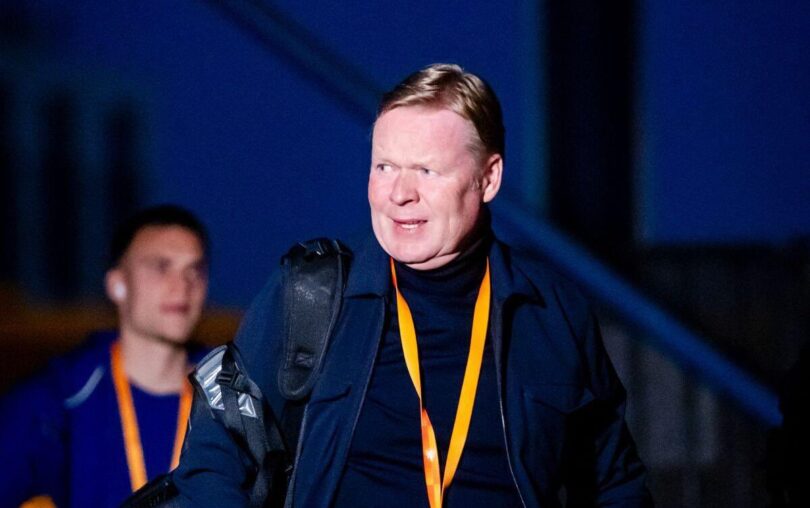
For ex-Barcelona Coach Ronald Koeman, the margins between success and failure could scarcely have been more narrow.
The Netherlands arrived at the tournament carrying the weight of history. Three-time World Cup finalists, the Dutch have long been recognised as one of international football’s perennial contenders, yet the elusive trophy has continued to evade them.
Koeman guided the Oranje into another knockout campaign that appeared capable of producing a deep run. However, their ambitions were shattered dramatically when African powerhouse Morocco eliminated them via a penalty shootout after a fiercely contested encounter. They were minutes away from winning in regular time before a lapse in concentration became their undoing.
The defeat represented more than just another painful World Cup exit. It also marked the conclusion of Koeman’s tenure, as rather than wait for a review by the Dutch football authorities, the former Barcelona player chose to resign, accepting responsibility for a campaign that ultimately fell short of the nation’s lofty ambitions.
His departure once again illustrated how, at football’s highest level, narrow defeats often carry consequences just as severe as comprehensive losses.
South Korea’s journey to the knockout rounds suggested progress for one of Asia’s most consistent footballing nations. Under Hong Myung-bo, the Taegeuk Warriors successfully negotiated the group phase and earned another opportunity to test themselves against the world’s elite.
Unfortunately, their reward was a meeting with Brazil; facing one of football’s traditional powerhouses, South Korea found the challenge insurmountable, as their World Cup campaign ended in the Round of 32.
In the immediate aftermath, Hong announced his resignation, choosing to bring his 2-year tenure to an end after fulfilling what he considered the natural conclusion of his project.
Although reaching the knockout stages was a respectable achievement, Hong’s departure reflected the increasingly ambitious standards in South Korean football, where merely qualifying for major tournaments is no longer considered sufficient success.
Steve Clarke leaves Scotland with a legacy that extends far beyond one disappointing World Cup campaign.
When he took control of the national team, Scotland had spent years struggling to re-establish itself among Europe’s competitive nations, but under his leadership, the Scots rediscovered stability, secured qualification for major tournaments and restored belief among supporters.
Yet football rarely allows reputations to remain untouched by recent results, as Scotland’s 2026 World Cup campaign failed to generate momentum, with a group-stage exit bringing their tournament to a premature conclusion.
Shortly afterwards, Clarke stepped down to the nation’s shock, having signed a contract renewal until the next World Cup less than a year ago, on 18 November, 2025, but stepping down on 27 June 2026, ending one of the country’s most significant managerial spells in recent decades.
While the World Cup disappointment will inevitably feature in assessments of his reign, it would not obscure the broader transformation he oversaw in Scottish football, and he also became Scotland’s longest-serving manager by the number of games managed.
For Czechia, the tournament never truly gathered momentum, they were drawn into Group A and the team struggled to establish consistency, producing performances that ultimately left them rooted to the bottom of the standings.
The inability to compete effectively against their group rivals exposed shortcomings that had gradually emerged throughout the qualification cycle, and following the disappointing campaign, head coach Miroslav Koubek resigned, acknowledging that a fresh direction was necessary.
The 74-year-old boss only took on the role ahead of Czechia’s World Cup play-off matches; his reign lasted for barely 7 months. He guided them to successive penalty shootout victories over the Republic of Ireland and Denmark, securing the country’s return to the global finals after a 20-year absence.
David Trunda, President of the Football Association of the Czech Republic, said: “The coach offered me his position at a personal meeting today and I decided to accept his offer after an open and fair debate.”
“Miroslav Koubek is stepping down as head coach of the Czech national football team by mutual agreement with the Football Association of the Czech Republic.
Coach, thank you for leading us back to the World Cup after 20 years.” Said the official announcement on X.
link to post on X
His decision reflected a recurring pattern in international football, where underwhelming tournament performances often accelerate transitions that may already have been under consideration.
While several coaches left after their tournaments had concluded, Sabri Lamouchi never received that opportunity to. Tunisia suffered one of the competition’s most damaging opening defeats, losing 5-1 to Sweden on the first matchday, and the result immediately intensified scrutiny around the team and prompted swift action from the Tunisian Football Federation.
The Tunisian Football Federation announced an agreement on 14 January 2026 with Lamouchi to coach the Tunisia national team, with a contract extending until 31 July 2028. However, Lamouchi was dismissed on 15 June 2026 after just five games, and one match at the World Cup, the day after Tunisia’s 5–1 defeat to Sweden in their opening match; becoming one of the earliest managerial casualties of the 2026 World Cup.
The decision underscored the unforgiving nature of tournament football, where administrators often believe immediate intervention offers the best chance of rescuing a faltering campaign.
Although Tunisia attempted to recover under new leadership, the damage inflicted by the heavy opening defeat proved difficult to reverse, as his replacement AFCON specialist Renard Herve couldn’t see them to the next around as well.