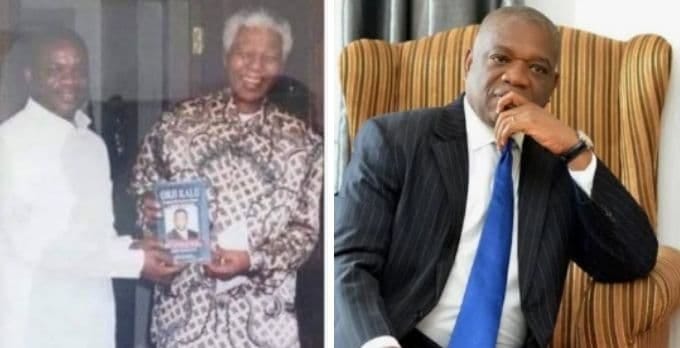
Hon. Ebere Nwokenna, popularly known as Lady Eby and Chairperson of the Cultural Committee of Nigerians in Diaspora Organisation, NIDO UK South, has called on constituents of Abia North Senatorial District to measure Senator Orji Uzor Kalu’s representation by the impact of his projects and programmes on their daily lives.
Quoting Nelson Mandela, she said the ultimate measure of leadership is not how long one holds power, but how faithfully one uses it to improve the lives of the people.
Nwokenna’s remarks came on June 24, amid renewed debate over the social contract between elected officials and voters in Abia North, a district made up of five local government areas: Arochukwu, Bende, Isuikwuato, Ohafia and Umunneochi.
The concept of a social contract, she explained, rests on a straightforward understanding that citizens entrust their mandate to a leader, and in return, that leader is expected to work for their welfare, development and progress.
According to her, many residents of Abia North believe Senator Kalu, who currently represents the zone in the 10th Senate, has continued to uphold that obligation through visible projects, strategic interventions and empowerment initiatives spread across the communities.
Since his election to the Senate, first in 2019 and re-elected in 2023, Senator Kalu has positioned himself as one of the more vocal lawmakers from the South East.
His office has consistently listed road infrastructure, educational support, healthcare interventions and community development as priority areas. For many constituents, the argument is not about political rhetoric but about what can be seen and used.
Roads that had deteriorated for years have been reconstructed or rehabilitated under projects linked to his office. Classrooms have received furniture and learning materials.
Primary healthcare centres have been equipped with basic medical supplies and, in some cases, solar power systems to keep facilities running during outages. Boreholes have been sunk in rural areas where access to clean water remained a challenge.
These interventions, Nwokenna noted, are not meant to exist only as figures in budget documents.
The physical presence of completed roads, renovated schools and functional health posts serves as a reminder of responsive leadership. In a district where government presence has historically been uneven, she argued that closing the gap between policy and practice has become central to Kalu’s representation.
Constituents often measure effectiveness by how quickly a broken bridge is fixed or how accessible healthcare becomes during emergencies.
By that yardstick, supporters of the senator point to a growing list of projects that they say directly affect household income, school attendance and health outcomes.
A distinguishing feature of Kalu’s tenure, according to Nwokenna, has been the emphasis on human capital development.
Through the China Seminar and a series of empowerment programmes organized for youths from Abia North, hundreds of young people have been exposed to training outside Nigeria.
The China Seminar, which has run in phases over the last few years, takes participants to institutions and industrial hubs in China where they study manufacturing processes, technology adoption, agricultural modernization and entrepreneurship.
Beneficiaries return with certificates, business ideas and, in some cases, equipment to start small enterprises. The programme is designed to move beyond cash handouts and focus instead on skills that can generate income over time.
Nwokenna said the goal of the initiative is to broaden horizons for youths who may not have had access to global knowledge or international networks. Participants have been trained in areas ranging from welding and fabrication to ICT, agro-processing and leadership.
For many, the exposure has shifted perspectives on what is possible within their communities. A young person from Ohafia who learned food processing techniques in China, for example, is now running a small packaged snacks business that supplies markets in Aba.
Another from Bende who received training in solar installation has set up a team that installs mini-solar systems for homes and shops. These stories, Nwokenna argued, illustrate how investment in skills can create ripple effects beyond the individual.
The impact of the empowerment programmes extends to families and communities. Each youth who acquires a trade or business skill represents a potential employer, an innovator and a community leader.
In local government areas where formal jobs are scarce, self-employment becomes critical. When a trained youth hires two apprentices, the cycle of skills transfer continues.
When a small enterprise begins to supply local markets, it reduces dependence on imported goods and keeps money circulating within the district. That, according to supporters of the senator, is the essence of forward-looking leadership: prioritizing long-term development over short-term political patronage.
Critics of Nigerian politics often point to a pattern where constituency projects are announced but poorly executed or abandoned.
In Abia North, the conversation has shifted to verifiable delivery. Nwokenna said that while no leader is beyond scrutiny, the evidence of completed roads, equipped health centres, renovated schools and ongoing youth training provides a basis for assessment.
She emphasized that accountability requires both the government to deliver and the people to evaluate delivery based on measurable results. The social contract, she added, is strongest when trust is built on performance rather than promises.
The district’s development challenges remain significant. Poor road networks still isolate farming communities during the rainy season.
Many primary healthcare centres lack full staffing. Public schools need more teachers and modern learning tools. Electricity supply remains erratic, forcing businesses to rely on generators.