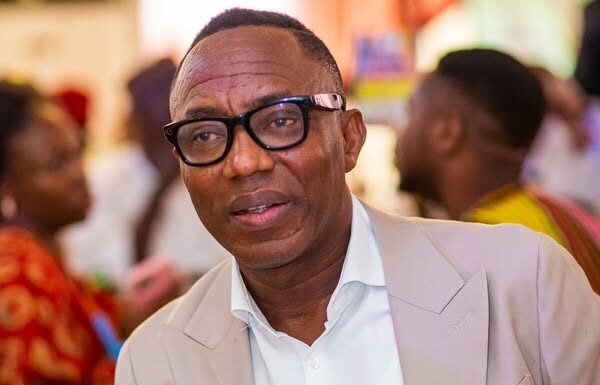
Mr Adeyanju appeared in court as Mr Sowore’s first defence witness in a cyberbullying trial focusing on Mr Sowore’s social media posts from last year that called President Tinubu a criminal.
Publisher of Sahara Reporters and activist Omoyele Sowore on Monday opened his defence before the Federal High Court in Abuja in his alleged cyberbullying trial over social media posts in which he described President Bola Tinubu as a “criminal.”
He said Mr Tinubu had publicly stated that citizens had the right to criticise and “even insult him” as part of democratic governance.
He also told the court that the president urged the judiciary “not to allow itself to become an instrument of oppression” against government critics.
According to the witness, President Tinubu made those remarks before Mr Sowore published the social media posts that gave rise to the charges against him.
However, the judge adjourned the proceedings until 13 July after the defence informed the court that it required a television to play video recordings containing the president’s remarks.
The SSS filed the cybercrime charges against Mr Sowore over his X and Facebook posts last year in which he referred to President Tinubu as “a criminal.”
The prosecution closed its case in March after calling its sole witness.
On 8 May, Mr Umar dismissed Mr Sowore’s no-case submission and directed him to open his defence.
Mr Sowore, who at one point represented himself after his legal team withdrew from the case, subsequently filed an application asking the judge to withdraw from the trial due to alleged bias.
The judge fixed 15 June for ruling on the application. However, the court did not sit on that date despite Mr Sowore’s appearance.
According to the defence, Mr Sowore later informed court officials that he would travel to Lagos and requested that any new hearing date be fixed in July.
However, the judge set the hearing for 16 June. When Mr Sowore failed to appear, the court revoked his bail and issued a bench warrant for his arrest. Mr Sowore was later arrested, and his lawyers subsequently filed an application challenging the revocation of his bail.
On 30 June, while ruling on the application, which the prosecution opposed, Judge Umar granted Mr Sowore fresh bail in the sum of N200 million with two sureties.
He subsequently released Mr Sowore to his lawyers and adjourned the case until Monday, 6 July (today), for him to open his defence.
When Mr Adeyanju was invited to the witness box to testify as a defence witness on Monday, the prosecution, led by Akinlolu Kehinde, also a Senior Advocate of Nigeria (SAN), raised an objection. He said Mr Adeyanju, being a lawyer on record in the matter, could not serve as both counsel and witness.
“I will address that in my final written address and explain why anything the witness says should not be believed,” the prosecutor said.
Responding, Mr Olumide-Fusika told the court that since he assumed conduct of the case, Mr Adeyanju had never announced an appearance as counsel.
“The law is very clear,” he said. The court allowed the witness to testify.
During Monday’s proceedings, Mr Sowore’s lawyer, Adeyinka Olumide-Fusika, also a SAN.
Led in evidence by Mr Olumide-Fusika, Mr Adeyanju told the court that he lives in Wuse II, Abuja, and that he knew Mr Sowore.
He described the defendant as “the publisher of Sahara Reporters, a human rights activist and a former presidential candidate of the African Action Congress (AAC).”
According to him, Mr Sowore was standing trial over allegations that he transmitted electronic messages through X, formerly Twitter, and Facebook, which the prosecution alleged amounted to cyberbullying President Tinubu.
Mr Adeyanju explained that social media platforms primarily serve as spaces for interaction among users.
He said users generally interact with those who follow them or with whom they already have an established connection.
Using his personal Facebook and X accounts as examples, the witness said another user could not simply send him a direct message without first meeting the platform’s requirements, such as becoming a friend or follower where applicable.
He added that he primarily used the platforms to express his views and interact with people who shared similar opinions.
According to him, his social media pages were his “personal virtual home,” where only content he chose to publish became visible to others.
He distinguished between a user’s public social media account and private messaging services.
According to him, X Chat and Facebook Messenger are separate messaging applications that allow private communication between users, unlike public posts made on X or Facebook timelines.
Mr Olumide-Fusika then referred the witness to the court’s ruling of 8 May dismissing Mr Sowore’s no-case submission and asked him to read a portion of that decision.