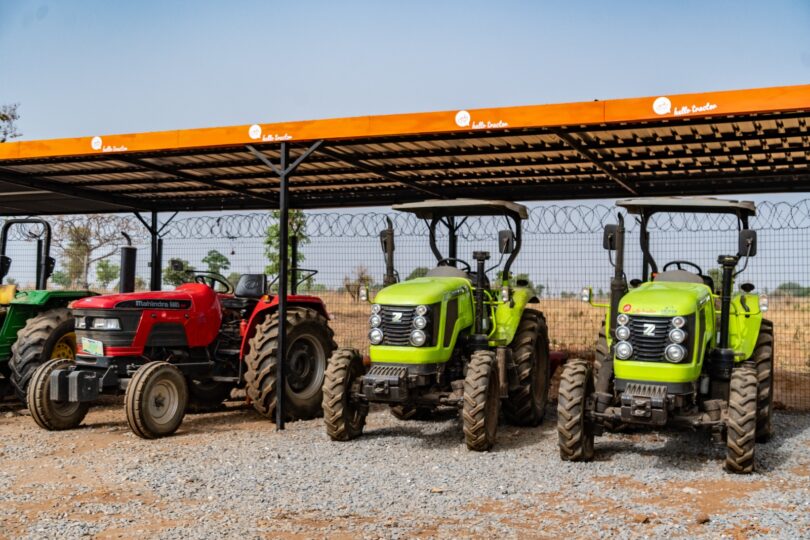
The agricultural technology firm says Nigeria’s mechanisation drive must move beyond tractor procurement to the development of systems that improve access, financing, maintenance, and operational efficiency.
Agricultural technology company Hello Tractor has called for stronger collaboration among governments, financial institutions, technology providers and private operators to build a sustainable agricultural mechanisation system capable of improving food production across Nigeria.
Speaking on behalf of the company in Nigeria, Nneka Enwonwu, the country director, said agricultural mechanisation should no longer be viewed solely as the acquisition of tractors but as an ecosystem requiring coordinated efforts from multiple stakeholders.
“The future of mechanisation in Nigeria cannot depend exclusively on government ownership models, nor can it be left entirely to the private sector,” Ms Enwonwu said in a statement on Thursday.
She said sustainable agricultural development would require collaboration among government institutions, financial organisations, technology companies, private operators and farmers.
According to her, farming activities operate within narrow planting and harvesting windows, making timely access to mechanisation services essential for productivity.
She noted that delays in tractor services during critical farming periods could reduce crop yields and affect farmers’ incomes.
PREMIUM TIMES reported that the President of Nigeria, Bola Tinubu, launched 2,000 tractors for Nigerian farmers last year, while other states, such as Jigawa and Bauchi, have joined recently.
Ms Enwonwu said technology has become increasingly important in improving mechanisation through real-time fleet management, equipment tracking, maintenance scheduling and operational coordination.
She said digital platforms could help governments and private operators improve tractor utilisation, reduce equipment downtime, strengthen accountability and maximise returns on public and private investments in mechanisation.
She also identified access to financing as a major challenge facing the sector, citing rising equipment costs, fuel prices, and maintenance expenses as barriers that limit the expansion of mechanisation services, particularly for smallholder farmers and service providers.
“Mechanisation succeeds when all parts of the ecosystem work together. Government provides scale and strategic direction. The private sector brings operational efficiency and innovation. Financial institutions provide growth capital. Technology improves coordination and accountability. Farmers remain at the centre of the entire system,” she said.
Ms Enwonwu said building a sustainable mechanisation ecosystem would have wider economic benefits beyond agricultural production, including improved food security, job creation in rural communities, enterprise development and youth employment.
She urged policymakers and industry stakeholders to prioritise developing operational systems that keep agricultural equipment productive and accessible over the long term, rather than focusing solely on increasing tractor numbers.
“Nigeria does not simply need more tractors. Nigeria needs a modern mechanisation system capable of delivering reliable services to farmers at scale,” she said.
Hello Tractor is an agricultural technology company operating in 20 African countries. The company uses Internet of Things (IoT)-enabled fleet management technology and a location-based booking platform to connect equipment owners with smallholder farmers seeking mechanisation services.