The Nigerian government accused Mr Barber of making inflammatory statements capable of inciting violence and deepening divisions, particularly in Plateau State.
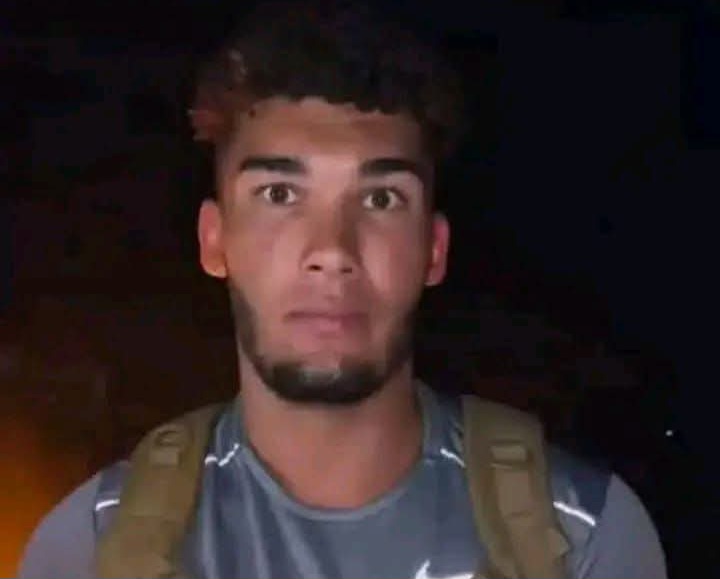
Amid a controversy over his role in the troubled Nigerian North-central region, the Nigerian government has expelled American missionary Alex Barber from the country.
Abiodun Essiet, the senior special assistant to President Bola Tinubu on Community Engagement (North Central), confirmed this during an interview with TVC on Monday, stating that Mr Barber’s activities posed a serious threat to national unity.
“Yeah, so we’ve realised what Alex Barber has done, so I must inform that Alex Barber is no longer in Nigeria,” Mrs Essiet said.
“He has been, we can say, removed and sent out of the country because of the work he’s doing, which is creating division.”
She alleged that Mr Barber’s remarks had immediate consequences, linking his speech in Jos to violence that followed shortly after.
“Immediately after he made his speech in Jos, a lot of people didn’t know that two people, two Muslims, were killed immediately after his speech,” she said.
“Because of the impact of this provocative speech, which he has been making, he was sent out of the country and is no longer in Nigeria.”
When Mr Barber arrived in Nigeria, he came with a story that resonated across borders. A former American college football player turned medical trainee, he presented himself as a humanitarian driven by faith and a sense of urgency. In communities across Benue and Plateau States, where violence has displaced thousands, he helped rebuild homes, drilled boreholes, and stood beside grieving families at mass burials.
Yet, within months, that same figure would become one of the most polarising foreign actors in Nigeria’s fragile conflict landscape. To supporters, he is a rare voice drawing global attention to neglected suffering. To critics, he is something more troubling: a foreign missionary whose words risk deepening the very divisions he claims to address.
This is the story of Alex Barber, the work he has done, the growing debate over whether his presence helped Nigeria or hurt it, and the latest developments surrounding his exit from the country.
Born on 17 August 1997, in Lawrenceville, Georgia, Mr Barber grew up in Cumming, alongside his brother, Josh, a physician and US Army Reserve officer. His early life followed a familiar American trajectory shaped by sport and discipline.
At South Forsyth High School, Mr Barber stood out as a football kicker with unusual physical strength for the position. His talent earned him a commitment to Rutgers University before he switched to Penn State, a move that drew attention within college football circles.
That trajectory was cut short by injury. A torn hip labrum requiring surgery ended his athletic ambitions and, by his account, left him disillusioned. He transferred to Liberty University, turning toward faith and later enrolling in its College of Osteopathic Medicine.
In 2020, he briefly returned to football and earned national recognition by kicking a 51-yard game-winning field goal against Virginia Tech, according to Liberty University. The moment, widely circulated in American sports media, became a pivot point. It offered visibility and a platform that would later follow him into humanitarian work.
Mr Barber’s work in Nigeria is closely tied to two organisations, his own initiative, Building Zion, and Equipping the Persecuted (ETP), a US-based NGO led by filmmaker Judd Saul. Through these platforms, he has been involved in reconstruction projects in communities affected by violence, particularly in Benue State.
At Yelwata, a community devastated by attacks on 13 June 2025, Mr Barber said his team rebuilt dozens of homes and basic infrastructure. Speaking to TruthNigeria during a project dedication in January 2026, he said, “So far, we have rebuilt 35 housing units… The joy among the people is overwhelming.”
Community leaders echoed that sentiment. Julius Joor, the traditional ruler of Yelwata, described the intervention as unprecedented. “For the first time, private individuals have come to our aid in such a massive way. You have restored hope and happiness to our people,” he said.
Some residents and diaspora advocates also praised the speed and scale of the intervention. Franc Utoo, a legal practitioner, said the effort filled a gap left by government response. “You have done what both the federal and state governments have failed to do,” he told TruthNigeria.
Mr Barber has framed his work as both humanitarian and moral. At burial ceremonies and public events, he often invokes religious language. At a mass burial in Jos in January 2026, he cited Psalm 82, calling for justice for the oppressed and urging action against what he described as unchecked violence.
As his visibility grew, so did the tone of his public statements.
In interviews and social media posts, Mr Barber has repeatedly described the violence in Nigeria’s Middle Belt as systematic and coordinated. In an interview with News Central Television in April, he said, “This is not just some random criminality… This is a war being waged on people.”
He also questioned official narratives about the nature of the conflict. “If there’s no war in Nigeria, what is happening?” he asked. “In every state, you have security forces deployed… people are being killed, both Christian and Muslim.”
His remarks have extended to direct criticism of Nigerian authorities. In earlier interviews, he said he did not trust state institutions to manage humanitarian funds, citing alleged corruption. He also warned that government officials would be held accountable if rebuilt communities were attacked again.
Such statements have amplified his profile internationally, but within Nigeria, they have drawn scrutiny.
Critics argue that Mr Barber’s framing of the conflict oversimplifies a complex crisis involving banditry, farmer-herder disputes, and insurgency. Some also accuse him of presenting the violence primarily through a religious lens, which they say risks inflaming tensions.
Former presidential aide Bashir Ahmad called for authorities to investigate his activities, warning that his comments could “threaten public peace.” In a public statement, Mr Ahmad said relevant agencies should “take immediate steps to caution… and, if necessary, apprehend him.”
Islamic cleric Ahmad Gumi similarly questioned his role, alleging that his rhetoric could incite division.
On social media and in public commentary, some Nigerians have gone further, raising suspicions about his presence at attack sites.
In a petition addressed to the State Security Services (SSS) in Plateau State, Aliyu Naziru alleged that Mr Barber was seen at the scene of violence in Jos under unclear circumstances and called for his arrest and investigation.