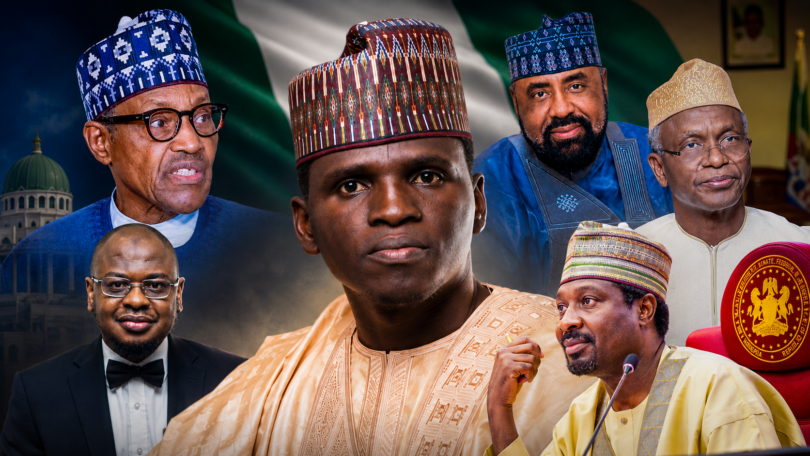
Rarara’s campaign songs became an integral part of Buhari’s electoral brand and were regularly played at political rallies across northern Nigeria.
A new political campaign song by popular Hausa musician Dauda Kahutu, better known as Rarara, has sparked controversy in northern Nigeria, with politicians, religious leaders, lawyers, civil society actors, and social media users debating whether the singer crossed the line between political criticism and personal attack.
Although Mr Rarara never mentions Mr Pantami by name, the song’s references leave little doubt among political observers about its target.
The lyrics include allegations that critics say are defamatory and unsupported by publicly available evidence.
Within hours of its release, the song had spread across Facebook, X, TikTok, WhatsApp, and YouTube, generating millions of views and becoming one of the most discussed political subjects in northern Nigeria.
Political music has long occupied a unique place in northern Nigeria’s democratic culture.
For decades, musicians have composed campaign songs to mobilise supporters, celebrate political victories, and criticise opponents. Many of these songs have shaped electoral narratives as much as campaign rallies and media advertisements.
No contemporary political musician has dominated that space more than Rarara.
From former President Muhammadu Buhari’s campaigns to governorship elections across northern states, his songs became synonymous with APC campaigns, earning him national recognition and considerable political influence.
His latest release, however, has reignited debate about where political expression ends and character assassination begins.
Commenters told PREMIUM TIMES that while political criticism remains a legitimate feature of democracy, allegations against public figures should be supported by verifiable facts.
The reactions to the song have been highly critical.
Many of the comments on social media accused the singer of abandoning constructive political messaging in favour of personal insults.
Bilkisu Sani, a social media commenter, argued that the singer appears emboldened by his political connections.
“Because he has National Security Adviser Nuhu Ribadu, whom he frequently flaunts on social media as his godfather, he attacks everyone without restraint. He believes he is untouchable. That is not a good example.”
Many users argued that attacking an Islamic scholar of Mr Pantami’s stature risks deepening political and religious divisions at a time when Nigeria is already experiencing heightened political tensions ahead of the 2027 elections.
“Political campaigns should be built on ideas, competence and policies—not on destroying people’s reputations. This trend is dangerous for our democracy,” says Abdulrashid Ibrahim.
Several commenters wrote that political campaigns should focus on ideas, governance records, and policy alternatives rather than slurs that often border on personal attacks.
Some supporters of the APC, however, defended the song, arguing that political music has historically employed satire and criticism as campaign tools.
Amina Muhammad, a public affairs commentator, said politicians should discourage campaign messages that promote personal attacks.
“Millions of young people listen to Rarara. When influential artists normalise apparent snide remarks and unverified allegations, they send the wrong message about what politics should represent.”
Kabiru Musa, a civil society and justice advocate, said the song risks inflaming political tensions.
“Freedom of expression comes with responsibility. You can criticise public officials without resorting to uncouth language capable of provoking hatred….”
Sadiq Lawal, a lawyer based in Kano, noted that freedom of speech is not absolute.
“If someone believes defamatory statements have been published against them, Nigerian law provides legal remedies. Political music is not exempt from the law.”
Another commenter, Maryam Garba, said the debate should encourage political actors to raise campaign standards.
“The North has a rich tradition of political songs that educate and inspire. We should not reduce that heritage to personal attacks that distract voters from the real issues affecting their lives.”
Others maintained that artists retain the constitutional right to freedom of expression, even when their work provokes controversy.
Among the most prominent critics is former Minister of Youth and Sports Development, Solomon Dalung, who described the song as evidence of a worrying decline in the quality of political communication in northern Nigeria.
Mr Dalung lamented that political music, once used to educate, inspire, and mobilise voters, was increasingly becoming a platform for ridicule and character assassination.