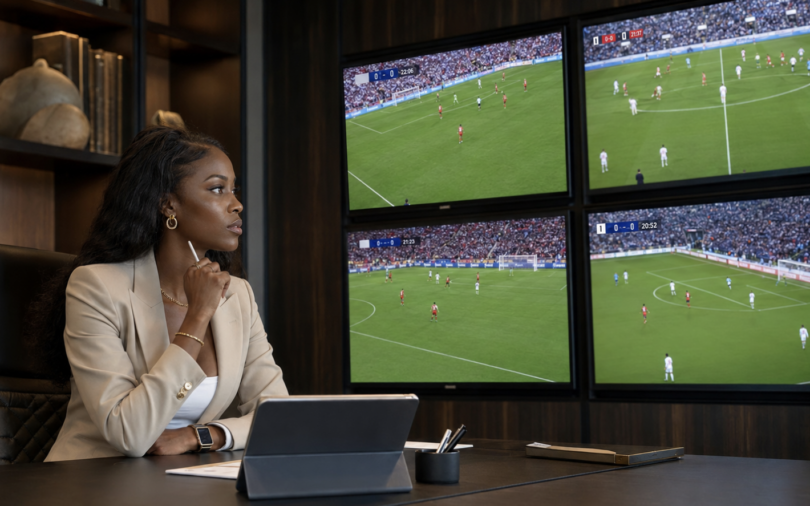
Argentina and Austria meet level on points after opening wins, with Messi chasing a record and midfield control set to decide how the Group J match tilts
Argentina arrive with the louder headline, but Austria bring the kind of problem that does not fit neatly into a star-player preview. Both teams opened Group J with three points. Argentina did it with Lionel Messi scoring all three goals against Algeria. Austria beat Jordan 3-1, but the performance left more room for inspection than the scoreline suggests. For fans comparing team news trackers, projection models and platforms like 1xBet Guiné-Bissau, the useful question is not whether Argentina are favoured. They are. The sharper question is how Austria can disturb Argentina’s midfield rhythm before Messi receives the ball in the zones that matter.
The official fixture details give the match a clean frame: 22 June 2026, 17:00 GMT, Dallas Stadium. The referee is Amin Mohamed Omar. Those facts matter because the schedule creates a short recovery window after the first group match, and the setting removes any home-like comfort from the discussion.
The table gives the administrative picture. The football picture is less tidy. Argentina look stronger on paper, but Austria’s pressing can make a favourite play faster than it wants.
Messi’s opening performance changed the tone of this match. Three goals against Algeria moved him level with Miroslav Klose on 16 World Cup goals, one short of standing alone at the top of the tournament scoring list. At 38, he is no longer judged only by involvement. He is judged by whether one touch still rewrites the match.
Against Algeria, Argentina did not need a long list of scorers. Messi provided the separation himself. The risk for Austria is obvious: if they allow him to receive between midfield and defence, the match can tilt without a long buildup.
Yet the forecast cannot stop there. Messi’s value increases when Argentina’s midfield protects the route into him. Rodrigo De Paul gives the side a connector who keeps the attacking shape from becoming stretched. Enzo Fernández brings ball-winning and forward passing. Alexis Mac Allister helps Argentina keep the game from becoming a series of broken transitions.
Austria’s first task is not stopping a shot. It is making the pass before the shot uncomfortable.
Argentina’s midfield is built to slow panic. That sounds simple, but it is a major tournament skill. When Austria press after losing the ball, Argentina need the first escape pass to land. If that pass reaches De Paul or Mac Allister cleanly, Austria’s pressure can leave space behind it.
Enzo Fernández led Argentina’s listed tackle data after Matchday 1 with three tackles won. That number is modest, but it tells part of the story: Argentina did not only attack well. They recovered the ball before Algeria could turn possession into pressure.
Austria will not play the same way. Ralf Rangnick’s side looks for aggressive pressure after turnovers. That style can create chances without long possession spells. It can also leave gaps if the first wave is bypassed.
Thiago Almada becomes an interesting selection question because of that. His ability to combine in tight spaces may be useful when Austria try to trap Argentina near the touchline. If he starts, Argentina may get more short passing around Messi. If another runner starts instead, the side may gain more vertical threat.
Austria beat Jordan 3-1, but the match was not as comfortable as the final number reads. The second goal arrived late, and the third came from the penalty spot. That does not reduce the value of the win. It does change the forecast.
Austria are dangerous when they turn pressure into set pieces. Seven of their last 10 World Cup goals have come from dead-ball situations, including corners, penalties and free kicks. That statistic is not a curiosity. It is a route into a match where open-play chances may be limited.
Argentina’s defence kept Algeria from registering a shot on target. Against Austria, the challenge may be less about volume and more about avoiding cheap restarts near the box. One poorly defended corner can undo 40 minutes of midfield control.
Austria also have a personnel question around the right side of defence, with Stefan Posch’s availability in doubt after a broken jaw. That matters because Argentina can overload that channel if Molina returns at right-back and Messi drifts inside from the same half-space.
The 61.1% Argentina win probability from 25,000 pre-match simulations is not a prediction of comfort. It is a statement of advantage. Austria still carry a 17.0% chance of winning in the same model, while the draw sits at 21.9%.
Those numbers make the match easier to misread. A 61% favourite is not a lock. It wins often enough to deserve the label, but not so often that the underdog path becomes fantasy. In football terms, Austria’s path is clear: reduce central space, extend the match at 0-0 and turn set pieces into genuine stress.
For betting research, that distinction matters. Match-winner markets point toward Argentina, but the more useful analysis may sit in goal timing, set-piece exposure and whether Austria can keep the first half tight. A mobile betting app, live match tracker or statistical dashboard can show prices moving, but the research still starts with the tactical question: can Austria stop Argentina from settling?
The betting topic around this fixture should not be reduced to picking a winner. Argentina’s stronger squad and Messi’s form create a clear market lean, but the match shape carries more detail. If Argentina score early, Austria will have to press higher and the game may open. If Austria reach half-time level, the pressure moves back toward the favourite.
A clean research process separates three items that often get mixed together. Team strength is one item. Game state is another. Set-piece threat is a separate question. Austria’s dead-ball record means Argentina can dominate open play and still face a dangerous moment from a corner.
There is also the record angle. Messi needing one goal to pass Klose will pull attention toward scorer markets, but Austria’s structure is designed to deny central touches. That does not cancel Messi’s threat. It changes where the threat may come from: second balls, cutbacks or a free kick near the area.
Argentina’s possible changes are not cosmetic. Julián Álvarez could return to the attack after beginning the opener on the bench. Nahuel Molina may come in at right-back if Gonzalo Montiel is unavailable. Nicolás Tagliafico could also enter the defensive picture on the left.
Each of those choices affects the tempo. Álvarez presses from the front and can attack space behind Austria’s defensive line. Molina gives Argentina more width on the right. Tagliafico offers a different balance on the opposite side, especially if Argentina want stronger defensive recovery after losing the ball.
Austria’s question is more about whether their press can hold its structure for long spells. Pressing Messi directly is not enough. The surrounding lanes must close at the same time. If De Paul receives freely, the first Austrian line has already been beaten.
This is where the match may become less glamorous than the headline. The decisive action could be a five-metre pass under pressure, not the final shot.
The match has several plausible paths. They do not all match the same forecast, and they do not all point to the same betting reading.
This table avoids a simple winner-only frame. A forecast needs conditions. Argentina can be the better side and still face an awkward evening if the first goal does not come early.
Argentina and Austria have met before, but not in a senior competitive fixture. Their previous meetings were friendlies, with Argentina winning 5-1 in 1980 and a 1-1 draw coming 10 years later. Those scores belong to another football age. They offer trivia, not guidance.
The lack of competitive history places more weight on current profiles. Argentina’s recent tournament identity is built around controlled possession, midfield protection and Messi’s decisive touches. Austria’s current identity is built around pressing, vertical recovery and set-piece danger.