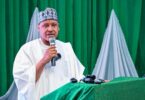
The President of IPI Nigeria, Musikilu Mojeed, said tensions between journalists and security agencies should be managed through dialogue, professional accountability structures and judicial processes rather than coercive actions.
The International Press Institute (IPI) Nigeria has urged security agencies to abandon arrests, detention and intimidation as tools for resolving disputes with journalists, insisting that democratic societies possess sufficient mechanisms to address disagreements between the media and the state.
The two-day summit, starting on 18 June, is in collaboration with the State Security Service (SSS). The first day of the event was attended by some security officers, public officials, including the Minister of Information and National Orientation, Mohammed Idris, the representative of the Minister of Defence, Christopher Musa, and the representative of Kano State Governor Abba Yusuf.
Mr Mojeed, who is also the editor-in-chief of PREMIUM TIMES, explained that the conflict between security agencies and the media often results from “inadequate communication, mistrust and the failure to utilise existing mechanisms for resolving disagreements.”
According to him, democratic societies must resist framing national security and press freedom as competing interests, arguing that both are essential and mutually reinforcing pillars of good governance.
“Security without accountability risks secrecy and abuse, while freedom without security cannot be meaningfully sustained,” he stated.
Mr Mojeed noted that alternative dispute-resolution channels already exist, including dialogue platforms, self-regulatory processes within the media, professional accountability mechanisms and the courts.
“Alternative dialogue, self-regulatory processes, professional accountability mechanisms and judicial remedies can address disputes more effectively than raids, arrests, detention and intimidation,” he said.
The veteran journalist acknowledged that tensions between journalists and security agencies are inevitable because both institutions pursue different objectives. However, he argued that the responsibility of democratic institutions is not to eliminate such tensions but to manage them responsibly.
“The task before democratic institutions is therefore not to eliminate tension, but to manage it responsibly,” he said.
Mr Mojeed stressed that national security and press freedom should not be viewed as opposing goals, maintaining that a strong society depends on both effective security institutions and a free press capable of holding power accountable.
“A society is strongest when its citizens are secure, informed and able to trust both the institutions that protect them and the institutions that hold power accountable,” he added.
“A society is strongest when its citizens are secured, informed and able to trust both institutions that protect them and institutions that hold power accountable,” he said.
He commended the NUJ for convening the summit, describing it as a necessary platform for addressing longstanding concerns over relations between journalists and security agencies in Nigeria.
Mr Mojeed also pledged IPI Nigeria’s continued support for press freedom while recognising the importance of national security in sustaining democratic governance.
PREMIUM TIMES reports that at least 412 attacks were reported against journalists and media houses between 2023 and early 2026, according to data published on Press Attack Tracker, a Centre for Journalism and Innovation Development (CJID) civic technology tool that tracks, verifies and documents incidents of press freedom violations in West Africa.
This year alone, 15 press attacks have been documented in Nigeria. The country ranked 112th in the World Press Freedom Index, with a global score of 46.81, according to Reporters Without Borders (RSF).
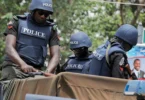
These attacks were carried out mostly by security agents, public officials and other actors, including thugs. Against this backdrop, the IPI Nigeria blacklisted two governors and the former Inspector General of Police (IGP), Kayode Egbetokun, for violations of press freedom and democratic norms.
The IPI unveiled the “Book of Infamy,” naming Governor Mohammed Bago of Niger State, Mr Egbetokun, and Governor Umo Eno of Akwa Ibom State for their roles in press crackdowns in 2025.
Mr Bago was blacklisted following his order to close Badegi 90.1 FM, the detention of a People’s Daily correspondent, and the reported assault of a Voice of America journalist by one of his commissioners.
The IPI also cited Governor Eno for media repression after he barred Channels TV reporters from the state’s press centre in response to their report on his undemocratic comments.
The IPI blacklisted Mr Egbetokun for overseeing a culture of impunity within the police force, specifically regarding the frequent harassment and assault of journalists by officers.