If Bala Mohammed’s political courtship with the APC or President Tinubu is deemed a betrayal, then intellectual honesty demands that similar labels be applied elsewhere.
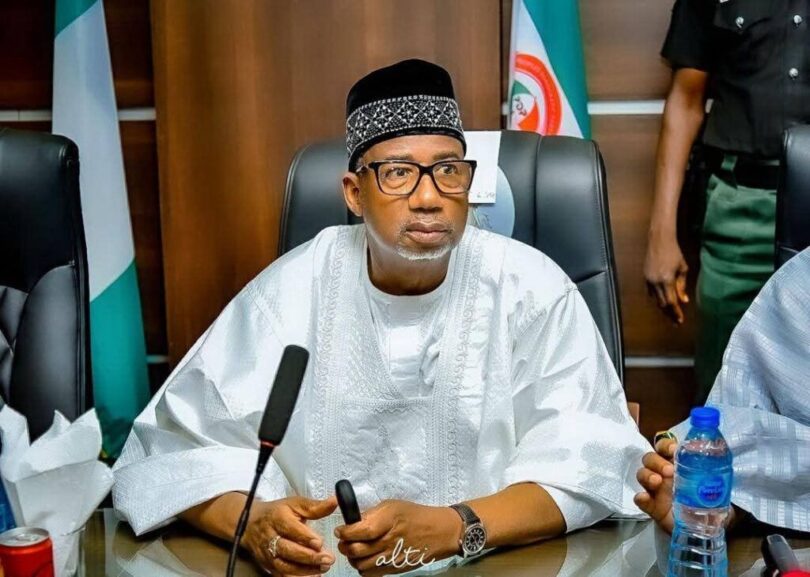
Let me state from the outset that if Andy Ezeani’s article, bearing the above title, was intended to portray Bala Mohammed—Governor of Bauchi State and Chairman of the Peoples Democratic Party Governors Forum (PDPGF)—as an unprincipled politician, then the argument misses its mark. Worse still, it risks collapsing the entire Nigerian political class into a single, undifferentiated caricature.
When this reality is combined with the absence of clear ideological boundaries in Nigeria’s political space, any attempt at moral absolutism becomes unsustainable. A puritanical posture collapses once all actors are subjected to the same standard of scrutiny. I shall return to this point shortly.
First, however, it is necessary to outline Andy Ezeani’s argument as fairly as possible.
Ezeani contends that Bala Mohammed’s reported search for accommodation within the All Progressives Congress (APC) exposes a striking inconsistency. This, he argues, is coming from a governor who had positioned himself as a fierce critic of the APC-led federal government. Ezeani further underscores statements from the Bauchi PDP acknowledging that negotiations with the APC failed because the party denied them the concessions allegedly extended to other states and governors.
Yet, what is politics if not a contest over scarce resources and strategic advantage?
From this premise, Ezeani laments what he sees as the erosion of a moral compass in Nigeria’s polity. In Bala Mohammed’s case, he asks pointedly how a second-term governor—once the nerve centre of opposition resistance—could now be found at the gates of the ruling party, seeking entry. He concludes that such a figure could only be received with contempt.
I admit that I share some of Andy Ezeani’s discomfort. Ezeani, widely acknowledged as one of Nigeria’s most lucid and productive writers, is no stranger to principled critique. His pedigree, shaped by formative years at some of Nigeria’s leading newspapers, places him far above the self-adulating commentariat that often clutters Nigeria’s media space.
I regard him, without hesitation, as a patriot.
It is precisely this patriotism—mixed with frustration—that appears to animate his lamentation. His anguish reflects a broader national despair over the disquieting, and hardly celebratory, trajectory of Nigeria’s politics. Still, selective outrage is a dangerous indulgence.
Who would have imagined, for instance, that Peter Obi—widely celebrated as a symbol of restraint and rectitude—would today share political space with principal actors from the Buhari era, including Nasir el-Rufai, Abubakar Malami, and Rotimi Amaechi? Who would have predicted that Rabiu Kwankwaso, after his sharp attacks on Obi before the 2023 elections, would later embrace him with the warmth of a newfound ally?
If Bala Mohammed’s political courtship with the APC or President Tinubu is deemed a betrayal, then intellectual honesty demands that similar labels be applied elsewhere. Anything short of this will amount to selective inquisition.
The underlying truth is uncomplicated. What drives Peter Obi into alliances with former adversaries is the same force drawing Bala Mohammed into conversations with the APC. Interests have shifted. Circumstances have changed. Survival and relevance now demand pragmatism.
The current moment transcends personal preferences within the opposition. Many non-APC actors find themselves cornered by a ruling party machine whose aggressive consolidation of power threatens pluralism itself. The danger is real. The stakes are national.
Avoiding implosion requires flexibility, not dogma. It demands hard choices, not self-immolating rigidity. Fixing Nigeria has become a political nightmare, and navigating its treacherous terrain is no small feat. To pretend otherwise is disingenuous.
Against this backdrop, the fixation on Bala Mohammed appears misplaced. At best, it is curious. At worst, it is mischievous.
It is possible, of course, that Ezeani’s disappointment stems from high expectations. He acknowledges Bala Mohammed’s forthright leadership as PDPGF chairman, particularly his consistent critique of federal policies that have deepened poverty and nudged Nigeria towards a de facto one-party state.
Recent validation by the IMF of these concerns—culminating in the political fall of the Finance Minister, Wale Edun—only strengthens the credibility of voices like Bala Mohammed’s.
In that context, portraying him as morally diminished borders on unfairness.
Notably, unlike the secrecy that often accompanies defections, Bala Mohammed has handled the issue of political realignment with uncommon transparency. At every stage, he has spoken openly about his motives, movements, and options. There has been no deception.
This openness is instructive. Bala Mohammed has repeatedly stated that he has surpassed his personal ambitions. His career spans the federal civil service, the Senate, the cabinet, and now the Bauchi governorship. If personal comfort were the goal, he could retire quietly to Alkaleri, a Bauchi outskirt fast emerging as an economic hub in oil, gas, agriculture, and industry.
But leadership, in his view, demands more.
His overriding concern is continuity. He seeks protection and opportunity for loyal allies, young politicians, and technocrats who have driven his administration’s achievements. He wants a political consensus that preserves Bauchi’s developmental momentum and ensures the state never again slips into stagnation.
This posture is not new.
In 2010, Bala Mohammed defied regional pressures and personal loyalties to support the Doctrine of Necessity. That noble gesture averted the looming implosion and saved Nigeria’s democracy. Today, the same nationalist instinct guides his actions. Whether in hosting Peter Obi with dignity when others banned or attacked him, or in championing a southern presidency within the PDPGF, the pattern is consistent.
Negotiations with the APC flow from the same logic. Nothing more. Nothing less. An African proverb warns that when one finger points in accusation, four point back at the accuser. This is the peril of selective judgment. Those eager to indict Bala Mohammed may find themselves inadvertently indicting everyone else—Peter Obi, Rotimi Amaechi included.
Nigeria’s tragedy is not that politicians pursue interests. It is that we pretend some do not.
*Kola Oyerinde, an Abuja based commentator on national affairs is of the Iresa Adu royal house in Ogbomosho.