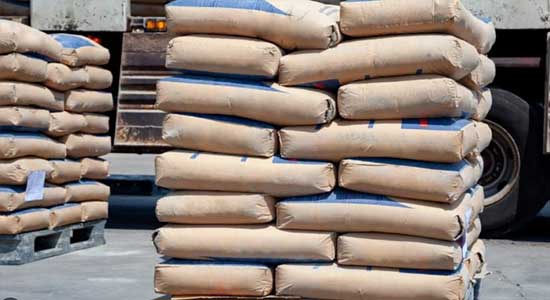
Despite Nigeria’s huge local cement production capacity, consumers across the country continue to pay some of the highest cement prices in Africa, raising fresh concerns over pricing, competition and the impact on housing and infrastructure delivery.
Nigeria’s cement industry has an installed production capacity estimated at between 60 million and 65 million metric tonnes yearly, one of the highest on the continent. With new plants expected to come on stream, national capacity could rise to about 85 million metric tonnes in the coming years.
However, domestic consumption is estimated at only 25 million to 30 million tonnes annually, meaning the country produces more cement than it currently consumes and exports surplus cement and clinker to neighbouring countries.
In spite of this supply advantage, a 50-kilogramme bag of cement sells between ₦12,500 and ₦15,000 in major markets across states such as Abia, Lagos and Abuja, depending on location and distribution costs.
This is almost twice the average price in several African countries. In South Africa, a 50kg bag of cement averages between ₦6,000 and ₦7,000, while in Egypt, one of the world’s major cement producers, prices can fall to the equivalent of ₦4,000 to ₦5,000 per bag. In Kenya, cement sells for about ₦6,500 to ₦7,500, while in Ghana, prices usually range between ₦7,000 and ₦8,000 per bag.
Nigeria’s cement market is dominated by Dangote Cement, BUA Cement and Lafarge Africa, recently rebranded as HBM Nigeria Plc.
Dangote Cement controls more than half of national cement production, with an installed capacity of about 35 million to 35.3 million tonnes yearly across its Obajana, Ibese, Gboko and Okpella plants. Its capacity is expected to exceed 41 million tonnes when its new plant in Itori, Ogun State, is completed.
BUA Cement, the second-largest producer, has an installed capacity of about 17 million to 20 million tonnes yearly, with major plants in Obu, Edo State, and Sokoto, while a new line is planned in Edo State.
Lafarge Africa has an installed capacity of about 10.5 million tonnes yearly, with plants in Ewekoro and Sagamu in Ogun State, Ashaka in Gombe State and Mfamosing in Cross River State.
Several new plants are also being planned, including MSM Cement in Kebbi State, with a proposed capacity of three million tonnes per year, and Resident Cement in Bauchi State, with a proposed 10 million tonnes yearly capacity.
The three dominant cement firms generated more than ₦6.53 trillion in revenue in 2025, while their combined after-tax profit stood at about ₦1.65 trillion, representing a 142 per cent increase from 2024.
Critics say the huge profitability raises questions over whether Nigerian consumers are paying more than necessary for a product produced locally at scale.
Manufacturers, however, argue that cement production in Nigeria remains expensive due to high energy costs, foreign exchange pressure, logistics challenges and inflation.
They said cement plants require large amounts of energy, with producers relying on gas, coal, alternative fuels and diesel to power kilns and generators. They also noted that while limestone and some raw materials are sourced locally, manufacturers still import equipment, spare parts, refractory materials, packaging materials and some additives, all of which have become more expensive due to the depreciation of the naira.
Industry players also blame poor logistics and infrastructure, noting that cement plants are often located far from key consumption centres. According to industry estimates, logistics alone can account for 30 to 40 per cent of the final retail price of cement.
They further argued that rising labour costs, financing costs, maintenance expenses and general inflation have increased production and distribution costs, while Nigeria’s housing deficit, infrastructure projects and private construction demand continue to keep prices high.
Nigeria also exports cement and clinker to countries such as Ghana, Cameroon and Niger. While exports earn foreign exchange for producers, critics say they reduce pressure on manufacturers to lower domestic prices.
The high cost of cement has continued to affect Nigeria’s housing and construction sectors. The Minister of Works, David Umahi, recently urged cement producers to reduce their prices, warning that the current cost of cement is making infrastructure projects more difficult and forcing the government to continually adjust project contracts.
Umahi said the Federal Government would begin formal engagements with cement companies from July 1, 2026, adding that lower cement prices would support the delivery of infrastructure projects and also benefit citizens building private homes.
Experts estimate that Nigeria has a housing deficit of more than 16 million units, with cement remaining one of the most important materials for housing and infrastructure development.
Stakeholders say when cement prices rise, the cost of building houses, schools, roads and other infrastructure also increases, placing additional pressure on government budgets, private developers and ordinary citizens.
The President of the Real Estate Developers Association of Nigeria, Oba Akintoye Adeoye, said the high cost of cement remains one of the biggest obstacles to affordable housing and infrastructure delivery.
The Executive Director of the Housing Development Advocacy Network, Festus Adebayo, also urged the Federal Government to introduce deliberate policy interventions to make cement more affordable.
“Cement is a strategic material in housing delivery. If Nigeria is serious about tackling its housing deficit, policies must be introduced to ensure cement becomes more affordable and accessible for developers and individuals seeking to build homes,” Adebayo said.
HDAN called for concessionary energy support for cement manufacturers, improved gas supply to plants and stable electricity to reduce dependence on expensive diesel.
The group also urged the government to consider duty waivers on critical equipment and machinery used in cement production, saying this could reduce operational costs and eventually reflect in market prices.
Adebayo further called for increased competition in the sector by supporting new investors to establish cement plants across different regions of the country.
An estate surveyor and valuer, Sola Enitan, described Nigeria’s cement industry as a technical success but a social failure if its huge capacity does not translate into affordable building materials for citizens.
“The coexistence of record profits and a worsening housing crisis is unsustainable. By shifting from protectionism to competition, the Federal Government can unlock affordable housing and ensure that industrial capacity serves the public good,” he said.
Enitan called for stronger oversight by the Federal Competition and Consumer Protection Commission, including the creation of a “Cement Competition Desk” to monitor possible price-fixing and regional dominance.
He also proposed reforms to limestone quarry licences through a “use-it-or-lose-it” policy to allow new and smaller producers access to raw materials.
He further suggested that cement producers should be required to publish quarterly plant utilisation data and regional ex-factory prices to improve transparency.
According to him, the government should also publish fair-value reference prices to protect consumers from excessive retail mark-ups.
Enitan also urged the Federal Government to prioritise standard-gauge rail connections to major cement plants, including Obajana and Sokoto, to reduce dependence on expensive diesel-powered trucking.
He further recommended that a percentage of cement volumes be sold through independent third-party distributors to break vertical monopolies in the supply chain and improve market competition.