The official proposed a collective goal to increase the share of global final energy demand met by electricity from just over 20 per cent currently to 35 per cent by 2035.
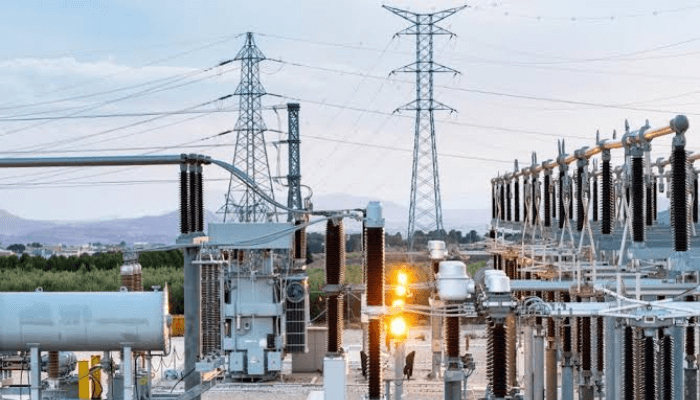
The Presidency of the 31st United Nations Climate Change Conference (COP31) has unveiled a new global electrification target aimed at accelerating the transition away from direct fossil fuel consumption across key sectors of the global economy.
The official proposed a collective goal to increase the share of global final energy demand met by electricity from just over 20 per cent currently to 35 per cent by 2035.
In recent years, countries have been urged to follow the path of green development by transitioning away from fossil fuel to a more climate-friendly energy source.
In Nigeria, the government has been making moves to reform the country’s electricity amidst epileptic power supply and consistent grid collapses. The government has also announced Nigeria’s Energy Transition Plan (NETP), targeting universal energy access by 2030 and net-zero carbon emissions by 2060.
The strategy, according to the government, requires a massive $1.9 trillion in expenditure—roughly $10 billion annually—across five key sectors: Power, Cooking, Oil and Gas, Transport, and Industry.
In his remarks at the Bonn meeting, Mr Kurum, who also serves as Türkiye’s Minister of Environment, Urbanisation and Climate Change, described the new target as a flagship initiative under the COP31 Presidency’s Action Agenda and said efforts were underway to build a broad international coalition to support its implementation.
According to the COP31 Presidency, the target is based on analyses conducted by the International Energy Agency and the International Renewable Energy Agency and is intended to support the implementation of the Paris Agreement while keeping global warming within 1.5 degrees Celsius above pre-industrial levels.
The United Nations COP31 is scheduled to take place in the Turkish city of Antalya, later this year. Parties are expected to advance implementation-focused climate actions alongside formal negotiations under the UN climate process.
Presenting the Presidency’s Action Agenda, Mr Kurum said expanding the use of clean electricity across transport, buildings and industry would strengthen energy security and shield households and businesses from volatile fossil fuel markets.
“By electrifying daily life, from transport to buildings and industry, we can protect families and businesses from volatile energy markets. This ‘35 per cent by 2035’ target will be one of the defining priorities of our COP31 Presidency,” he said.
He added that the Presidency recognised varying national circumstances and would work with countries, particularly developing economies, to facilitate access to technical assistance, capacity-building and financial support.
The initiative forms part of a broader package of non-negotiated Action Agenda priorities announced by the COP31 Presidency.
Alongside the electrification goal, the Presidency announced a target to halve the growth in global waste by 2035 as part of its “zero waste” agenda.
The Presidency noted that food waste alone accounts for around 10 per cent of global greenhouse gas emissions, largely through methane emissions, a greenhouse gas significantly more potent than carbon dioxide.
Another target unveiled under the Resilient Cities initiative seeks to reduce energy consumption intensity in the building sector by at least 25 per cent by 2035.
According to the Presidency, the measure is expected to help households and businesses reduce energy costs while enhancing urban resilience to climate-related challenges.
Mr Kurum also disclosed that additional initiatives covering food security, circular materials in manufacturing and climate education were being developed ahead of COP31.
The Presidency further outlined plans for a “Climate Implementation Bridge,” designed to help countries better align climate action with economic and development priorities and improve access to climate finance.
Australia’s Minister for Climate Change and Energy and COP31 President of Negotiations, Chris Bowen, said accelerating electrification would improve energy security while lowering costs and emissions.
“Electrifying the global economy is one of our practical priorities for COP31 because it’s the fastest way to strengthen energy security, cut emissions and bring down costs,” he said.
The Executive Secretary of the United Nations Framework Convention on Climate Change, Simon Stiell, described electrification as critical to reducing dependence on fossil fuels and addressing rising energy costs.
He said more energy-efficient cities and improved waste management would play a key role in tackling the climate crisis, which is already affecting economies and supply chains worldwide.
To support the electrification target, the COP31 Presidency and Australia have commissioned the IEA to produce special reports outlining pathways to achieving the 35 per cent electrification goal and assessing the benefits of reducing waste growth and expanding circular waste management systems.
The Executive Director of the IEA, Fatih Birol, said the world was entering an “Age of Electricity,” driven by growing demand from artificial intelligence, electric vehicles, air conditioning and industry.
He said the agency would support the COP31 Presidency by identifying strategies that could help countries increase electricity’s share of energy consumption while improving energy security.
Similarly, the Director-General of IRENA, Francesco La Camera, welcomed the proposed target, saying the agency’s energy transition roadmap already envisages global electrification reaching 35 per cent by 2035.
He described electrification as one of the most immediate and cost-effective pathways for reducing fossil fuel dependence and improving economic competitiveness.
The Chief Executive Officer of the Global Renewables Alliance, Bruce Douglas, also endorsed the initiative, saying greater electrification would help lower costs, improve energy access and provide stronger signals for investment in renewable energy.
The UN said the new target builds on a series of complementary pledges agreed at previous climate conferences.