The strong corporate earnings are an affirmation that margin recovery is progressing fast, with a net profit margin, a metric that indicates how much of revenue has turned into after-tax profit, rising to 49.7 per cent from 27.9 per cent.
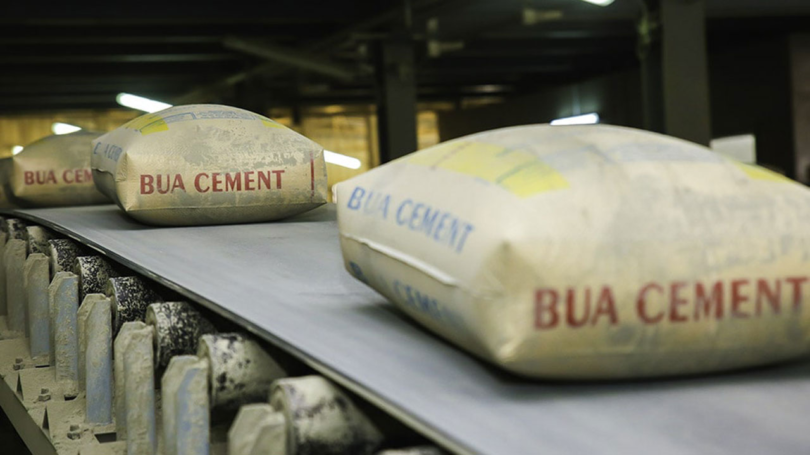
BUA Cement more than doubled its net profit for the quarter to March, compared to a year ago, after putting a couple of cost management strategies to use.
The building materials powerhouse continues to cling to the playbook that helped it book record profits last year to turn in robust results.
The improvement, despite a degree of reliance on stronger turnover, resulted largely from keeping all costs under control, from operating expenditure and cost of sales to tax liability.
Cost of sales as a proportion of revenue dropped to 43.1 per cent from 52.3 per cent, as the direct cost of production grew by only 1 per cent. That was a far muted pace compared to that of turnover, which sped up by 22 per cent to N355 billion.
Administrative expenses rose to N7.3 billion from N6.1 billion, but the manufacturer’s cost-discipline approach is even more evident in cutting finance costs by 42.5 per cent, assisted by lower interest expense on borrowings and the amount capitalised to qualifying assets.
BUA Cement paid 12.4 per cent, or N2.3 billion less, in income and deferred tax than it did one year prior, having offset its tax bill substantially after receiving a deferred tax credit of up to N20.5 billion.
Boosting net profit, the corporation incurred no minimum tax credit in the period under review, unlike a year earlier when it paid N665.3 million for that purpose.
Pre-tax profit advanced to N192.7 billion from N99.7 billion, just as profit after tax was up at N176.4 billion from N81.1 billion.
The strong corporate earnings are an affirmation that margin recovery is progressing fast, with the net profit margin. This metric indicates how much of revenue has turned into after-tax profit, rising to 49.7 per cent from 27.9 per cent.
Operating profit margin was 50.7 per cent, compared with 40.9 per cent in the first quarter of 2025, while gross profit margin advanced to 56.9 per cent from 47.7 per cent.
Those significantly high margins lend credence to the notion that the Nigerian cement industry is a seller’s market, rather than a consumer market.
The highly restrictive sub-sector, where just three companies – BUA Cement, Dangote Cement and Lafarge Africa – dominate, has fostered a less competitive market that has kept cement prices elevated for years and shut out potential players.
Those corporations have tremendously benefited from import bans and other regulator-imposed barriers to entry, which have driven their average EBITDA margin – a measure of companies’ operating profit – to about 45 per cent as of June 2025. That figure is well above the average for both Africa and Europe.
Abdul Samad Rabiu, Nigeria’s second-richest man according to the Bloomberg Billionaires Index, holds a combined 97.7 per cent stake in BUA Cement: 56 per cent directly, 39.8 per cent through BUA Industries Limited, and 1.9 per cent through Damnaz Cement Company Limited.
That leaves only 2.3 per cent of the company’s shares tradable to the public.
Allowing a single investor to own a stake that huge in a public company so that just a fraction of its issued shares is available for transaction in the open market has been noted by analysts to create artificial scarcity of the shares.
The practice tends to fuel jumps in the share price without justifiable fundamentals to support most of the gains the stock records over time.
The main board of the Nigerian Exchange (NGX), where BUA Cement is listed, requires that companies maintain a free float (the minimum number of shares that can be traded publicly) of 20 per cent or at least N40 billion worth of their shares.
Capital market authorities in Nigeria are currently considering relaxing free-float rules to boost liquidity, attract more investors, and prevent sharp spikes in the prices of stocks in which a few individuals hold a vast majority of the shares, Bloomberg reported in March, citing an interview with NGX’s CEO, Temi Popoola.
BUA Cement has assets of N2 trillion and a market value of N10.7 trillion. It has lined up the construction of a greenfield plant in Ososo, Edo State and another in Sokoto this year, each expected to add 3 million metric tonnes per annum to its nameplate capacity.