Iran has warned neighbouring countries and other states against joining the United States’ escalating economic pressure campaign, saying any country that participates in Washington’s sanctions against Tehran will be treated as an enemy.
The warning came as tensions between Iran and the United States intensified following Washington’s announcement of plans to impose what US Treasury Secretary Scott Bessent described as the “toughest sanctions in history” against the Islamic Republic.
Mohsen Rezaei, Iran’s newly appointed secretary of the Supreme National Security Council, issued the warning on Saturday, according to reports by the Associated Press and other international media.
“We tell all neighbouring countries not to participate in the economic war with the United States, or we will consider them enemies,” Rezaei said in an interview broadcast on Iranian state television, according to reports.
He further warned that if neighbouring states cooperated with Washington’s economic pressure campaign, Tehran could target their economic interests and disrupt oil shipments through the Persian Gulf and the Strait of Hormuz.
The threat marks a significant escalation in the confrontation over the US sanctions regime, which Washington says is designed to cripple Iran’s financial lifelines and pressure its leadership into accepting US demands.
Bessent announced on Thursday that the United States would impose sweeping new financial restrictions on Iran, describing them as the toughest sanctions ever imposed on the country. The measures are expected to target Iran’s oil trade and other sources of revenue, with Washington particularly focused on limiting Tehran’s ability to maintain economic ties with major trading partners.
Iran has rejected the planned sanctions as illegal and an attempt by Washington to impose its authority beyond US territory.
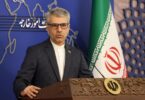
Iranian Foreign Ministry spokesman Esmaeil Baghaei said on Saturday that the proposed measures amounted to an assertion of “extraterritorial sovereignty” over independent states and described the US approach as a return to what he called “full-scale classic colonialism.”
Tehran has also warned that countries that comply with the US sanctions could face retaliation.
Rezaei’s warning comes amid growing concern over the future of oil shipments through the Strait of Hormuz, one of the world’s most strategically important energy routes. Iran has previously threatened to prevent the movement of oil through the waterway if neighbouring countries assist the United States in its campaign against Tehran.
The Strait of Hormuz has already been severely affected by the wider US-Iran confrontation, with tanker traffic falling sharply and disruptions pushing up shipping costs and creating renewed concerns about global energy supplies.
The latest confrontation follows months of conflict between Iran and the United States and Israel. Reuters reported that the conflict began with US and Israeli airstrikes on Iran in February 2026 and has since caused thousands of deaths while severely disrupting the region’s economy and energy markets. Active hostilities have paused at various points, but Washington and Tehran have failed to reach a lasting political settlement.
The United States has maintained that its latest economic measures are intended to increase pressure on Tehran without necessarily resorting to further major military operations. Washington has also warned countries that continue providing Iran with economic lifelines that they could face consequences themselves.
Iran, however, has vowed to resist the campaign.
On Friday, Iranian officials described any further US escalation as a threat to which Tehran would respond “devastatingly”. Iranian military officials have separately warned that the country retains significant military capabilities despite losses sustained during the conflict.
The economic pressure is already taking a heavy toll on ordinary Iranians. Reports indicate that inflation is approaching 70 per cent, while currency depreciation, job losses and disruptions to trade have made basic necessities increasingly difficult for many households to afford.
Iran’s economic difficulties have also been compounded by a deteriorating relationship with some of its traditional regional trading partners.
The United Arab Emirates recently suspended trade and financial transactions with Iran after accusing Tehran of launching ballistic missiles towards maritime traffic. Iran denied responsibility for the attacks and suggested they could have been a false-flag operation.
The UAE has historically served as an important commercial and financial channel for Iranian businesses, making the suspension potentially significant for Tehran’s efforts to circumvent US sanctions.