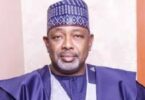
A former Labour Party presidential candidate, Peter Obi, has raised concerns about Nigeria’s rising debt-servicing obligations, warning that the country now spends significantly more on loan repayments than on critical sectors such as health, education, and poverty alleviation.
Obi reacted to reports that the Federal Government could spend about $11.6bn on debt servicing.
He argued that while borrowing is not entirely negative, the growing repayment burden raises concerns about how authorities utilise loans and whether they channel them into measurable economic growth and improved living standards.
He noted that debt servicing figures, estimated at between N17tn and N18tn depending on exchange rates, far exceed the combined budgetary allocations to healthcare, education, and poverty reduction.
He described the trend as a fiscal imbalance capable of undermining long-term national development.
The former Anambra State governor cited countries such as Japan, the United Kingdom, the United States, the United Arab Emirates, Singapore, and Indonesia as examples of economies that manage high debt levels by investing in infrastructure, education, healthcare, and innovation.
He argued that Nigeria’s borrowing history differs significantly, claiming that authorities have directed a large share of past loans toward consumption rather than productive development.
Obi said, “Nigeria’s debt stock has continued to rise under the current administration.
“Recent external borrowing commitments, including about $6bn in total external loans (comprising $5bn from First Abu Dhabi Bank in the UAE and $1bn via UK Export Finance through Citibank London), alongside a proposed $1.25bn World Bank facility and an additional $516m arranged through Deutsche Bank, bringing recent external borrowing commitments to approximately $7.8bn.
“Budgetary figures show that debt servicing, estimated at N17tn to N18tn depending on exchange rates, is nearly three times the combined allocations to health (N2.46tn), education (N2.56tn), and poverty alleviation (N865bn).”
Obi described the imbalance as a major fiscal concern, warning that debt obligations increasingly crowd out investments in human capital development.
He also expressed concern that authorities may not fully release or effectively utilise approved funds for key sectors.
Obi stressed that the key issue is not borrowing itself, but whether authorities convert borrowed funds into productivity, inclusive growth, and improved living standards.
He warned that without such outcomes, debt servicing could become a long-term structural burden on the economy.