NBS data shows that about 74 per cent of children under the age of ten in Bauchi are deprived of education in the state.
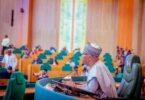
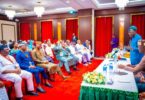
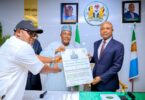
On Monday, Bauchi State Governor Bala Mohammed distributed hundreds of official vehicles to traditional rulers across the state in a lavish ceremony held at Government House, even as official data shows that more than 70 per cent of the state’s population lives in multidimensional poverty.
The governor described the gesture as part of his administration’s deliberate effort to “strengthen grassroots governance and deepen community engagement.”
“I remain committed to extending this support across both long-established and newly created emirates, chiefdoms, and districts, ensuring that governance in Bauchi State remains inclusive and aligned with our broader development agenda,” Mr Mohammed said.
At the event, the Commissioner for Local Government and Chieftaincy Affairs, Isa Tilde, echoed the governor’s sentiments, reaffirming the ministry’s commitment to working in close partnership with traditional institutions and recognising their vital role in maintaining peace and mobilising communities.
The display of governmental largesse, however, stands in stark contrast to the grinding poverty afflicting millions of Bauchi residents.
Data from the National Bureau of Statistics (NBS) paints a grim picture of a state where deprivation is not an exception but the norm.
According to the NBS, approximately 74 per cent of Bauchi’s population or 5.71 million people, are multidimensionally poor, many of them residing in homes constructed with natural or rudimentary materials.
The scale of deprivation in Bauchi State is documented across nearly every social indicator.
NBS data shows that 69.2 per cent of residents lack access to clean cooking fuel, forcing millions of households to rely on dung, wood, or charcoal for daily cooking.
More than half (52 per cent) of households are without access to clean drinking water, while 86 per cent are deprived of roofing materials, the highest such rate recorded anywhere in Nigeria.
The state’s unemployment rate stands at 34.2 per cent, meaning more than one in three working-age residents in the state cannot find work. This deepened the economic hardship facing households already struggling to meet basic needs.
Taken together, the figures place Bauchi among the most deprived states in the country, a reality that critics say makes the governor’s vehicle distribution all the more difficult to justify.
Children in Bauchi State bear a disproportionate share of the state’s deprivation.
NBS data shows that about 74 per cent of children under the age of ten are deprived of education in the state.
Bauchi also records the highest rate of poor and vulnerable children deprived of school attendance among school-age children in the entire country, at 54 per cent.
A further 53.3 per cent of children are completely out of school.
The situation extends beyond the classroom. Approximately 77.6 per cent of children in the state are deprived of child engagement activities such as reading books, storytelling, singing songs, outdoor play, and other educational activities, indicating a near-total collapse in early childhood development support.
The state’s health indicators are equally alarming.
A Maternal and Perinatal Death Surveillance Review conducted by the Bauchi State Primary Healthcare Development Board found that between July and December 2022 alone, at least 872 maternal and perinatal deaths were recorded across 123 health facilities, comprising 56 maternal deaths and 816 neonatal fatalities.
Seven out of every ten births in the state occurred at home without skilled supervision, significantly increasing the risk of complications and preventable deaths. The state’s maternal mortality ratio stands at 512 per 100,000 live births, according to the 2023 Nigeria Demographic and Health Indicators Survey (NDHIS), the most current state-level estimate available.
Health experts say the situation constitutes a public health emergency. Bauchi continues to rank among Nigeria’s highest-burden states for maternal mortality.
The NBS data further notes that poverty levels and their composition vary significantly across different zones within the state, underlining the need for targeted interventions tailored to the specific needs of individual communities rather than blanket policy responses.
Spending money on frivolities amidst widespread poverty is not peculiar to Bauchi. PREMIUM TIMES has reported similar instances in many other states, such as Akwa Ibom, Katsina and Jigawa.
Mr Mohammed has not been able to address the developmental challenges facing Bauchi, but his administration has maintained that investments in traditional institutions form part of a broader governance strategy aimed at reaching grassroots communities.