The absence of international faculty and students in our universities, and their poor showing in global rankings, speaks a lot about their inadequacies in knowledge production.
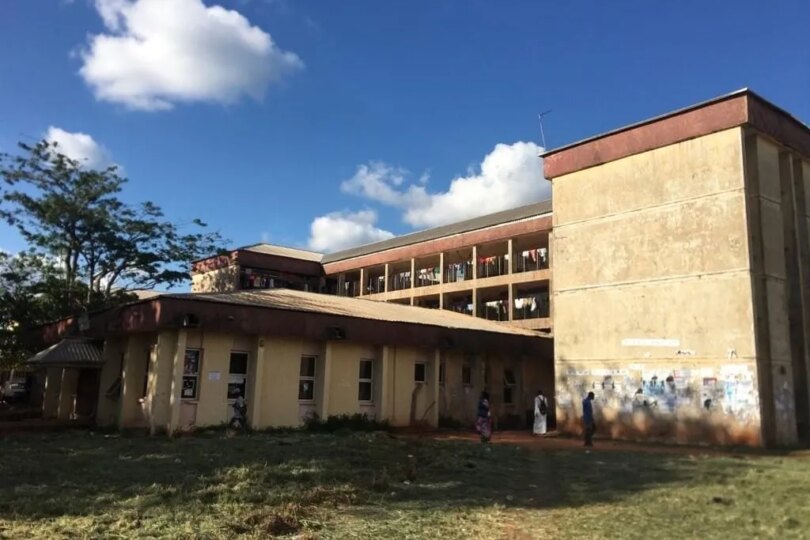
The learning environment in Nigeria’s universities has become an embarrassment, with the extent of the dilapidation of existing infrastructure. One often neglected facet is students’ hostels. Video footage of one of them at the University of Nigeria, Nsukka (UNN), penultimate week, even on national television, bore utterly repulsive sights.
Eni Njoku hostel was the focus. But the rot is evident in others, students testified. In a sense, the immortalisation of this intellectual icon and pioneer, a former Vice Chancellor of the University of Lagos, in this hostel’s naming, is being smeared by the institution’s action.
The putrid environment of this hostel, students reveal, is made worse by the five-month strike embarked on by its cleaners, who had not been paid their salaries. The students wondered what the hostel fees they paid were being used for. Besides the unkempt toilets and bathrooms, the hostels are overcrowded and generally filthy. The health hazards from these unsanitary conditions are frightening.
The Vice Chancellor of UNN, Simon Ortuanya, needs to be conscious of the motto of the institution, “Restore the Dignity of Man,” and therefore protect the dignity of the school and its students by reversing the highly undesirable state of affairs in question without delay.
But this malaise is not peculiar to the UNN. It is an anomaly that is prevalent in virtually all universities across the country. A student in one of the most prominent universities in the South-West said, “Our facilities are broken down; the bathroom is in a mess; the mattresses are bed-bug infested, and no water. Besides, electricity is not constant.” At the University College Ibadan (UCH), 100 days of blackout in 2025 over an unpaid ₦400 million electricity bill disrupted service delivery. And the clinical training of students was in jeopardy throughout the period.
PREMIUM TIMES feels highly concerned that students should never be made to live or learn under these unhealthy conditions. Therefore, it is a necessity for the relevant authorities to quickly fix this mess. If citizens can engage in self-help to provide water for themselves by sinking boreholes, even when less than ideal, it remains unthinkable that universities are not doing their very best to provide water for students. This is a very crucial need that equally has a vital bearing on resolving the filth of their environments and enhancing their overall well-being. Water is basic to life.
Nigeria presently has a total of 310 universities, comprising 74 federal, 68 state, and 168 privately-owned academies. All are plagued by outdated libraries, ill-equipped laboratories, inadequate classrooms and offices, shortages of research grants and the lack of electricity and water.
These inadequacies underpinned the 2009 pact between the Academic Staff Union of Universities (ASUU) and the federal government. It entailed the injection of ₦1.3 trillion into federal universities as revitalisation funds for a period of five years. This was due for renegotiation in 2012.
Unfortunately, the government failed to implement the pact, thus sparking ceaseless disruptions of academic calendars for almost 16 years attendant upon ASUU’s annual strikes. Hopefully, the Yale Ahmed-led committee seems to have resolved the dispute in 2025 with a raft of packages.
These include a 40 per cent increase in the salaries of academic staff; the retirement of professors at the age of 70 with their salaries as pension; special professorial allowances; an increase in unearned allowances; in addition to allowances for research, the procurement of books, payment of professional membership dues, and access to the internet, among others. To take care of infrastructure, ₦30 billion is to be injected into 74 federal universities. These took effect from January this year.
Some gains might have been made, but long-standing issues remain. It is difficult for ₦30 billion to take care of the infrastructural deficits in 74 universities, even with the ₦2.5 billion each is to receive from TETFund, in its intervention support in 2026.
As is evident, many universities – both public and private – continue to admit more students than they have they capacities to carry, thereby exerting pressure on existing facilities like hostels and classrooms. Some departments have 500 students in a class, most of whom stay outside the halls to receive lectures, while the majority who are inside these halls have no seats. In a situation like this, the thorough assessment of students and individualised instructions becomes impossible.
Regrettably, more institutions have been created under the guise of expanding access to university education. In 2012, when the Needs Assessment of Universities came out with a damning report on the degradation of facilities and shortage of 34,000 PhD holders – the minimum qualification to teach at that level, only 124 universities existed. Federal and state governments had 37 universities each, and
50 owned by individuals.
The Federal Executive Council (FEC), in its consideration of the report, observed that “Students cannot get accommodation; where they get, they are packed like sardines in tiny rooms. No light and water in hostels, classrooms and laboratories.” These conditions remain the same, 14 years later. In fact, they have doubled with the increase in the number of universities.
The country needs to be guided by the Registrar of JAMB, Ishaq Oloyede’s disclosure in 2018, that having more universities is needless. For instance, data showed that of the 1.6 million who sat the 2018 UTME, only 700,000 met the minimum requirement of five O-level credits, including English and Mathematics. Not all the candidates passed.
Mr Oloyede’s position is reinforced by the fact that 34 universities had ZERO student applications in the 2024/25 UTME, and 199 other universities received fewer than 100 applicants. The funds used to set these institutions up, in the case of public universities, would have been channelled to the sustenance of existing ones.
A federal government that inserted a questionable ₦135 billion in the 2026 budget for election litigation, when candidates actually bear this cost, should do more in funding our universities. Admissions outside of JAMB’s Central Admission Processing Systems (CAPS) should be viewed as system derailment and undue pressure on university infrastructure, with negative effects on the quality of our degrees. Over 4,000 of these cases are recorded annually. And, the only way to enforce compliance, discipline and standards is by sacking errant Vice Chancellors. They have made nonsense out of the CAPS since its creation in 2017.
The absence of international faculty and students in our universities, and their poor showing in global rankings, speaks a lot about their inadequacies in knowledge production. These deserve priority attention, and ASUU should not buckle under its continuous charge for excellence!