As a reality check, Nigeria is going through one of the worst cost-of-living crises ever, during which many are close to, or already mired in, destitution.
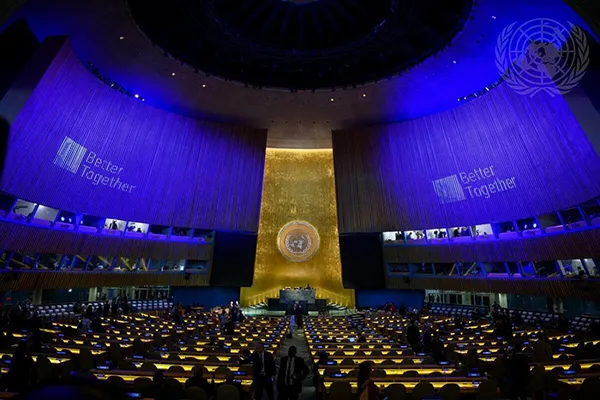
World leaders will converge on New York, United States, for the 81st Session of the United Nations General Assembly (UNGA) on 8 September. Debates will last for five days, beginning on 22 September, on shared global concerns or goals. This would be the last for the UN Secretary-General, António Guterres, whose two-term tenure expires in December.
Nigeria will be among the 150 member-nations attending, with its own agenda.
Vice President Kashim Shettima represented President Bola Tinubu at the 2025 UNGA, when Nigeria canvassed UN reforms in sync with the new world order, especially Africa’s inclusion in the Security Council’s permanent membership. The country’s programme of action on global climate change, projection as an investment hub in rare earth minerals, and its $200 billion energy transition plan were espoused.
Previous such international engagements had been jamborees of sorts for government officials, for which they incurred the ire of the public. Nigeria, for instance, had one of the largest contingents to the COP28 climate conference in Dubai in 2023, with 1,411 delegates. Spouses and children of senior government officials, including President Tinubu’s son, attended. Also, government agencies that had no business being there were present. In a pushback, the Minister of Information, Mohammed Idris, disclosed that only 422 out of the 1,411 delegates were sponsored by the government. Even that figure was unreasonably high.
Therefore, this year’s UNGA should not be another wasteful moment of wanderlust for the Nigerian political elite to converge on New York for vanity’s sake on taxpayers’ money. New York hoteliers are the biggest beneficiaries, with their $1000+ a night rooms, among other costs such as flight tickets, feeding, internal transportation, for which estacodes and sundry allowances, which the country can hardly afford, are awarded.
As a reality check, Nigeria is going through one of the worst cost-of-living crises ever, during which many are close to, or already mired in, destitution. It is in this context that we welcome the timely presidential directive that only those who have business at UNGA2026 should travel for the event. The Chief of Staff (COS) to the President, Femi Gbajabiamila, conveyed this to officials of ministries, departments and agencies (MDAs) of government at a recent retreat in the State House, Abuja.
Mr Gbajabiamila noted that, “During recent protests, there were talks about reduction in the cost of governance. Everyone is waiting to see if Nigeria, as in the past, will send the largest delegation to the UNGA. From experience, we know that some individuals use the opportunity of such international meetings to go about their personal businesses.”
Clearly, the public flak that arose from the government’s excesses during COP28 was a reason for pruning the number of those accompanying the president on international and local trips thereafter. The directive also affected the First Lady, the Vice President, his wife, and ministers. For Mr Tinubu, 20 officials are to follow him on foreign travels, and 25 persons when it is local. The First Lady is allowed five aides for foreign travels and 20 within Nigeria. The VP, Mr Shettima, the ministers and heads of agencies were granted four and two persons each on foreign trips.
Unfortunately, the president was the first to violate this directive when he visited Imo State with 25 officials in 2023. Sadly, fidelity to policy directives is novel to public officials in Nigeria. This may have informed Mr Gbajabiamila’s warning that, “We are going to see a test of this policy during the UNGA in New York.”
As usual, UNGA26 would be shaped by discussions around climate change, the Sustainable Development Goals (SDGs), peace, security and humanitarian issues. A standout task would be the election of the next UN scribe. Whoever emerges, on the assumption of office, will be assailed by seemingly intractable challenges.
Perhaps, the biggest of the leviathans is the perverse doctrine of “might is right” that clearly undermines the UN Charter in its sovereign equality of member states, as orchestrated by Donald Trump, Benjamin Netanyahu and Vladimir Putin – of the US, Israel and Russia, respectively. This evil has made global peace and security a mirage.
The US, Israel and Russia, in violation of Article 4 of the UN, on the non-use of threat or force against the territorial integrity of others, have created geopolitical tensions in the Middle East and Europe, particularly with the US/Israel war with Iran that began in February. It has also dislocated the global economy, especially the energy sector, as the closure of the Strait of Hormuz remains at the centre of it all. The earlier Israeli conflict with Hamas has obliterated Gaza. In Eastern Europe, Mr Putin’s Russia has remained unyielding to calls to end its egregious full-scale war with Ukraine since 2022.
The death tolls from these wars have reached stratospheric proportions, and their attendant humanitarian toll has become simply unmanageable for an enfeebled UN, whose funding has been rapidly drying up. In February, Mr Guterres raised the alarm of a “financial imminent collapse” of the UN, stemming from the US’s non-payment of its financial obligations in 2025, and withdrawal from the World Health Organisation (WHO), UNESCO, among others, with the excision of their financial support.
These are profound expressions of Mr Trump’s aversion to multilateralism, and they cripple the UN’s effectiveness in implementing its responsibilities. A US that used to give $10 billion in voluntary donations, totalling $17 billion in its annual financial support to the UN in recent years, now owes it $4 billion.
The United Nations High Commission for Refugees (UNHCR) stated in July that 11 million refugees would soon lose access to food aid, as it had received only a mere 23 per cent of its $10 billion budget for 2026. The UNHCR’s humanitarian support in Southern Sudan, which is ravaged by a civil war, has already taken a hit.
These conundrums, undoubtedly, have thrown the UN into a cul-de-sac. Therefore, only a radical reform will save it. The stranglehold of the US, Russia, and Israel on the UN, and their habit of short shrift treatment of its resolutions, needs to stop. They reflect institutional weakness and a clarion call for reform.
The theme of UNGA2026, entitled “Restoring Trust, Managing Transformation: A United Nations That Delivers for All”, would only be meaningful if its outcome aligns with this declaration. As a result, the confession of Khalilur Ralman, President of UNGA, that the meeting holds at a time when trust in the UN is “being tested on multiple fronts,” should provide a compass for the deliberations to free the global body of the mere performative perception of many.