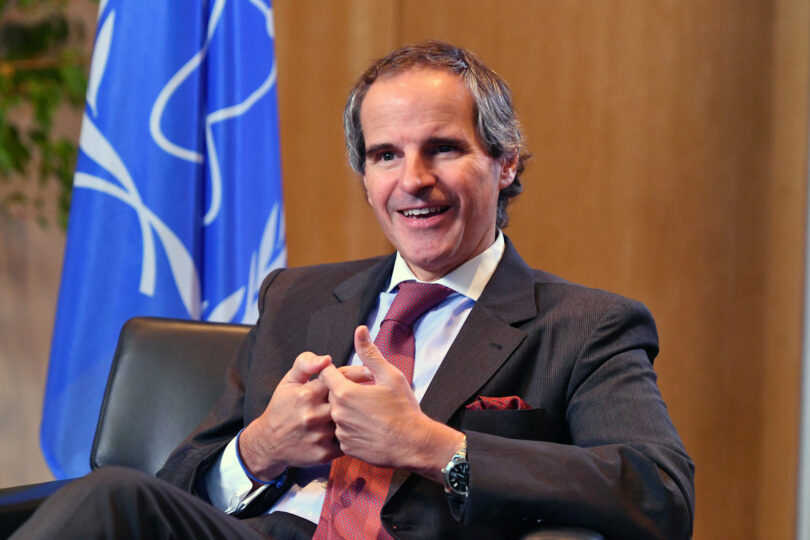
“There hasn’t been a decision yet. There is like a pre-decision to explore the alternative. Of course, your country (Nigeria) is a big oil producer country, an exporter, etc. So the discussion in your country is different than in other countries,” the DG said.
The Director General of the International Atomic Energy Agency (IAEA), Rafael Grossi, said discussions on Nigeria’s nuclear power programme remain alive, amid continuous technical engagements with concerned authorities in the West African country.
The IAEA DG said the agency continues to work with Nigeria on its nuclear power plan and IAEA officials had held visits and technical meetings with relevant stakeholders to actualise the dream.
In May 2024, while on a visit to Nigeria for a seminar on ‘Promoting Cancer Awareness and Advocacy Programmes’, Mr Grossi expressed the agency’s readiness to support Nigeria’s efforts to develop a nuclear power programme during meetings with senior government officials, including the Secretary to the Government of the Federation, George Akume.
Speaking during the visit, he described Nigeria’s pursuit of nuclear energy as “a logical move for a country of your (Nigeria’s) size and importance.”
When this newspaper asked Mr Grossi about the progress of the discussions and technical meetings since the visit two years ago, the IAEA DG reassured that discussions are still ongoing.
“We have continued working with Nigeria, I have to tell you. It’s not that after that visit, things stopped. We have continued at technical levels, some visits, and technical meetings,” the IAEA DG said.
He noted, however, that no final decision has been taken on the programme, adding that Nigeria’s status as a big crude oil-producing nation makes its situation quite different from other economies.
“There hasn’t been a decision yet. There is like a pre-decision to explore the alternative. Of course, your country (Nigeria) is a big oil producer country, an exporter, etc. So the discussion in your country is different from that in other countries,” the DG said.
The IAEA boss insisted that the conversation around the programme is still alive, but Nigeria’s energy options are quite diversified.
“It’s a matter of diversification more than a matter of need, maybe. But the conversation space is pretty much alive, I must say,” Mr Grossi said.
Nigeria’s nuclear energy programme operates under the guidance and safety standards of the International Atomic Energy Agency (IAEA), aiming to add clean, stable nuclear electricity to the national grid. The programme is managed primarily by the Nigeria Atomic Energy Commission (NAEC) and is said to be advancing through the foundational infrastructure phases and planning stages.
Earlier in September 2023, Nigeria signed its Country Programme Framework (CPF) for the period of 2024–2029 on the margins of the General Conference. A CPF is the frame of reference for the medium-term planning of technical cooperation between a Member State and the IAEA and identifies priority areas where the transfer of nuclear technology and technical cooperation resources will be directed to support national development goals.
Nigeria has been an IAEA Member State since 1957 and, according to the agency, its 4th CPF covering the period 2024 – 2029 identifies five priority areas, such as nuclear and radiation safety and security; food and agriculture; health and nutrition; water and environment; as well as energy planning and development.