The proposal would create a dual policing structure, redefine the relationship between federal and state authorities, and introduce new oversight mechanisms.
For more than two decades, the agitation for state police has remained one of the most contentious issues in Nigeria’s political and constitutional discourse.
On Thursday, 11 June, the debate moved a step closer to law.
The House of Representatives overwhelmingly approved a constitutional amendment bill seeking to establish state police across the federation, marking one of the most significant security reform proposals currently before the National Assembly. The Senate also passed the bill on Wednesday.
The bill is part of the ongoing Constitution alteration process aimed at restructuring Nigeria’s security architecture in response to rising insecurity across the country, including terrorism, banditry, kidnapping, armed robbery and other violent crimes.
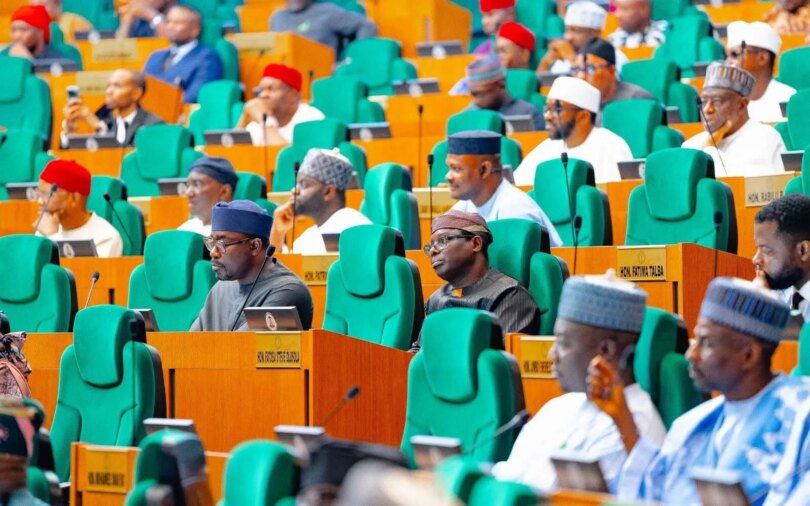
In the House of Representatives, at the end of voting, 289 lawmakers supported the proposal while only one member voted against it, signalling rare bipartisan support for a reform that has historically divided politicians, security experts and civil society groups.
If there are differences between the versions passed by the Senate and the House, a committee would be established to harmonise them before the final bill is transmitted to the states, as required by the Constitution. At least 24 out of the 36 state Houses of Assembly must endorse it, and the president assents to it before it can become part of the Constitution.
The development raises several important questions:
While the proposed amendment contains numerous constitutional changes, several provisions stand out because of their potential impact on how security would be managed across the federation.
Two police systems – Perhaps the most far-reaching provision is the creation of a dual policing structure comprising the Federal Police and State Police.
This would end the current constitutional arrangement under which the Nigeria Police Force is the only recognised police organisation in the country.
However, states would not automatically begin policing activities. Before a state police service can commence operations, it must pass a law establishing the force and satisfy national standards prescribed by federal legislation.
Governors would appoint state police commissioners – Under the bill, each state police service would be headed by a commissioner of police appointed by the governor.
However, the appointment would not be entirely at the governor’s discretion. It would involve the National Police Council and require confirmation by the State House of Assembly.
This provision seeks to ensure that the appointment process contains checks and balances.
Police commissioners can challenge governors’ directives – One of the provisions is designed to address fears that governors may use state police for political purposes.
The bill allows a state commissioner of police to challenge directives considered unlawful or inconsistent with established policing standards.
Where such disputes arise, the matter would be referred to the National Police Council, whose decision would be final.
Abuja can still intervene in states – Contrary to suggestions that state police would operate entirely independently, the bill preserves a role for the federal police.
Federal intervention would be permitted where there is a complete breakdown of law and order, where a governor requests assistance, or where a state police service becomes incapable of functioning due to administrative, operational, or financial difficulties.
Even then, approval from the National Police Council would be required.
The federal government can fund state police – Funding remains one of the biggest concerns surrounding the proposal.
To address this, the bill empowers the federal government to provide grants and financial assistance to state police services, subject to recommendations by the National Police Council and approval by the National Assembly.
A powerful National Police Council would emerge – The bill proposes a significantly expanded National Police Council comprising representatives of federal and state governments, retired police officers, human rights institutions, labour unions, traditional rulers, lawyers and journalists.
The council would become the central coordinating body for policing nationwide.
Its powers would include appointments, discipline, standard-setting, oversight and coordination between federal and state police organisations.
Every state would establish a Police Service Commission – The proposal also requires every state to establish a State Police Service Commission.
The commission would be responsible for recruitment, discipline and personnel management within the state police service.
It would recommend senior officers for appointment while exercising direct authority over officers below the rank of assistant commissioner of police.
Nigeria currently operates a highly centralised policing structure.