“I want to state that we did not send any correspondence or any request to the Office of the Accountant-General in respect of this council. We don’t even know anything about this council. We never heard about this council until we started seeing it in the media.”
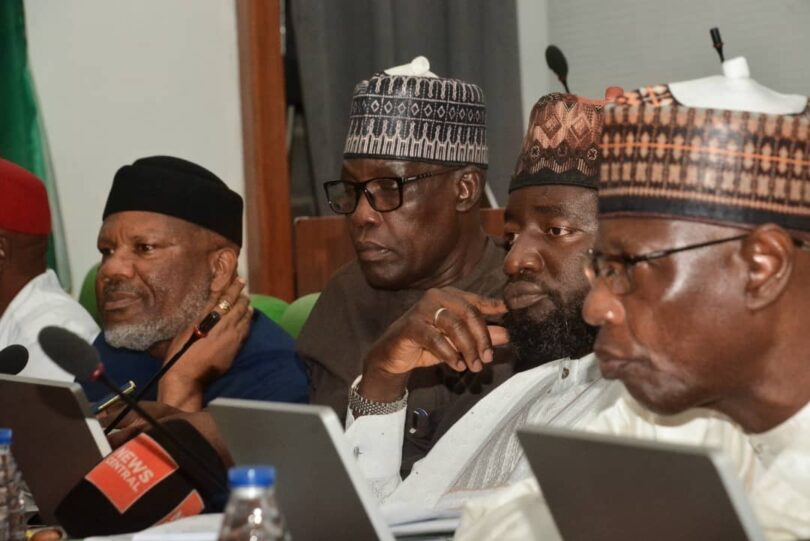
The House of Representatives Ad-hoc Committee probing the controversial Presidential Foreign Investment Promotion Council (PFIPC) has uncovered fresh discrepancies in documents linked to the council’s establishment, as the State House distanced itself from its creation and denied requesting any budget code for the body.
The investigation is examining how the PFIPC allegedly secured official recognition, obtained government approvals and appeared in aspects of the federal government’s administrative and budget processes, including the 2026 Appropriation Act, despite concerns over its legal status.
Representing the Permanent Secretary of the State House, the Director of Administration, Abdulkadri Idris, told the lawmakers that the Presidency neither established nor approved the council and had no knowledge of any correspondence requesting the Office of the Accountant-General of the Federation to generate a budget code for it.
“I want to state that we did not send any correspondence or any request to the Office of the Accountant-General in respect of this council. We don’t even know anything about this council. We never heard about this council until we started seeing it in the media,” Mr Idris said.
He explained that the State House has no constitutional or statutory responsibility for creating government agencies, adding that documents presented to the committee and purportedly issued by the Presidency were fabricated.
Mr Idris specifically rejected a document allegedly signed by one “Akande Adewale” as director of Administration and Support Services, saying no such official or department had ever existed in the State House.
“I presented the list of Directors of Administration in the State House from 2003 to date, and there was no name resembling Akande Adewale.
“In addition, there is no department known as the Directorate of Administration and Support Services in the State House. We have only the Department of Administration. Akande Adewale has never, ever been Director of Administration in the State House,” he said.
To support its position, the State House submitted official records, including authentic letterheads and a historical list of its Directors of Administration, which had earlier been forwarded to the Nigeria Police National Cybercrime Centre.
Reacting to the testimony, committee chairman Yusuf Gagdi said the evidence exposed glaring inconsistencies between records obtained from the Office of the Accountant-General and documents presented by the State House.
“The State House has denied that it ever wrote any letter to the Accountant-General requesting budget codes. Secondly, there is no Directorate of Administration and Support Services as contained in those documents.
“The Accountant-General responded to an office that the State House says does not exist, while the name of the signatory, Akande Adewale, is absent from all official records submitted to this committee,” Mr Gagdi said.
He described the inconsistencies as a significant breakthrough in the investigation into how official government procedures were allegedly manipulated to legitimise the council.
The State House also denied appointing the purported Director-General of the PFIPC, Adeniyi Adeyemi, stressing that appointments of heads of federal agencies are political appointments communicated through the Office of the Secretary to the Government of the Federation.
“If the president approves any appointment, the conveyance is done by the Office of the Secretary to the Government of the Federation,” Mr Idris added.
Meanwhile, the FRSC defended its decision to issue seven official federal government number plates to the PFIPC, saying it acted based on documents and representations submitted by the applicants.
Corps Marshal Shehu Mohammed told the lawmakers that the application was received via a letter dated 4 April 2025 and signed by Adeniyi Adeyemi on behalf of the Office of the Director-General of the Presidential Economic Advisory Council/Presidential Foreign Investment Promotion Council.
According to him, the request was followed by another letter dated 11 April 2025, accompanied by documents outlining the council’s purported mandate and the vehicles to be registered.
Mr Mohammed said Mr Adeyemi personally submitted the application at the FRSC headquarters.
He explained that because the PFIPC claimed to be a newly established federal agency, the Corps carried out additional checks, including reviewing the supporting documents, visiting the government website provided by the applicant, which carried a federal government domain, and physically inspecting the council’s office at the Federal Secretariat Complex, Phase III, Abuja.
“Having completed the foregoing verification processes and being satisfied with the information presented, the Corps approved and allocated seven official federal government Vehicle number plates to the Agency,” he said.
The registered vehicles included a 2024 bulletproof Lexus LX, two Toyota Land Cruiser sport utility vehicles and four Toyota Hilux vehicles, which received registration numbers PFIPC 01 to PFIPC 07 after verification of their chassis numbers.
Mr Mohammed, however, admitted that the Corps later discovered the council was not a recognised federal government agency.
“It therefore came as a profound shock to the Corps when it subsequently emerged that the Presidential Foreign Investment Promotion Council was not an approved federal government agency and that the representations made by Prince Adeniyi Adeyemi were false,” he said.
He disclosed that the FRSC had begun steps to recover the seven official number plates and had strengthened its verification procedures to prevent similar incidents.
During the hearing, Mr Gagdi questioned the credibility of the documents relied upon by the FRSC, noting that they lacked standard government security features and unusually listed President Bola Tinubu, the Secretary to the Government of the Federation, the Head of the Civil Service of the Federation and several ministers as members of the council.
“Does this look normal to you?” the lawmaker asked.
“No, not at all,” the Corps Marshal replied, while maintaining that the Corps relied on the information available at the time, including the operational office, government-domain website and vehicle verification records.
The committee subsequently directed the FRSC to provide details on the current location and status of all vehicles registered under the PFIPC.