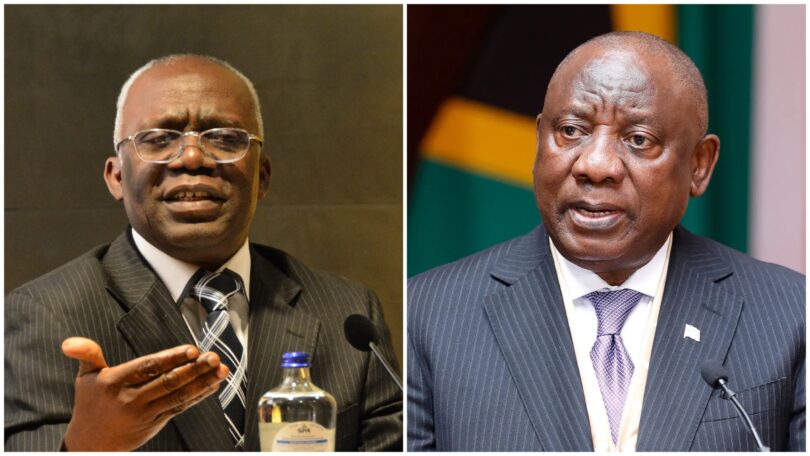
Mr Falana urged both the African Commission and the South African government to hold perpetrators of xenophobic attacks accountable.
Human rights lawyer Femi Falana has petitioned the African Commission on Human and Peoples’ Rights (ACHPR), demanding that the xenophobic violence in South Africa be officially declared a grievous violation of human rights.
“Find that the Republic of South Africa is in violation of its obligations under the African Charter, including Articles 1, 2, 3, 4, 5, 6, 12, 14, and 18,” Mr Falana, a Senior Advocate of Nigeria (SAN), said in his petition dated 15 May, shared with PREMIUM TiMES on Wednesday.
He also demanded that the South African government prosecute “perpetrators, strengthen protection mechanisms for foreign nationals, End incitement to xenophobic violence, and address structural causes of discrimination and insecurity.”
The human rights lawyer said recent resurgence of xenophobic attacks in the country have resulted in the deaths of two Nigerians and the harassment of African migrants in South Africa.
In April, the Nigerian Consulate in Johannesburg announced the deaths of two Nigerians in South Africa. The victims were Amaramiro Emmanuel and Ekpenyong Andrew.
Since then, reports of xenophobic attacks have been on the rise in parts of South Africa, and videos of violence against African migrants have circulated online.
The two victims were attacked and beaten by South African National Defence Force (SANDF) operatives. Mr Andrew’s corpse was found on 19 April, days after his arrest in the Booysens area of Pretoria.
He was arrested due to an alleged altercation with members of the Tshwane Metro Police, and his body was discovered at the Pretoria Central Mortuary afterwards.
The second victim died on 20 April due to injuries he sustained from an attack by the security personnel.
In the petition, Mr Falana lamented the persistent xenophobic attacks against Nigeria and other African nationals in South Africa.
He said, “These violations are neither isolated nor sporadic; rather, they reflect a recurring cycle of attacks marked by killings, physical assaults, arbitrary arrests, torture, looting, destruction of businesses, forced displacement, and sustained threats to life and personal security.”
He condemned the killings and resurgence of violent mob attacks against African migrants, “These incidents have caused widespread shock within the Nigerian community and raise serious concerns about the conduct and accountability of state actors.”
showing groups of South Africans assaulting Black foreign nationals, issuing threats, and demanding that they leave the country.
These attacks include harassment, beatings and inflammatory rhetoric across Gauteng Province, Durban, Cape Town, East London, and parts of KwaZulu-Natal and the Eastern Cape in South Africa.
Despite the caution of diplomatic missions and calls for intervention from African governments, the xenophobic attacks persisted, he said.
“Migrants are frequently subjected to profiling, harassment, and exclusion, with limited access to effective remedies. Women and children are disproportionately affected, experiencing heightened vulnerability to violence, exploitation, and displacement.”
Mr Falana recalled that by 2019, 127 Nigerians had been killed in South Africa.
While the South-African Government acknowledged the attacks and apologised for previous attacks, President Cyril Ramaphosa, in recent attacks, has “asked African migrants to respect the laws, tradition and customs of South Africa.”
Mr Falana accused South African President Cyril Ramaphosa of reneging on his previous acknowledgement of the attack on African migrants.
This indicates “a consistent failure on the part of the Government of South Africa to exercise due diligence in preventing these attacks, protecting affected individuals, conducting prompt and impartial investigations, prosecuting perpetrators, and providing effective remedies to victims. This failure has fostered a climate of impunity, emboldening perpetrators and perpetuating cycles of violence,” Mr Falana argued.
Mr Falana noted that the xenophobic attacks contravene several core tenets of the African Charter.
Specifically, he cited violations of Article 2 on nationality-based discrimination, Article 3 regarding the denial of equal legal protection, and Articles 4 and 5, which protect the right to life and prohibit inhuman treatment. He further argued thatthe violence breaches charter protections for personal liberty, freedom of movement, property rights, and family stability.
Mr Falana urged both the commission and the South African government to hold perpetrators accountable.
He asked the commission to investigate the attacks and refer it to the African Court on Human and Peoples’ Rights.
Following investigations, Mr Falana there should adequate compensation and reparations for victims, guarantees of non-repetition, and the enforcement of structural and institutional reforms.
He requested that the matter be treated with utmost urgency to the point of presenting it before the Assembly of Heads of State and Government of the African Union.
“I trust that the Commission will act with urgency and resolve, having regard to the facts and circumstances of this petition,” Mr Falana said.
While Mr Falana petitioned the ACHPR, some governments, such as the Ghanaian government, are turning to alternative measures to protect their citizens in South Africa.
On Monday, Ghana announced that it will repatriate 300 nationals out of South Africa as part of the effort to protect its citizens from the xenophobic tension and violence in South Africa.