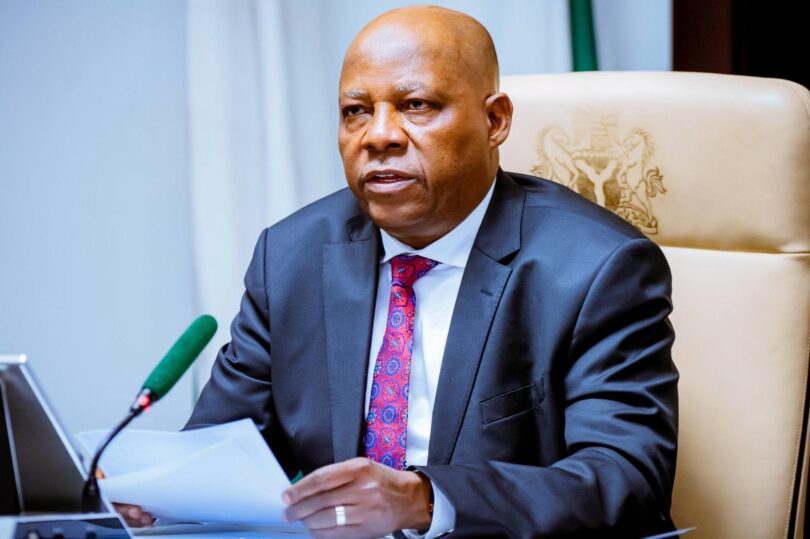
The decision was reached on Wednesday at the second high-level meeting of the Nutrition 774 (N-774) Initiative Strategic Board, chaired by Vice President Kashim Shettima at the Presidential Villa, Abuja
The federal government has adopted a domestic financing model for nutrition programmes, signalling a major policy shift as Nigeria seeks to reduce dependence on donor funding amid growing concerns over a global decline in development assistance.
As part of the move, the board directed the Federal Ministry of Finance and other stakeholders to activate existing financing mechanisms, including the Presidential Nutrition Intervention Fund (PNIF) and revenues from the Sugar-Sweetened Beverage (SSB) levy, to support nutrition interventions across the country.
Speaking at the meeting, Mr Shettima said Nigeria could no longer assume that external support would remain available indefinitely.
“The domestic financing architecture must be activated now,” he said, warning that nutrition programmes should not be left vulnerable to changing donor priorities.
The funding decision comes as Nigeria continues to grapple with one of the world’s highest burdens of malnutrition.
According to data from the Federal Ministry of Health and development partners, Nigeria accounts for one of the highest numbers of malnourished children globally.
An estimated two million children suffer from severe acute malnutrition annually, while millions more experience stunting and other forms of undernutrition.
Poor nutrition remains a major contributor to child mortality and can have lifelong consequences, including impaired physical growth, reduced learning capacity and lower productivity in adulthood.
Recognising these challenges, the National Economic Council (NEC) launched the Nutrition 774 Initiative to strengthen coordination and accountability for nutrition interventions across all 774 local government areas.
Mr Shettima said Nigeria must take urgent steps to close the estimated N500 billion financing gap in the nutrition sector, stressing that commitments to improving nutrition outcomes must be backed by adequate funding.
He said that nutrition remains a key component of President Bola Tinubu’s human capital development agenda, noting that investments in child nutrition are essential to building a healthier and more productive population capable of driving the country’s future growth and development.
Beyond funding, the vice president expressed concern about delays in setting up nutrition governance structures at the subnational level.
He urged the remaining 26 states yet to inaugurate their State Councils on Nutrition to do so and called for the establishment of Local Government Committees on Food and Nutrition in the remaining 304 LGAs where they are absent.
According to him, stronger state and local government participation will be critical to achieving the goals of the Nutrition 774 Initiative.
The board also discussed plans for a National Nutrition Bill intended to provide legal backing for nutrition interventions and strengthen accountability mechanisms.
Mr Shettima directed the initiative’s secretariat to engage lawmakers, state governments and development partners before transmitting the proposed legislation to the National Assembly.
The proposed law is expected to complement ongoing efforts to institutionalise nutrition programmes and ensure more predictable financing for interventions targeting mothers and children.