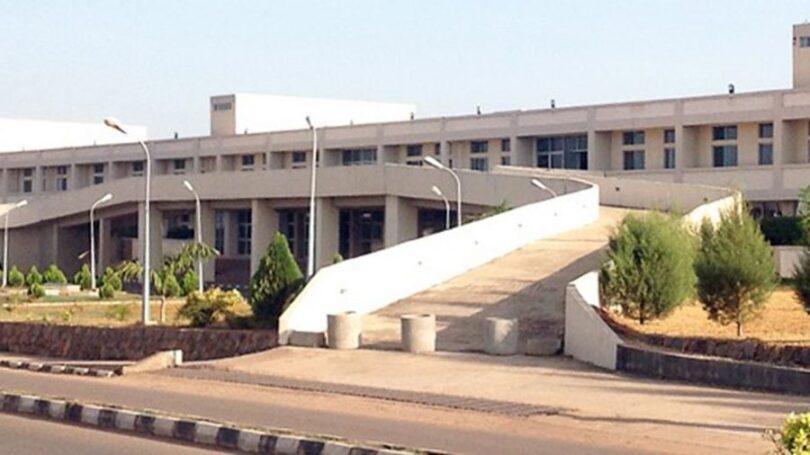
The hospital will operate as an outpost of the Jos University Teaching Hospital (JUTH), the government announced on Monday during the launch of the National Emergency Medical Services and Ambulance System (NEMSAS) in Riyom.
The federal government has upgraded the Riyom General Hospital in Plateau State to a National Trauma Centre and deployed 15 ambulances to the state to strengthen emergency medical services.
The intervention comprises five conventional emergency ambulance buses and 10 tricycle ambulances for rural and hard-to-reach communities.
Governor Caleb Mutfwang, represented at the event by his deputy, Josephine Piyo, described the development as a major investment in emergency healthcare and saving lives.
Mr Mutfwang said the intervention was consistent with his administration’s healthcare policy of ensuring that residents were not denied medical care because of distance, cost or lack of transportation.
He said the Plateau government had earlier procured five ambulance buses under the Plateau State Emergency Medical Services and Ambulance System (PLASEMSAS), while tricycle ambulances were provided for Jos East and Riyom Local Government Areas under the Maternal and Newborn Mortality Innovative Initiative.
The governor assured the federal government that the newly deployed ambulances would be properly deployed, professionally managed and maintained.
He also thanked President Bola Tinubu and the Federal Ministry of Health and Social Welfare for approving the trauma centre and supporting emergency medical services in the state.
The Permanent Secretary of the Federal Ministry of Health and Social Welfare, Kachollom Daju, who represented the Coordinating Minister of Health, Muhammad Pate, announced the federal government’s approval of the facility as the National Trauma Centre, Riyom.
Ms Daju commended the Plateau government for ceding the facility to the federal government, saying the development would not have been possible without the governor’s consent.
She said the ambulances would be used strictly for emergency medical services and operated through different components of NEMSAS.
According to her, PLASEMSAS will provide free emergency transportation within the state, while the Federal Tertiary Facility Pathway will provide vulnerable patients with free emergency treatment for up to 48 hours.
She said another component, REST-M, would provide emergency transportation for pregnant women and newborns in rural communities.
The Chief Medical Director of JUTH, Pokop Bupwatda, said the intervention would enable healthcare providers to reach emergency patients more quickly and transport them to facilities where they could receive definitive treatment.
Mr Bupwatda pledged 24-hour emergency operations at the hospital in line with the Federal Government’s 48-hour free emergency treatment initiative.
The Plateau State Commissioner for Health, Nicholas Baamlong, said the state began its emergency ambulance system in August 2025 after procuring ambulances for strategic health facilities.
Mr Baamlong said the state’s rural emergency transportation initiative recorded more than 2,000 emergency patient transfers within six months, including 1,115 patients in Jos East and more than 900 in Riyom.
He said the initiative recorded one maternal death in Jos East and none in Riyom during the period.
The commissioner also said Plateau’s maternal mortality ratio had declined from 905 to approximately 500 deaths per 100,000 live births.
Under the NEMSAS arrangement, the five conventional ambulances will be deployed to JUTH, the National Orthopaedic Hospital, Jos, the Federal Medical Centre, Wase, the Plateau State Specialist Hospital, and the National Trauma Centre, Riyom.
The 10 tricycle ambulances will serve as last-mile emergency transport vehicles in rural and hard-to-reach communities across the state.