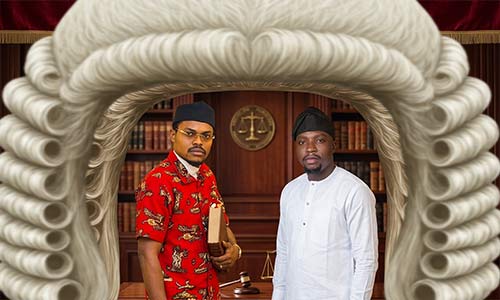
Popular Nigerian cryptocurrency entrepreneur Linus Williams Ifejirika, known as Blord, has been released from the Kuje Correctional Facility after completing his bail conditions on Monday evening three days after the Federal High Court granted him bail on Friday, with the delay caused by his international passport being unable to arrive in Abuja from Anambra State in time for the weekend.
The release came as social media commentator Martins Vincent Otse, popularly known as VeryDarkMan the complainant in the impersonation case against Blord announced a separate but dramatic decision to withdraw completely from all social media platforms, citing accusations that his posts were distracting Nigerian youths from holding the government accountable.
Blord was released from the Kuje Correctional Facility on Monday evening after satisfying the bail conditions set by Justice Rita Ofili-Ajumogobia of the Federal High Court on Friday.
The court had granted bail on self-recognisance with three conditions: deposit of his international passport with the court, production of two sureties of good public standing, and a directive not to make public comments about the case.
However, despite the bail being granted on Friday, Blord could not be released immediately because his international passport a key bail condition was in Anambra State and could not be transported to Abuja before the weekend. The logistical delay meant the entrepreneur spent an additional three days in Kuje prison on top of the 16 days he had already been detained since his remand on April 1.
By Monday evening, the passport had arrived, the bail conditions were perfected, and Blord walked out of the Kuje facility.
Human rights activist and former presidential candidate Omoyele Sowore, who had been present in court during the bail hearing and had followed the case closely, announced Blord’s release on his Instagram page, sharing a video of the entrepreneur’s exit from the correctional facility.
“Linus Williams, also known as Blord, is finally out of Kuje Prison, and that outcome is a reminder that collective action can yield results,” Sowore wrote.
“No one should be abandoned to unjust detention. No one shall be left behind. Thank you, everyone,” Sowore added, crediting public support and collective advocacy for contributing to the outcome.
Sowore’s characterisation of Blord’s detention as “unjust” reflects the concern expressed by many legal commentators that remanding a first-time defendant on impersonation charges rather than granting bail at arraignment was disproportionate to the nature of the alleged offence.
Blord was remanded at the Kuje Correctional Centre on April 1, 2026, after being arraigned before Justice Ofili-Ajumogobia on charges of criminal impersonation and related offences.
The case stems from VeryDarkMan’s complaint that Blord used his identity, image, and trademark “Ratel” for commercial purposes without authorisation. Specific allegations include displaying VDM’s image on billboards and social media platforms as a brand ambassador for the “Billpoint” platform, creating a fraudulent application in VDM’s name, forging documents to suggest an endorsement arrangement, and fabricating a flight ticket to falsely imply VDM endorsed the platform.
VDM has denied any endorsement agreement or authorisation. Blord’s legal team has suggested that an agreement existed and payment was made a claim VDM has categorically rejected.
At the bail hearing on Friday, VDM’s lawyer withdrew the counter-affidavit opposing bail and told the court he no longer objected to the application a dramatic shift that signalled behind-the-scenes settlement discussions. Blord’s lawyer, Abubakar Marshal, confirmed after the hearing that “my client offended VDM but the two parties are looking at how to settle the matter amicably.”
The case is adjourned to April 27 for continuation.
In a development that has generated its own wave of public reaction, VeryDarkMan announced on Monday that he is withdrawing completely from all social media platforms — Facebook, Instagram, YouTube, and all others effective immediately.
In a video posted on his Instagram handle before going silent, VDM explained that the decision was in response to persistent accusations that his prolific social media activity was distracting Nigerian youths from holding the government accountable.
“Because of the allegations and accusations that it is my posts that have been distracting the Nigerian youths from holding the government accountable, I have decided to not post again on social media during this period,” VDM stated.
He challenged influencers, celebrities, and activists to step into the space during his absence: “I would expect all influencers and celebrities and activists to use this opportunity to take over. Let’s watch and see.”
Speaking further in Pidgin, VDM emphasised the totality of his withdrawal: “I’ve made my decision that from today I am not going to be making any post on Facebook, Instagram, YouTube, everywhere. I am going to leave you people. I am going to give you people time. That’s why I am not going to be posting.”
He added: “All the protest you want to do, everything that you want to do to hold the government accountable, VeryDarkMan is going to be taking a back stage.”
The timing of VDM’s withdrawal coming on the same day Blord was released from prison and just days before the impersonation case returns to court on April 27 — has fuelled speculation about whether the social media exit is connected to the ongoing settlement discussions in the case.
If VDM and Blord are negotiating an out-of-court settlement, a temporary withdrawal from social media by the complainant could serve multiple purposes: removing the public pressure and commentary that could complicate negotiations, demonstrating good faith by not using his platform to discuss the case, and reducing the risk of making statements that could affect the legal proceedings.
However, VDM framed his departure entirely around the accusation that his posts distract from civic engagement making no reference to the Blord case or any legal considerations.
Whether the withdrawal is genuinely motivated by the stated reason, is connected to the settlement talks, or represents a strategic pause for personal reasons, only VDM himself knows.
The twin developments generated contrasting public reactions.
Blord’s release was widely welcomed, with many Nigerians expressing relief that the entrepreneur had been freed after what they considered an excessive period of detention for a non-violent offence. Sowore’s framing of the release as a product of “collective action” resonated with those who had publicly called for bail during the 19 days of detention.
VDM’s withdrawal drew a more divided response. Some supporters expressed concern and urged him to reconsider, arguing that his social media activism however controversial has been one of the few consistent voices holding public figures accountable. Others viewed the withdrawal as a strategic move either connected to the legal case or designed to prove a point about the extent to which his audience depends on his content.
His challenge to influencers and activists to “take over” during his absence was interpreted by some as a genuine invitation and by others as a pointed commentary on the tendency of the Nigerian public to rely on individual voices rather than building sustained collective movements.
For Blord, the immediate priority is freedom but the legal case continues. The matter returns to court on April 27, where the trajectory of the case will become clearer. If settlement talks succeed, the prosecution may seek to withdraw the charges. If negotiations fail, the case proceeds to trial.
Blord remains bound by his bail conditions: his passport is deposited with the court, he must produce two sureties, and he is barred from making public comments about the case.
For VDM, the question is how long the social media withdrawal lasts and what happens when or if he returns. His platforms, which have millions of followers across multiple channels, have been among the most influential in Nigerian social media activism. His absence will be felt and his challenge to others to fill the void will test whether the accountability function he has served can be sustained without him.
For both men, April 27 looms as the next significant date the day the court will determine whether a case that began with a dispute over bread billboards and brand ambassadorships moves toward trial or toward the settlement that both sides appear to be pursuing.