The Maigatari Export Processing Zone (EPZ) stands out as one of the most ambitious economic assets in Jigawa State, with the potential to transform the state into a major hub for trade, manufacturing, and export-led growth in Northern Nigeria
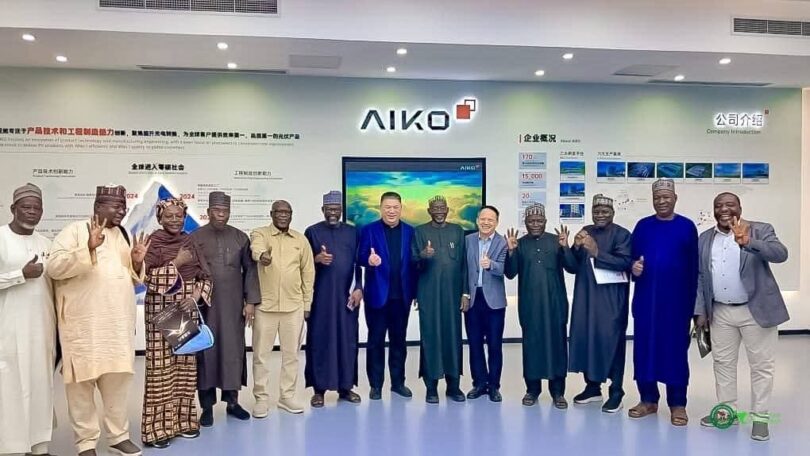
Governor Umar Namadi’s investment tour to China represents a defining moment in the economic trajectory of Jigawa State—one that powerfully consolidates years of strategic planning aimed at revitalising Maigatari Export Processing Zone (EPZ). The visit marks a transition from groundwork to execution, from vision to visible progress.
The importance of the Maigatari EPZ lies primarily in its geography and economic design. Positioned at an international border and home to one of the largest livestock markets in sub-Saharan Africa, the zone naturally serves as a gateway for cross-border commerce.
Beyond location, the EPZ is structured to promote export-oriented industrialization. It has warehouses, factory spaces, banks, and logistics facilities that help businesses process, package, and ship goods quickly and easily. The zone is expected to support light manufacturing, agro-processing, and assembly industries, thereby boosting value addition to locally produced goods.
Crucially, the EPZ represents a major tool for economic diversification. In a state heavily reliant on agriculture, it creates pathways for industrial growth, enhances small and medium enterprise (SME) development, and facilitates access to international markets.
Its socio-economic impact is equally significant. When fully operational, the zone is projected to generate up to 100,000 jobs, stimulate local businesses, and uplift surrounding communities through increased economic activities.
Since assuming office, the governor has consistently identified the zone as a cornerstone of Jigawa State’s economic transformation—an entry point for regional trade, industrial expansion, and global competitiveness. Strategically located, the border town of Maigatari—home to one of West Africa’s largest cattle markets—offers a natural advantage as a commercial gateway linking Nigeria to neighbouring countries.
From the outset of his administration, the MBFZ has occupied a central place within the governor’s 12-point development agenda, particularly under the pillars of industrialization and investment promotion. Well before the China mission, the administration had embarked on a deliberate process of laying the groundwork for the Zone’s revival.
This included strengthening institutional frameworks, refining policy direction, and intensifying engagements with both domestic and international stakeholders to unlock its long-dormant potential. The vision has remained clear and consistent: to transform Maigatari into a thriving economic corridor that integrates Jigawa into regional and global value chains.
One of the governor’s earliest and most decisive actions upon assuming office was to initiate the comprehensive rehabilitation and upgrading of the zone’s long-neglected infrastructure. Years of abandonment had left critical facilities in disrepair, necessitating urgent intervention.
The administration responded with a broad infrastructure renewal plan, covering the expansion of the airstrip, construction of modern warehouses and residential accommodations, and the rehabilitation of internal road networks to support industrial logistics.
Perhaps most crucially, the administration moved to secure a functional operational license for the zone from the relevant federal regulatory authority—resolving a longstanding institutional bottleneck that had previously stalled progress. This singular achievement provided the legal and operational foundation required to attract serious investors and reposition the MBFZ for full-scale economic activity.
With the policy and structural framework firmly in place, Governor Namadi then activated a focused investment drive through Invest Jigawa. This agency has played a pivotal role in marketing the Zone, facilitating investor entry, and coordinating partnerships.
Over the past three years, these efforts have begun to yield measurable results, with increasing interest from both local and international investors. Dozens of companies have already expressed interest in the zone, with some establishing operations in areas such as garment production and agro-processing within the EPZ and the adjoining Gagarawa Industrial Cluster.
Against this backdrop, the China investment tour represents a significant leap from preparation to acceleration. A landmark Memorandum of Understanding (MoU) for the revitalization of the MBFZ marks a turning point by transitioning the project from a development concept into an active investment destination. The agreement opens the door to the development of industrial clusters, logistics hubs, and expanded cross-border trade, reinforcing Maigatari’s strategic importance.
Equally significant is the governor’s broader engagement with over 20 Chinese companies across diverse sectors. These engagements were not incidental; they were strategically aligned with the specific needs of the MBFZ and the state’s wider economic ambitions. Key areas of interest include light manufacturing, renewable energy, agro-processing, and infrastructure development—all essential components for building a competitive and sustainable free trade zone.
The planned establishment of assembly and light manufacturing plants within the MBFZ is particularly transformative. It signals a decisive shift toward local production, value addition, and export-oriented growth. Once operational, these facilities are expected to stimulate industrial activity, create jobs, and position Jigawa as an emerging manufacturing hub in Northern Nigeria.
Complementing these efforts is a strong focus on enabling infrastructure. The proposed deployment of solar microgrid systems, for instance, addresses one of the most critical challenges facing industrial zones—reliable power supply. By integrating sustainable energy solutions, the administration is not only enhancing productivity but also aligning with global trends in green development.
Agriculture, which remains the backbone of Jigawa’s economy, is also being strategically linked to the MBFZ initiative. Agreements on the supply of modern agricultural machinery and improved farming systems are expected to boost productivity and strengthen value chains. This creates a natural synergy where agricultural outputs can feed into agro-processing industries within the Zone, reinforcing a cycle of production, processing, and export.
A notable example of this is the development of agro-processing value chains, particularly in hibiscus production—where Jigawa is a leading producer. The establishment of processing facilities linked to the EPZ is designed to boost exports, improve farmers’ incomes, and position the state as a global supplier of processed agricultural commodities.
Another defining feature of the governor’s approach is the emphasis on technology transfer and human capital development. Recognizing that infrastructure alone cannot drive industrialization, the administration is prioritizing skills acquisition and capacity building—particularly for the youth. This ensures that the emerging opportunities within the MBFZ translate into meaningful employment and long-term economic inclusion.
In essence, the China investment tour has not only validated Governor Namadi’s long-standing commitment to the Maigatari Border Free Trade Zone but has also significantly accelerated its realization. It reflects a governance approach anchored on continuity, strategic planning, and results-driven execution.
As implementation gathers pace, the Maigatari EPZ is poised to evolve into one of Nigeria’s most dynamic and competitive free trade zones. More importantly, it is set to stand as a defining legacy of the Namadi administration—a symbol of economic renewal, a catalyst for industrial growth, and a gateway to shared prosperity for the people of Jigawa State.
*Hamisu M Gumel is the Chief Press Secretary to the Governor of Jigawa