Mr Ganduje decried the marginalisation of persons with disabilities in Northern Nigeria, linking it to widespread street begging.
Former Kano State Governor and immediate past National Chairman of the All Progressives Congress (APC), Abdullahi Ganduje, has urged state governments, development partners and philanthropists to prioritise investment in persons with disabilities as part of efforts to tackle street begging in Northern Nigeria.
He lamented what he described as the persistent neglect of persons with disabilities in the region, noting that the situation has contributed to the rising number of beggars on the streets.
According to him, increased access to education and assistive technology could transform the lives of people with special needs, enabling them to become self-reliant and productive members of society.
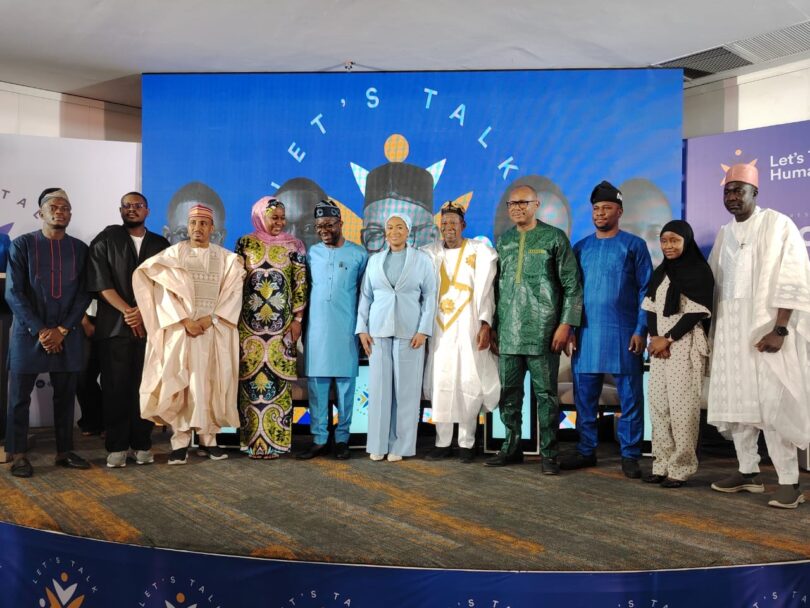
The event attracted stakeholders in disability education, including government officials, development partners, and representatives of Tudun Maliki Special School in Kano. The school’s Vice Principal, Ibrahim Abdukabir, delivered a keynote address highlighting the impact of the LTH initiative.
Mr Ganduje said persons with disabilities in Northern Nigeria are often marginalised, a trend he linked to the visible increase in street begging.
“In the northern part of this country, people with disabilities are so much relegated to the background. That’s why we have an array of beggars across the northern part of this country day and night. Some sleep under bridges, some sleep on the road, this is a sorry story,” he said.
He, however, noted that initiatives like LTH demonstrate that meaningful change is possible if replicated and supported more widely. He described the programme as a revolution” capable of restoring dignity and opportunity to affected individuals.
“They are neglected because they are physically challenged. This has affected their psyche, motivation and they cannot even think they are human beings like other beings but unveiling this kind of programme we are making them to be like any other human being in our society,” he added.
Mr Ganduje further stressed that, with the right support, persons with disabilities could excel in different fields and even create employment opportunities for others, rather than depend on alms.
The former governor also spoke about the founder of the initiative, Fatima Abiola-Ajumobi, who is his daughter, expressing pride in her work and longstanding commitment to supporting vulnerable groups.
He called on government authorities and partners to scale up investments in inclusive education and empowerment programmes.
Also speaking, the Minister of Humanitarian Affairs and Disaster Management, Bernard Doro, commended the initiative and stressed the need for inclusion to be embedded in policy and design processes.
He said programmes, technologies and public infrastructure should be developed with persons with disabilities in mind from the outset, rather than being adjusted later.
“Special needs is not an option but an obligation. When we develop assisted devices or technology in general this has to be done with People Living with disability in mind.
“You don’t wait until you do it before you begin to adapt it for people to use,” he added.
In her remarks, Mrs Abiola-Ajumobi said LTH has supported about 1,000 beneficiaries annually since its inception in 2015, focusing on equipping them with skills and tools for learning and independence.
She recalled the organisation’s early days and expressed appreciation to students, staff and supporters who believed in its mission.
Looking ahead, she said the organisation plans to establish a national resource centre for people with sensory impairments within the next two decades, aimed at leveraging global expertise and resources to improve special needs education in Nigeria.
She also called on partners and advocates to move beyond commitments and take concrete steps towards advancing inclusion and expanding opportunities for persons with disabilities.
She said, “Our projection for the next 10 years is to be able to have a national centre, a National Resource Centre for those with sensory impairment, to be able to tap into the international knowledge and the international resources that are available in the parts of the world that are much more developed than us when it comes to special needs.”