On any given day, more than 300 million women and girls worldwide are menstruating, while an estimated 500 million lack access to menstrual products and adequate facilities for managing menstruation
Despite growing awareness about menstrual health, many girls in Nigeria still lack access to sanitary products, accurate information and safe facilities needed to manage menstruation with dignity.
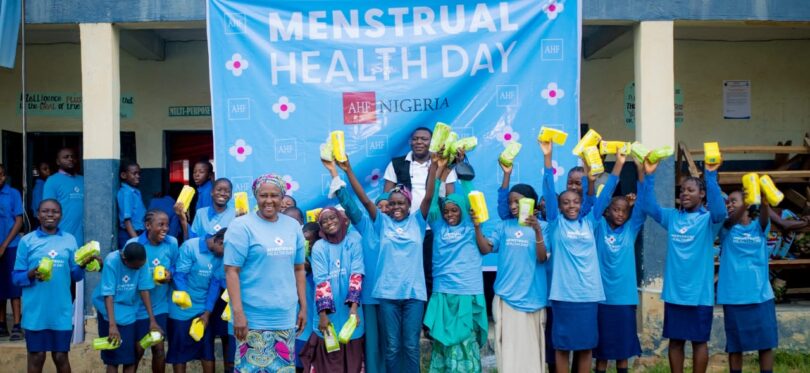
The event, organised by AIDS Healthcare Foundation (AHF) Nigeria, in collaboration with the Nasarawa State Ministry of Women Affairs and Humanitarian Services, brought together government officials, health workers, educators and students.
Participants at the event called for stronger government action, wider awareness campaigns and practical support for girls, including improved access to sanitary products and toilets in schools.
Menstrual hygiene management (MHM) is increasingly recognised by development agencies as a critical factor in girls’ health, education and long-term wellbeing, with evidence showing that poor access to facilities and products can directly affect school attendance and learning outcomes.
According to the World Bank Group and partners, working on water, sanitation and hygiene (WASH), good menstrual hygiene is essential for women, girls and other menstruators to reach their full potential, noting that the consequences of poor menstrual health cut across education, health and economic participation.
According to WASH-focused organisations including WASH United, more than 300 million women and girls worldwide menstruate, while an estimated 500 million lack access to menstrual products and adequate facilities for managing menstruation.
Speaking during the event, Angelina Kigbu of the Keffi Education Area Office said many girls struggle to afford disposable sanitary pads, making reusable alternatives important.
Ms Kigbu disclosed that the office plans to establish a club where girls would be trained to produce reusable sanitary pads.
According to her, the initiative would help students reduce costs while also expanding awareness about menstrual hygiene.
“If they can make it themselves, they can teach others and expand awareness. Most girls are not aware this is possible,” she said.
Also speaking, Halima Omaku, gender focal person at the Nasarawa State Ministry of Women Affairs and Humanitarian Services, said menstruation remains surrounded by stigma and silence in many communities.
Ms Omaku said many girls still grow up without adequate information on menstrual hygiene, describing the campaign as an opportunity to address harmful beliefs and misconceptions.
“This programme provides enlightenment and education on issues many people still struggle to discuss openly. We have a lot of work to do in changing harmful norms and perceptions around menstruation,” she said.
She urged participants to share the knowledge gained with others in their communities and stressed the importance of involving boys in conversations around menstrual health.
“You are lucky to have this opportunity. In our time, we didn’t. Use it to achieve what’s best for you,” she told students.
Safiya Yahuzu, gender and human rights focal person at the Nasarawa State AIDS Control Agency, said some students attending the campaign were learning about menstrual hygiene for the first time.
Ms Yahuzu said awareness programmes remain necessary to tackle misconceptions surrounding menstruation and improve hygiene practices among girls.
“Hygiene is necessary for young girls at all times. You must also learn to keep yourselves clean during your period,” she said.
Students who attended the programme also called for more support for girls in schools.
Victoria Samson, 15, said the session highlighted the importance of proper hygiene and dangers associated with reusing sanitary pads improperly.
She, however, appealed to government authorities to provide toilets and sanitary pads in schools.
Another student, Catherine Ogogi, 16, said she learned about reusable pads and proper disposal methods during the programme.
She called for the provision of emergency sanitary pads in schools and stronger efforts to address myths surrounding menstruation.
Deborah Mamman of AHF Nigeria advised girls to change sanitary pads regularly and maintain proper hygiene during menstruation.
Ms Mamman recommended changing pads every six to eight hours, washing hands before and after handling menstrual materials and maintaining proper cleaning practices.
Sunday Emmanuel, an ART clinician with AHF Nigeria, said the campaign formed part of efforts to provide young people with accurate information on menstrual and reproductive health.
Mr Emmanuel called for sustained collaboration between government agencies, schools and civil society groups to expand awareness campaigns through community outreach and media engagement.
World Menstrual Hygiene Day is marked annually on 28 May to raise awareness on menstrual health, challenge stigma and promote access to safe, affordable and dignified menstrual care for women, girls and other menstruators.
The day was initiated in 2014 by WASH United and has grown into a global advocacy platform supported by governments, development partners and civil society organisations to highlight menstrual health as a public health, education and gender equality issue.
The 2026 theme, #periodfriendlyworld, focuses on strengthening integrated systems that support menstrual health, particularly through improved WASH, education and gender-responsive policies.