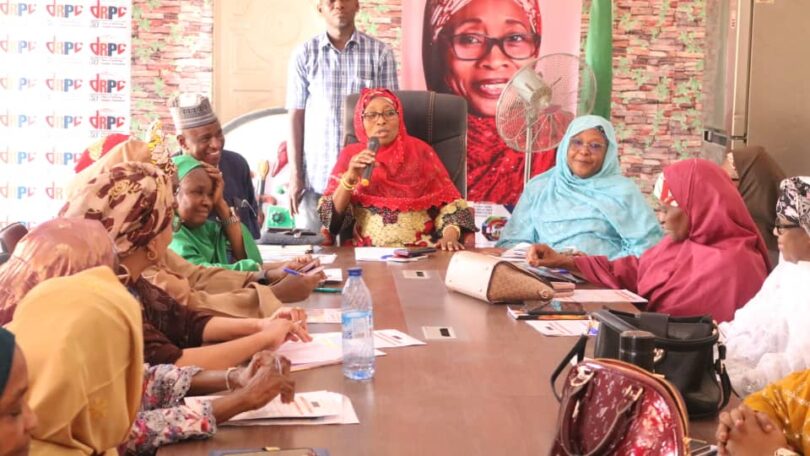
The network wants to mobilise grandmothers in Kano, Jigawa and other northern states to address gender-based violence.
The Development Research and Projects Centre (dRPC), a non-profit organisation, has initiated a programme to fight gender-based violence (GBV) in Kano and Jigawa states.
The Kano State Commissioner for Women Affairs and Social Welfare, Amina Sani, said the scheme focuses on grandmothers because they are the primary “custodians of culture and moral values” in communities.
The commissioner explained that the project’s strategy is grounded in a groundbreaking research conducted by the dRPC.
She said the research revealed that within multigenerational households, grandmothers are the most influential arbiters of gender norms and practices, significantly affecting the lives of wives and daughters.
“While men may be influenced by religious and community leaders, within the home, the grandmother remains the predominant voice guiding decisions and reinforcing them through the lens of tradition and culture,” Mrs Sani stated.
She noted that grandmothers command deep respect within communities and are well-positioned to play an authoritative role in preventing gender-based violence.
Describing the initiative as a “pioneering effort,” the commissioner stated that it is specifically designed to align with northern Nigeria’s social structures, where elders are traditionally revered for their wisdom.
“The project is indeed unique and a pioneering effort of its kind. It’s a household-centered and community-level intervention anchored in the realities of our tradition and social structures, where elders are revered for their wisdom,” she added.
The primary goal of the initiative is to dismantle harmful gender norms by utilising the existing domestic hierarchy.
By engaging grandmothers, the project seeks to shift the decision-making processes of men within the household toward more equitable and safe practices.
“Its core objective is to prevent GBV by transforming norms, beliefs, and decision-making processes among men in the household through the positive influence and support of the grandmothers, using messages that align with cultural values,” the commissioner stated.
She appreciated dRPC for bringing the project to Kano and Jigawa states,
Hadiza Abdulwahab, Mrs Sani’s counterpart from Jigawa State, affirmed the state government’s commitment to the project.
Speaking through the Director of Planning, Aminu Umar, Mrs Abdulwahab stated that the initiative will target protections for both young girls and married women.
She said beyond addressing violence, the project aims to significantly boost the enrollment of girls in schools across the state.
“The Jigawa State government pledged to provide all necessary support to the Development Research and Projects Center (dRPC) to ensure the programme’s success. Jigawa state intended to institutionalise the initiative, ensuring its sustainability well beyond the initial project timeframe”, Mrs Umar said.
In a statement on Monday, Judith-Ann Walker, the executive director of dRPC, said the project aims to foster a safer environment and drive sustainable social change.
“Accordingly, the goal of GNEC is to, among other things, support three new low-level leadership groups within traditional society – grandmothers and local-level village heads and village Imams- as male allies who have been neglected in past GBV projects, to become champions, influencing behavioural change and shifting gender norms to prevent GBV, exacerbated by economic rights denials that leads to poor girl’s education and early marriages in the states
“The New GNEC Project also aims to strengthen the capacities of grandmothers at the state and local levels to influence the behavioural change of husbands within households in order for wives to have economic rights and for girl children to attend school.
“In the first year of the New GNEC Project, the project will identify and work in six villages in Kano State, and four in Jigawa State, where husbands are known for not supporting their wives economically, and wives are forced to be breadwinners, and also communities where husbands are not supportive of their daughters’ education.
“The six villages in Kano State and the four villages in Jigawa State that are selected must also be communities where the local level village heads and local Friday Mosque Imams can participate in the project. As they participate in this project, they are being trained on GBV, economic rights and girls’ education”, Ms Judith-Ann stated.