The group expresses concerns about the “increasing threats to the Nigerian Nation and desirous of sharing our concerns with fellow citizens.”
A group has called on the government, civil society organisations, traditional leaders, and the private sector, to address Nigeria’s insecurity and protect civic rights.
The signatories to the statements are Husseini Abdu, Fatima Balla, Usman Bugaje, Ibrahim Gambari, Yahaya Hashim, Jibrin Ibrahim, Attahiru Jega, Mohammed Kuna, Abubakar Balarabe Mahmoud and Kabiru Yusuf.
“Our assessment of the state of the Nation reveals that Nigeria stands at a dangerous crossroads where rising insecurity, an alarming level of electoral manipulation by the government, and the weakening of democratic institutions are converging into a national crisis that threatens the country’s survival,” the group said.
Some of the issues the group raised include a threat to the principle of the separation of powers, lack of judicial independence and integrity, the executive government’s “lack of accountability or citizens’ concern and erosion of institutional independence.”
All these create a crisis of political exclusion and impunity leading to violent extremism, organised crime, and communal conflict, the group argued.
They therefore recommended the following to mitigate these issues. First, the government must recognise that “insecurity in the Sahel fuels the Nigerian crisis and that rapprochement between AES (Alliance of Sahel States) and ECOWAS is an important element in Nigeria’s national interest.”
Therefore, there should be regional security cooperation between Nigeria and Sahel states for intelligence sharing to address growing insecurity.
Youth employment and local conflict resolution mechanisms to address the root causes of radicalisation and insecurity. Deployment of a Special Envoy for the Sahel to rebuild trust between Nigeria, the AES and ECOWAS.
They also called on CSOs and the private sector to sensitise the public and demand accountability.
Similarly, traditional leaders and members of the clergy are expected to “promote peaceful co-existence, solidarity, and inter-faith dialogue to arrest the current slide to criminality and civil disorder.”
They also urged professional bodies like the Nigerian Bar Association, unions, and civic groups should set up mechanisms for engaging the Independent National and Electoral Commission (INEC) for transparent and credible elections in 2027.
The group also urged the judiciary to stay independent, for the NBA to ensure lawyers behave professionally, monitor courtrooms and ensure politicians follow due process, while the National Judicial Council (NJC) holds judges accountable for their election rulings.
Insecurity and election irregularities are part of the issues Nigeria is currently facing.
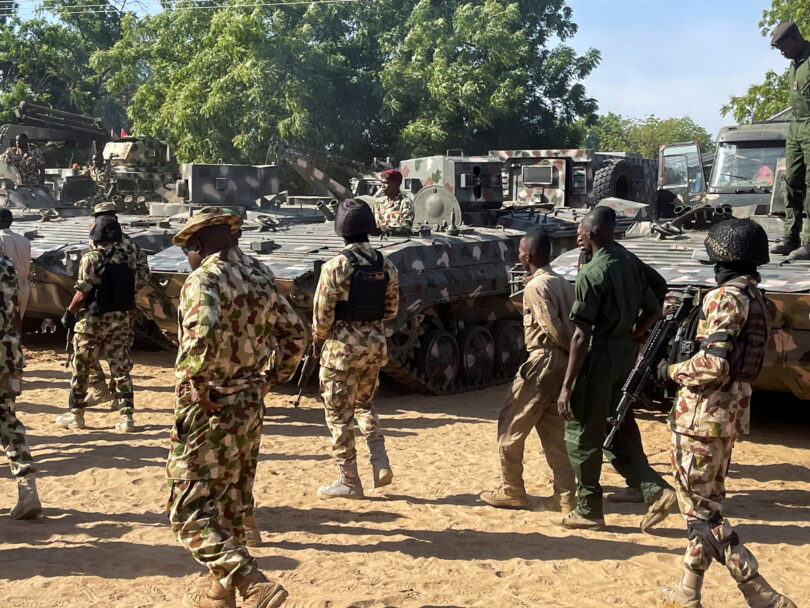
Since 2009, Nigeria has faced insecurity from the activities of Boko Haram attacks, which have escalated and spread to other parts of the country. Besides insurgency and terrorist activities, there have been farmer-herders crisis, banditry, abductions and kidnapping in the northern mad southern parts of the country.
The insecurity has led to the internal displacements of many Nigerians and the loss of livelihoods, thus creating a deep impact on national growth and development.
Also, the right to education has been affected. On 15 May, children were abducted in both Askira-Uba, Borno and Oyo states, some of whom are as young as two. Twenty-five days later, they are still in captivity. This adds to the list of child abductions since the Chibok girls’ abduction in 2014.
While this issue persists, some Nigerians believe that good leadership can help curb, but mistrust in the electoral process remains a major hurdle.