The groups said the investment, if not properly scrutinised and regulated, could have far-reaching implications for land, water resources, local livelihoods, smallholder farmers and the environment.
Civil society organisations and environmentalists in Nigeria have questioned the proposed $2.5 billion investment by JBS, the world’s largest meat-processing company, in the country.
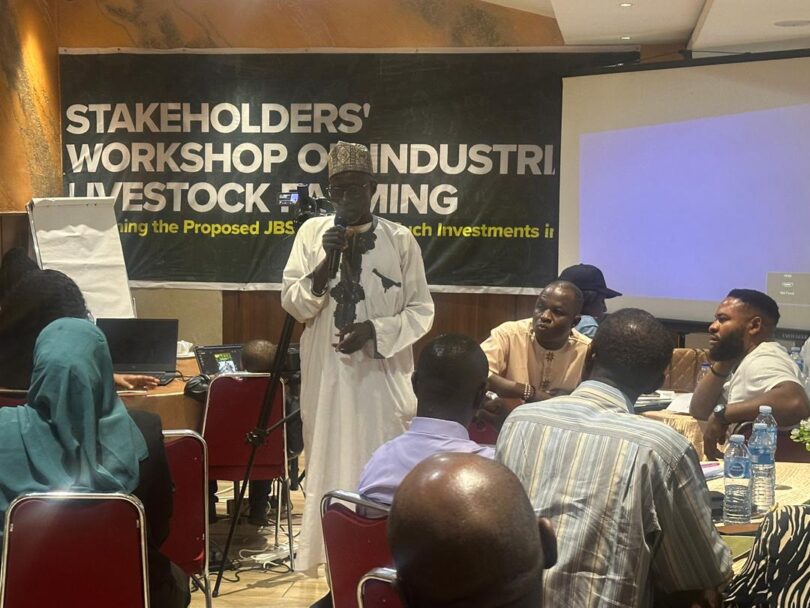
They raised the concerns at a stakeholder convening in Abuja on Wednesday, organised by the Health of Mother Earth Foundation (HOMEF), in partnership with Environmental Rights Action (ERA) and the HEDA Resource Centre.
The two-day event, which ended on Thursday, featured discussions on JBS’ proposed investment and the implications of industrial-scale livestock production in Nigeria.
The groups later staged a peaceful demonstration at the Federal Secretariat, Abuja, before submitting a petition on the proposed JBS investment to the Ministry of Livestock Development.
In November 2024, JBS announced that it had signed a memorandum of understanding (MoU) with the Nigerian government to invest in food security and develop sustainable supply chains in the country.
“Our goal is to establish a strong partnership and support Nigeria in addressing food insecurity. Our experience in regions where we operate worldwide shows that developing a sustainable food production chain creates a ‘virtuous’ cycle of socio-economic progress, particularly for vulnerable populations,” Gilberto Tomazoni, JBS Global CEO, said at the time.
Under the agreement, JBS said it would develop a five-year investment plan covering feasibility studies, preliminary project designs, budget estimates and an action plan for supply-chain development.
The Nigerian government, in turn, would provide the necessary economic, sanitary and regulatory conditions for the project.
The agreement provides for the construction of six plants—three poultry plants, two beef plants and one pork plant—with an estimated investment of $2.5 billion.
The company’s proposed investment has been presented as an opportunity to expand domestic protein production, reduce imports, create jobs and support millions of small-scale farmers.
According to information contained in the investment announcement, protein production in Nigeria accounts for about 10 per cent of GDP and supplies roughly 40 per cent of domestic demand.
However, environmental and civil society groups say there is insufficient publicly available information about the project, particularly regarding the amount of land that could be allocated to JBS and the potential social and environmental consequences.
Niger State officials have reportedly said the state could make available about 1.2 million hectares of land for the project—an area of nearly three million acres.
Details of the proposed land allocation and the specific terms of the investment, however, remain unclear.
PREMIUM TIMES’ request for details of the project, sent to the Special Assistant to the Minister of Livestock Development, Idi Maiha, Abubakar Sadiq, had not received a response at the time of filing this report.
In an interview with PREMIUM TIMES, Mariann Bassey, Deputy Executive Director of Environmental Rights Action, said the groups were not opposed to foreign investment but wanted the government to ensure that such investments did not harm communities or the environment.
She said civil society organisations had repeatedly requested access to the JBS MoU but had not received it.
“We are not anti-investment. We want investments that will not negatively impact our people, the environment and generations to come,” Ms Bassey said.
She said the organisations were particularly concerned about JBS’ environmental record in countries where it operates and wanted the Nigerian government to conduct proper due diligence before allowing the project to commence.
“We don’t want them to come here and repeat the experiences we have had with companies like Shell. We have watched Shell’s activities. They come, promise heaven, and then leave communities devastated,” she said.
Mrs Bassey said the government needed to clarify whether environmental impact assessments had been conducted and how issues relating to land, water, pollution and waste management would be handled.
“If they come, they are going to need a lot of land to set up these plants. Have they done an assessment? What about water? What about pollution and contamination?” she asked.
She also raised concerns about the potential impact of the investment on pastoralists, livestock farmers and indigenous breeds.
“Are they going to bring in their cattle, or are they going to source cattle locally? Are they going to use indigenous cattle?” she asked, adding that imported livestock could also raise concerns about disease risks.
Mrs Bassey said the scale of the proposed investment also raised questions about market concentration.
“We need disclosure. We need to be protected. We don’t want a concentration of power. Are they going to have a monopoly over the poultry, beef and pork industries?” she asked.
According to her, the government must prioritise people’s interests and ensure that JBS is transparent and accountable.
“We are not anti-investment. We are pro-people. We say that it is people first, rules for business, people over profit.”
Joyce Brown, another participant at the convening, said the major concern was the apparent lack of adequate preparation for an investment of such magnitude.