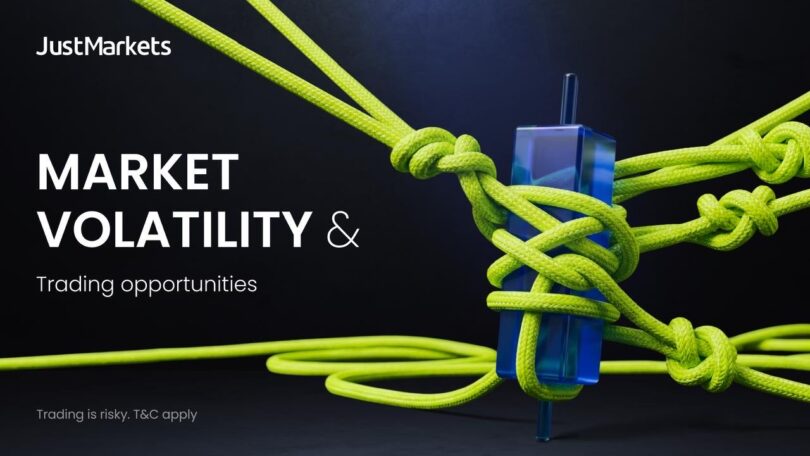
Volatility requires traders to have a strategy and risk management in place. The ability to work quickly and to be prepared for changing conditions at any second becomes vital.
High volatility contributes to making one of the most active environments in the world of finance. In addition, prices fluctuate quicker; price ranges increase, and news and technical levels, as well as liquidity areas, have greater influence. The opportunity that such volatility offers is attractive for active traders who may find chances to benefit from it. However, there are risks as well.
It is important to note that volatile market environments differ from those that exhibit low volatility. It could happen that prices break support and resistance levels quicker, spreads are wider, and more often stops are hit. Thus, techniques and approaches that have proven themselves effective in low-volatility environments might need adjustments.
Things that traders must consider include:
● broader price range
● quickly emerging breakout or reversal scenarios
● a strong reaction to economic figures
● high slippage potential
Scalping in Volatile Markets
Scalping is one of those approaches that concentrate on taking advantage of smaller price movements. Under high-volatility circumstances, scalping may become very appealing due to the fact that prices cover greater distances in lesser amounts of time.
At the same time, volatility means higher risks. Being slow or even just late on entering the market may negatively impact the efficiency of your scalping system. That is why scalping requires trading liquid assets, narrow spreads, and quick executions.
In terms of volatile markets, successful scalping might require the following elements:
● trading during market hours
● avoiding poorly structured markets
● having pre-defined entry and exit points
● reducing exposure period
● carefully controlling positions
News Trading and Event-Driven Volatility
Trading the news means paying attention to how the markets react to different news events that have an impact on the economy or certain asset classes. Price action is likely to be sudden when news regarding consumer price index, interest rates, employment, and oil supplies, among others, is released.
The problem is that the initial reaction may not necessarily indicate the final outcome. Prices may move in one direction and reverse later because traders realize that their initial assumption was wrong.
Volatility plays a crucial role in making risk management more relevant. When volatility grows, it can happen that usual stop-loss settings become too narrow, while overpositioning may result in quick capital reduction.
To handle this situation, traders use smaller sizes, set wider stops according to the market environment, avoid being overexposed to assets showing high correlation, and employ take-profits more actively.
High volatility calls for an execution infrastructure that ensures good execution. In fast markets, it is necessary to have an infrastructure that provides good order processing and enables smooth access to price information.
The JustMarkets trading platform has been designed to meet the needs of traders who use a trading style that benefits from high volatility markets. The trading infrastructure, which is very reliable, offers the following functionalities: efficient trading orders, risk management tools, real-time charting, stop losses, and take profits.
High volatility is a source of opportunity, but also requires discipline and organization. Because experienced traders do not merely react to market activity. Rather, they organize themselves for market action and employ the right strategy and technology.
Risk Warning: Trading Forex and CFDs involves significant risk and can result in the loss of your invested capital. This article is for informational purposes only and does not constitute investment advice.