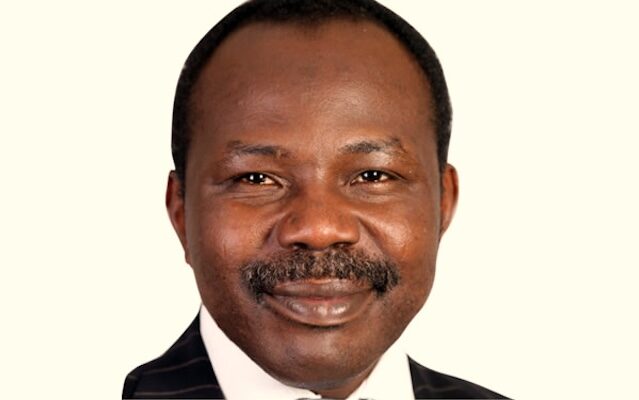
Mr Banire reflected on the evolution of the Lagos State Security Trust Fund model and its implications for security governance in Nigeria.
A former Lagos State Commissioner for Environment, Muiz Banire, has called for stronger institutional support and sustainable funding for security trust funds across Nigeria, saying effective security financing requires transparency, accountability and broad-based participation.
He stated that security remained a core constitutional responsibility of the government, noting that economic growth and foreign investment would remain constrained without adequate protection of lives and property.
According to him, the establishment of the Lagos State Security Trust Fund in 2007 marked a turning point in Nigeria’s approach to security financing by introducing a public-private partnership framework to support law enforcement agencies.
The fund was created under the administration of former Governor Babatunde Fashola following recommendations by a security committee chaired by former Inspector-General of Police, Musiliu Smith.
It was designed to mobilise resources from government, corporate organisations and private individuals to improve the operational capacity of security agencies in Lagos.
Mr Banire said he played a role in discussions with Mr Fashola that led to the development of the legislative framework, which was later transmitted to the Lagos State House of Assembly.
He added that the model succeeded largely because it prioritised transparency, accountability and institutional integrity, in contrast to earlier federal interventions that suffered from weak governance structures and declining public confidence.
Over the years, the fund has supported security operations through the provision of patrol vehicles, communication equipment, protective gear and other logistics, contributing to improved response capacity across the state.
Security trust funds have increasingly emerged in Nigeria as states seek alternative ways to support security agencies amid rising insecurity and limited federal resources. Lagos pioneered the model, which has since been replicated in several states.
Analysts often cite the Lagos initiative as one of the most sustained sub-national security funding frameworks due to its donor confidence, audited accounts and structured governance processes.
The senior lawyer said the initiative demonstrated that governments alone could not sustainably finance security operations, stressing that private sector participation had become increasingly necessary globally.
He cited international collaborative funding models, including donor-supported security initiatives and multi-agency financing mechanisms, as evidence of a growing global shift toward shared security responsibility.
According to him, the Lagos model has continued to attract private sector contributions because of its annual independent audits, compliance with procurement procedures and regular public financial reporting.
He added that the credibility of the system had helped sustain public trust and improve support for security interventions in the state.
Mr Banire, who previously served in several cabinet positions in Lagos and later chaired the Asset Management Corporation of Nigeria (AMCON), has long been involved in governance reform debates.
He, however, noted that attempts by other states to replicate the Lagos model had produced mixed results due to weak governance structures, limited transparency and poor stakeholder engagement.
He said the effectiveness of security trust funds depended not just on their creation but on the credibility of the institutions managing them.
The former commissioner called for stronger legal frameworks to shield such funds from political interference and ensure continuity beyond electoral cycles.
He also advocated deeper private sector involvement, investment in security technology, performance-based funding models and improved public disclosure systems.
Mr Banire further suggested expanding funding sources to include structured contributions from residents, similar to neighbourhood improvement levies, noting that informal community security contributions already exist in many areas.
He referenced the recent establishment of a security trust fund in Osun State and expressed hope that it would help address rising insecurity in parts of the state.
Mr Banire noted that several suburban communities in Osun had experienced repeated armed robbery attacks that disrupted economic activity and forced some financial institutions to shut down.
He argued that the move towards state policing in Nigeria would further increase the need for sustainable subnational security financing mechanisms.
The Lagos State Security Trust Fund, however, is widely regarded by stakeholders as a relatively successful model of subnational security financing, largely due to its public-private structure, donor confidence and consistent procurement of operational equipment.
It has supported the deployment of vehicles, communication tools and training programmes for security agencies in the state. However, despite these gains, analysts note that the model still faces structural limitations, including reliance on voluntary donations, fluctuating funding levels and rising operational costs.
While it continues to serve as a reference point for other states, its long-term effectiveness remains dependent on governance discipline, sustained private sector participation and improved funding stability.
“The imperative now is to move beyond isolated success and embrace this model as part of a broader national strategy,” he stated.
He added that security should be treated as a collective investment requiring trust, accountability and sustained commitment from both government and citizens.