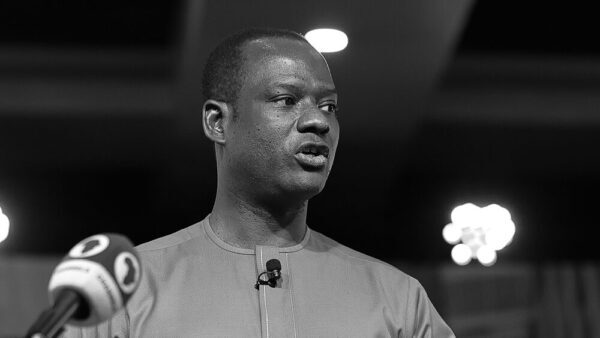
The minister explained that although the reforms generated fiscal savings, the government immediately faced higher financial obligations arising from the reforms themselves, including debt servicing costs and increased public sector wages.
The Minister of Finance and Coordinating Minister of the Economy, Taiwo Oyedele, has said that the savings from the removal of fuel and foreign exchange subsidies have largely gone into debt servicing, increased workers’ wages, student loans, and other major government obligations.
He said the combined impact of the subsidy on fuel and foreign exchange was about 5 per cent of the country’s gross domestic product, but the savings were not saved.
“But saving money was not the primary objective. It was eliminating the distortion and the corruption in the system, which is more fundamental.
“But where has the money gone to? In a few days, you will see the detailed analysis because we believe that we owe a duty to explain what we do to the Nigerian people. That’s what transparency looks like,” he said.
The minister explained that although the reforms generated fiscal savings, the government immediately faced higher financial obligations arising from the reforms themselves, including debt servicing costs and increased public sector wages.
According to him, before the reforms, Nigeria financed part of its expenditure by printing money, a practice that fuelled inflation but reduced immediate borrowing needs.
He explained that parts of the subsidy removal savings were used to service debts, including money printed before the reforms.
“Many Nigerians will conclude that the reforms are not working for them. Some would even say it’s a bad reform. What we do not normally compare is what would have been if the reforms were not carried out.
“Before the reforms, we were printing money to spend, the interest rates were about eight per cent, and the minimum wage was N30,000. If you just think about those three, those are big numbers.
“If you stop printing, the spending doesn’t disappear. You need to finance the money you were printing before. That was part of where the savings went,” the minister said.
Mr Oyedele explained that the reforms triggered higher inflation, prompting interest rates to rise and increasing the government’s debt servicing costs.
“So instead of paying eight per cent on our debts, we were paying as high as 24 per cent. When you need to service debts, you do not debate whether you need to pay. You can not negotiate it. You pay, and you pay on time,” he said.
Mr Oyedele said the government also committed substantial resources to implementing the new national minimum wage and financing higher education through the Nigerian Education Loan Fund (NELFUND).
On the NELFUND programme, Mr Oyedele said more than 1.5 million students now receive funding for both their tuition and monthly stipends, allowing parents to redirect money previously set aside for school fees to other essential household needs.
“Minimum wage went up from N30,000 to N70,000. That’s almost double the wage bill of the government.
“A million households, the parents, no longer have to save, borrow, and be stressed just to pay the tuition. Now they can deploy those resources into their small businesses and to take care of other important basic needs.
The minister said the government would soon provide Nigerians with a detailed account of both the savings realised from the reforms and how the resources have been allocated.
“So what we need to do is we’ll provide a detailed explanation of how much we saved and how the money has been spent,” he added.
Mr Oyedele stressed that the removal of fuel subsidies and the liberalisation of the foreign exchange market were designed primarily to eliminate long-standing economic distortions rather than simply reduce government spending.
Earlier in his address, he said President Bola Tinubu’s administration deliberately chose long-term economic fundamentals over short-term political convenience by implementing reforms that previous governments had delayed.
According to him, the administration inherited an economy weakened by structural distortions that discouraged investment, reduced productivity and undermined competitiveness.
He argued that postponing the reforms would have imposed even greater economic costs on the country.