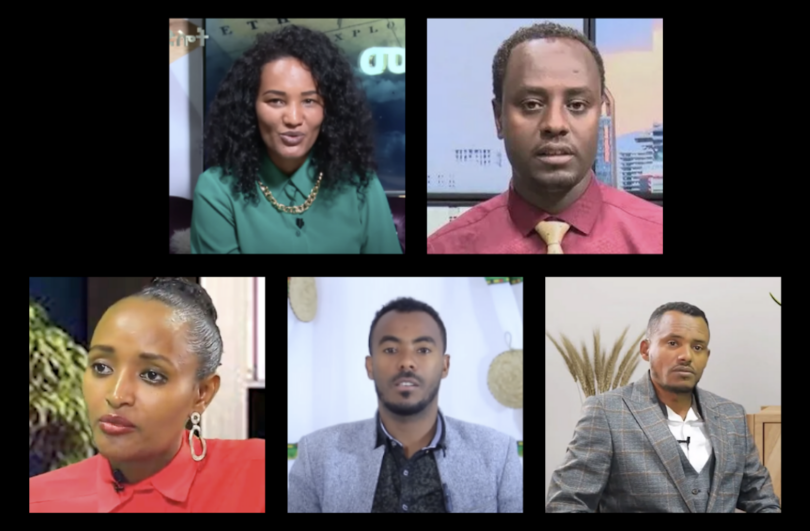
“After keeping these five journalists behind bars for years and delaying their trials, Ethiopian authorities are now trying to blackmail them into confessing to crimes that they have already denied in court.”
The Committee to Protect Journalists calls on Ethiopian authorities to immediately release five journalists who have been in detention for three years awaiting trial, instead of pressuring them to admit to, and apologise for, taking part in a deadly insurgency in exchange for their freedom.
Solomon said prison officials had threatened his clients and separated them from other prisoners to compel them to write their own versions of a draft document shared by the government, in addition to promising to stop working as journalists.
“After keeping these five journalists behind bars for years and delaying their trials, Ethiopian authorities are now trying to blackmail them into confessing to crimes that they have already denied in court,” said CPJ Africa Program Coordinator Muthoki Mumo. “Authorities must stop humiliating and manipulating Gobeze Sisay, Meskerem Abera, Genet Asmamaw, Dawit Begashaw, and Abay Zewdu, withdraw the charges against them, release them, and ensure that they are free to continue their journalism.”
Media reports said more than 300 politicians, journalists, and others facing terrorism charges related to the conflict in the Amhara region had been asked to sign apology letters.
The insurgency began in 2023 in response to a government decision to integrate regional militia into the federal army, which triggered protests. The Amhara Regional Special Forces refused to surrender their weapons, and the Fano militia took up arms against federal forces.
About 30 detainees refused to sign, saying they would not declare themselves criminals while continuing to contest the charges in court, the news reports said.
Government officials asked the journalists to write letters in which they “take responsibility” for the crisis, lives lost, and property destroyed in the “extremist” struggle, promise not to participate in similar activities, and consent to unspecified government action against them if they breach that commitment, Solomon said.
In February, a federal court ruled that the joint case against Gobeze, Meskerem, Genet, and Dawit had sufficient evidence to proceed. Repeated adjournments have delayed their defence until November 19.
The court has yet to rule on whether prosecutors have presented sufficient evidence for a separate case against Abay to proceed. His next hearing is scheduled for October 16.
If convicted, the journalists could face life imprisonment or the death penalty.
The government told the journalists that the proposed release process was a pardon, but Solomon told CPJ that Ethiopian law provides for pardons only after a defendant has been convicted and received a final sentence. As the five journalists’ trials have not concluded, their cases would need to be resolved through the withdrawal of charges or an amnesty, he said.
CPJ’s email requests for comment to the Ministry of Justice and Government Communication Service office did not immediately receive any responses, while an email to the Federal Prison Commission could not be delivered.