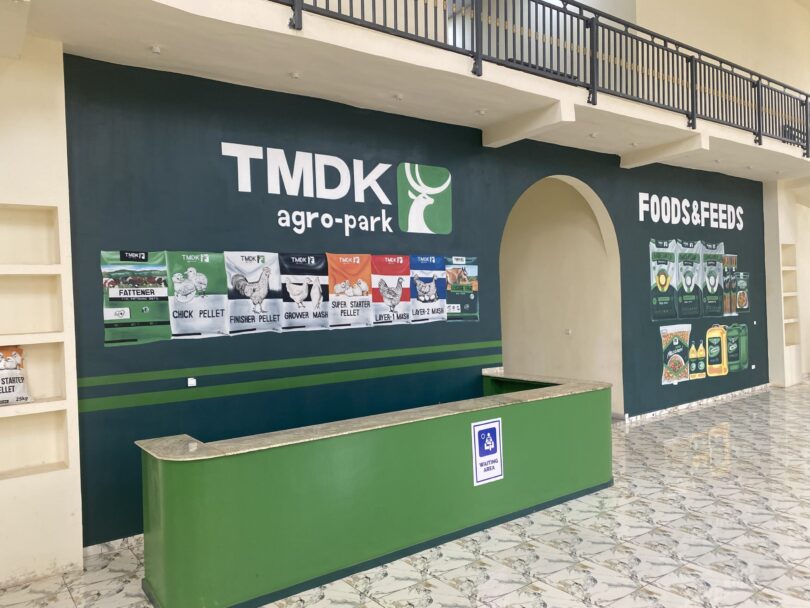
Lying quietly beside the road is the TMDK Agro Industrial Park, estimated to cost $75 million, with the potential to unlock northern Nigeria’s agricultural wealth and address Nigeria’s food security concerns.
Along the Kaduna-Zaria Expressway, vehicles zoom past the expansive space of TMDK Group in Rigachikun area of Kaduna, unperturbed by the roaring sounds of processing plants and the chitchats among workers at a commodious agro park.
The nation’s quest for energy reliability and food sufficiency increasingly depends on private sector investments that create lasting economic value. TMDK Group, whose expanding investments in petroleum infrastructure and agro-industrial processing are designed to address two of the country’s most pressing development challenges, remains one of the companies positioning themselves at the intersection of these national priorities.
“The dream is to establish agro parks across all the geo-political zones in Nigeria,” says Suhailu Ismaila, the Acting Managing Director of the TMDK Agro Park. But in the meantime, Mr Ismaila says, the company is already adding values to the operations of farmers not just in Kaduna but across the country.
The agro park, which was initially impacted by the COVID-19 pandemic in the early years of construction in 2019 and completed in 2024, is being built as a complete integrated hub with heavy machineries, including a 1000 metric tonnes capacity per day animal feed plant, a 300 metric tonne Soya processing plant, an expansive corn mill, among others.
“Plans are in the pipeline to introduce pasta and noodles produced from corn,” Mr Ismaila says of the company’s novel idea, before delving extensively into the company’s backward integration plans to strengthen food security. He speaks further of actions geared toward margarine and mayonnaise production with locally sourced raw materials.
Originally conceived as Tamaidukka Investment Company Limited, TMDK Group has grown into a prominent, indigenous Nigerian conglomerate. The company was incorporated on July 8, 2001, and in 25 years of operation, has expanded from its initial roots into a diversified three-pillar business operating across the energy, agriculture, and infrastructure sectors.
The group houses the TMDK Agro Park, TMDK Oil Traders, TMDK Infrastructures, TMDK Terminals, and TMDK Downstreams—all with facilities and operations spread across Lagos, Abuja, Suleja, Ogun, Kaduna, and several other key locations across the country.
Through strategic investments in petroleum terminals, logistics and large-scale agro-processing facilities, TMDK Group is building an integrated business model that supports energy distribution while creating value across Nigeria’s agricultural value chain.
“We source for raw materials from every part of Nigeria,” says Ola Olalere, General Manager, Business & Planning, adding that the company supports small businesses across different ecosystems.
For instance, we get limestone from Edo, Wheat bran from Lagos and port harcourt , grains such as soya, Maize and others from the North and other parts of the country,” Olalere added.
The TMDK Integrated Agro-Industrial Complex is one of its kind in Nigeria, designed to process agricultural commodities into a diverse range of food and industrial products for both human and animal consumption.
The facility processes maize, soybeans, and other agricultural commodities into products including corn flour, corn grits, edible vegetable oil, animal feed, and innovative corn-based pasta and noodles. By integrating agricultural processing and manufacturing within a single industrial complex, TMDK is helping to strengthen Nigeria’s domestic food-processing capacity and reduce reliance on imported finished products.
Rather than exporting agricultural commodities in their raw form, the facility adds value locally by converting them into finished and semi-finished products. This approach enables a greater share of the economic value generated from Nigeria’s agricultural resources to remain within the country, while supporting local manufacturing, creating employment opportunities, strengthening agricultural value chains, and contributing to national food security.
The TMDK Integrated Agro-Industrial Complex therefore represents a strategic investment in local value addition, agro-industrialisation, food security, import substitution, and sustainable economic development, with the potential to connect Nigerian farmers directly to large-scale industrial processing and domestic consumer markets.
Despite making important headways within the short time of its operations, the TMDK Agro Park isn’t resting on its oars.

“Our R&D (Research and Development section) is being piloted and supported to drive innovation and introduce new recipe,” says Dr. David Onabajo, the Chief Operating Officer at the Park.
Dr. Onabajo says the move represents a significant step towards local value addition, reducing dependence on imported food products and creating markets for Nigerian farmers.
The TMDK integrated agro-industrial complex processes maize, soybeans and other agricultural commodities into a range of consumer and industrial products, including corn flour, corn grits, edible vegetable oil, animal feed, and innovative corn-based pasta and noodles. By processing crops locally instead of exporting raw produce, Onabajo said the facility helps retain more value within the Nigerian economy while supporting domestic manufacturing.
One of the park’s distinguishing features is its focus on products that can substitute imported wheat-based foods. TMDK’s corn-based pasta and noodles provide consumers with locally produced alternatives while creating stronger demand for maize cultivated by Nigerian farmers. The company also sources raw materials locally, a strategy intended to strengthen rural livelihoods, deepen agricultural value chains and stimulate inclusive economic growth.
“Noodles and Pasta come majorly from flour but we are introducing corn-based fibre… just as our Soya Refinery is near-completion,” Onabajo added.
The Agro Park extends beyond food manufacturing. According to Nasmat Anas, the park’s HR analyst, its integrated operations include edible oil extraction, animal feed production, corn milling and packaging, creating a complete industrial ecosystem capable of serving households, livestock producers and commercial customers alike. According to the company, the packaging facility has the capacity to produce more than 70 million woven polypropylene bags annually, supporting both agricultural and industrial users.

TMDK’s investment model aligns with Kaduna State’s broader ambition of positioning agriculture as a major driver of economic development through value addition, agro-processing and stronger market linkages for farmers. The state continues to promote partnerships that improve productivity, expand food processing and strengthen food security.
But challenges remain in the area of infrastructure, says Onabajo, who explained that the facility would do with support in terms of energy supply, ease of doing business concerns, overlap in regulators’ functions, government policies on import, among other issues.
For farmers, the benefits of the agro park extend beyond increased production. Large-scale processors such as TMDK provide dependable off-take opportunities, encouraging greater investment in cultivation while reducing post-harvest losses. The agro-industrial project, with over 500 estimated workers at the facility, is projected to create hundreds of direct and indirect jobs while providing reliable markets for thousands of farmers across Kaduna and neighbouring states in the immediate quarters.
At the Kaduna facility, one notable feature of the company is the diversity in the staff recruitment and management structure.
“The recruitment process is free and fair,” says Tamwakat Barde, the Human Resource Manager, who noted that the company recruits the best in all areas, irrespective of where they come from. She, however, clarified that in order to give back to the host community, certain portion of the workforce is reserved for the local community to drive inclusivity and provide jobs for residents.