Politics
“INEC Should Disqualify Candidates Sponsoring Political Violence” — Senate Demands Sanctions Against Election Thugs

*Warns Governors Against Denying Opposition Access To Public Facilities
The Senate has called on the Independent National Electoral Commission (INEC) to enforce the provisions of the Electoral Act 2026 against political candidates linked to electoral violence, including disqualification where the applicable legal requirements and court convictions have been established.
The upper legislative chamber also urged state governors to stop denying opposition political parties access to public facilities, including government-controlled hotels, stadiums and other venues, warning that such restrictions could fuel political intolerance and undermine the conduct of peaceful and credible elections in 2027.
The resolutions followed growing concerns over political thuggery, intimidation and violent attacks on political leaders, candidates and their supporters across the country.
The Senate condemned the increasing frequency and spread of political violence, describing the development as a serious threat to national security, democratic participation and the peaceful conduct of the 2027 general elections.
The resolutions followed a motion sponsored by Senator Abdul Ningi, representing Bauchi Central, on the urgent need to address political violence, intolerance and attacks on political leaders and their supporters.
The motion came against the background of several reported incidents, including an attack on President Bola Tinubu’s motorcade in Abuja on Friday, November 13, 2026.
During deliberations, lawmakers expressed concern that violence was becoming an increasingly prominent feature of political activities, warning that failure to address the trend could discourage citizens from participating in the electoral process.
The Senate consequently urged INEC to enforce relevant provisions of the Electoral Act 2026 against candidates implicated in electoral violence, irrespective of their political affiliations.
The lawmakers stressed the importance of proper investigations, prosecution and court convictions in determining the appropriate legal consequences for electoral offences.
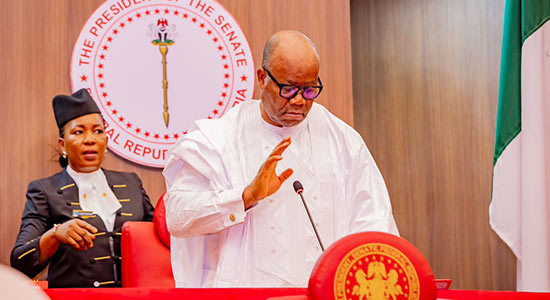
Speaking during the debate, Senate President Godswill Akpabio said candidates whose supporters instigated violence should face the sanctions prescribed by law.
“Any candidate or supporter caught instigating violence, then INEC has a right to disqualify,” Akpabio stated.
He urged the electoral commission to pay particular attention to the provisions of the Electoral Act 2026 concerning political violence and electoral offences.
“We should call the attention of INEC to the 2026 Electoral Act. No matter the political party, such a candidate should immediately be disqualified. They are embedded in the 2026 Electoral Act and require strong implementation,” he declared.
Akpabio maintained that the legislation contained provisions intended to deter intimidation, disruption of electoral activities and attacks on election officials.
He specifically referred to Sections 121 to 128 of the Electoral Act 2026, which he said addressed electoral offences and violence.
“Let us refer to the Electoral Act 2026. If you examine Sections 121 to 128, you will see that electoral offences and violence are clearly spelt out. These include intimidation, snatching of BVAS machines, ballot boxes and other electoral materials,” he said.
The Senate President also referred to penalties recommended for electoral offences, including imprisonment for aggravated acts of violence.
“We recommended penalties, ranging from 12 months to five years’ imprisonment, with no option of a fine for aggravated offences, such as stoning, beating with sticks or using other dangerous objects. That was what we recommended,” he explained.
According to Akpabio, Section 92 of the Electoral Act also provides for INEC to suspend elections in areas affected by violence and reschedule them within 24 hours.
“Furthermore, under Section 92, we provided that INEC could suspend elections in areas where violence is reported and reschedule such elections within 24 hours,” he stated.
He further drew attention to the Electoral Offences Commission Bill 2025, which he said was passed alongside the Electoral Act to establish a dedicated mechanism for dealing with electoral offences.
“We also provided for the Electoral Offences Commission Bill 2025, which was passed alongside the Electoral Act, to establish a dedicated mechanism for addressing electoral offences, including vote-buying, electoral violence and attacks on INEC officials,” Akpabio said.
The Senate President maintained that the relevant legislative provisions were intended to protect electoral personnel and other participants in the democratic process.
“We made provisions to protect INEC personnel and other individuals involved in the electoral process. The fact that we have enacted the law means the responsibility now rests with the executive to implement it. The provisions are very clear,” he added.
Earlier, while presenting the motion, Senator Ningi expressed concern over reported attacks on political leaders and their supporters in different parts of the country.
He described the incidents as evidence of an alarming rise in political intolerance capable of undermining public confidence in the forthcoming general elections.
According to him, the Senate was disturbed by the escalation in political violence, particularly attacks directed at political leaders, supporters and gatherings.
“The Senate, disturbed by the alarming escalation in the frequency and spread of political violence across the country, characterised by attacks on political leaders, supporters and political gatherings, with grave implications for national security, democratic participation and the peaceful conduct of the 2027 general elections,” Ningi stated in his motion.
The lawmaker specifically referred to the reported attack on President Tinubu’s motorcade in Abuja.
He recalled that the incident allegedly occurred on Friday, November 13, shortly after the President observed Jumu’ah prayers at the Shehu Shagari Central Mosque in Garki, Abuja.
According to the motion, the departing presidential convoy was attacked with stones and other dangerous objects, resulting in damage to vehicles and injuries to security operatives.
Ningi also drew attention to reported attacks involving former Labour Party presidential candidate Peter Obi and other political stakeholders during political gatherings in Benue and Edo states.
He further cited the violent disruption of a political procession involving supporters of the Nigeria Democratic Congress (NDC) and the Obidient Movement in Asaba, Delta State, on November 7, 2026.
The incident reportedly resulted in one death and injuries to five persons.
The senator also referred to a reported attack on the convoy of former Vice President and African Democratic Congress (ADC) presidential candidate Atiku Abubakar in Sokoto State.
Ningi warned that the incidents reflected a disturbing pattern of political intolerance, intimidation and violence capable of discouraging Nigerians from exercising their democratic rights.
Following the motion, the Senate urged relevant security agencies to conduct impartial and transparent investigations into the reported incidents in Abuja, Edo, Delta and Sokoto, as well as other affected areas.
The lawmakers demanded that the perpetrators and sponsors of the violence be identified and prosecuted in accordance with the law.
The Senate also called on the Federal Government to direct the Inspector-General of Police and other relevant security agencies to strengthen security arrangements for political leaders, candidates, supporters and political gatherings nationwide.
It urged the establishment of effective early-warning and rapid-response mechanisms to prevent political violence before and during the 2027 elections.
The upper chamber further mandated its Committees on National Security and Intelligence, Police Affairs, and INEC to engage relevant institutions and report back within one week on measures to prevent political violence and safeguard the electoral process.
The lawmakers also raised concerns about restrictions allegedly imposed by some state governments on the activities of opposition parties.
In his contribution, Senator Binos Yaro, representing Adamawa South, moved an additional prayer calling on governors to ensure that opposition parties and candidates were not denied access to public facilities.
He specifically identified public arenas, hotels and other venues controlled by state governments as facilities that should be made available to political parties without discrimination.
Yaro maintained that denying rival political organisations access to such facilities could undermine the principle of a level playing field and create unnecessary political conflicts.
The Senate subsequently adopted the prayer, urging governors to respect the rights of opposition parties to conduct lawful political activities.
The lawmakers warned that restrictions on opposition activities could heighten political intolerance and further endanger the peaceful conduct of elections.
Also contributing to the debate, Senator Ali Ndume, representing Borno South, condemned the reported attack on President Tinubu and warned that political violence could become uncontrollable unless decisive measures were taken.
Ndume said he had intended to contact Senator Ningi over the incidents before the motion was presented.
“I had tried to reach out to Senator Ningi after observing these incidents over the last two weeks. Fortunately, the motion has now been presented, and I commend you, Mr President, for recognising its urgency and allowing the Senate to consider it immediately,” he stated.
Ndume described the reported attack on the President as an embarrassment to the country.
“What happened to the President was not an embarrassment to him alone; it was an embarrassment to Nigerians,” he said.
The senator also referred to religious teachings concerning the granting of political authority and questioned the justification for violent protests against elected leaders.
He maintained that citizens had legitimate ways of expressing dissatisfaction without resorting to attacks or intimidation.
“There are several legitimate ways to express anger or stage protests, but what happened to the President last Friday at a mosque was unacceptable,” Ndume said.
He further claimed that 88 persons were arrested following the incident but were subsequently released unconditionally on the President’s directive within 24 hours.
According to him, the decision demonstrated statesmanship.
“If he had a military mentality, the 88 people arrested that day might not have been treated with the magnanimity they received. Within 24 hours of their arrest, the President directed that they be released unconditionally. That demonstrated statesmanship,” he stated.
Ndume warned that political violence could spread rapidly if not adequately contained.
He also cautioned that members of the National Assembly could become victims of politically motivated attacks.
According to him, the fact that the President could be exposed to such an incident despite his security arrangements demonstrated the vulnerability of other political actors.
The Borno lawmaker consequently proposed stricter measures to prevent the carrying of dangerous weapons during political campaigns.
He suggested that the police and armed forces should prohibit individuals from carrying knives, sticks and other dangerous objects to campaign venues.
According to Ndume, candidates and their supporters should attend political activities with posters and other legitimate campaign materials rather than weapons.
“Anybody caught carrying knives, sticks or other harmful objects during campaigns should be arrested immediately,” he said.
Ndume also proposed the establishment of mobile courts to accompany political campaigns.
He suggested that magistrates should be available at campaign venues to ensure that persons arrested for carrying dangerous weapons or engaging in violence were promptly prosecuted.
“Furthermore, we should establish mobile courts to accompany campaign activities. Wherever campaigns are taking place, a magistrate should be available to ensure that anybody arrested for carrying dangerous weapons or engaging in violence is promptly prosecuted,” he stated.
He maintained that where sufficient evidence existed, offenders should be convicted in accordance with the law, irrespective of their political affiliations.
Ndume stressed that the proposed measures should apply equally to all political parties, including the ruling All Progressives Congress (APC).
He argued that strict enforcement could discourage political thuggery and improve safety during campaigns.
The senator also criticised campaign slogans he considered provocative or capable of encouraging hostility among political supporters.
He cited slogans such as “Tinubu Must Go,” “Atiku Must Go” and “Obi Must Go,” questioning their usefulness in promoting peaceful political competition.
“If everybody must go, who will govern the country?” he asked.
In his contribution, Senator Sumaila Kawu, representing Kano South, supported Ndume’s proposal for special courts to deal with electoral violence and the possession of dangerous weapons during political campaigns.
However, Kawu challenged lawmakers to examine their own conduct and the activities of their supporters.
He questioned why political candidates, including those contesting governorship and National Assembly elections, were sometimes seen surrounded by supporters carrying dangerous weapons.
“It is a shame to see candidates contesting for the Senate, House of Representatives or governorship surrounded by supporters carrying dangerous weapons. Where are we going as lawmakers when we appear to encourage conduct that violates the laws we enacted?” Kawu asked.
He urged political leaders to acknowledge their responsibility for the conduct of individuals accompanying them to political events.
“We must be honest with ourselves. How many of our supporters and young people follow us to political activities carrying weapons?” he questioned.
Kawu maintained that political office seekers should demonstrate greater commitment to the laws governing elections by discouraging supporters from engaging in threatening or violent conduct.
He argued that the responsibility for peaceful political participation rested not only with security agencies and electoral authorities but also with political leaders and their followers.
Meanwhile, following an additional prayer moved by Senator Sampson Ekong, representing Akwa Ibom South, the Senate called on the Federal Ministry of Information and the National Orientation Agency (NOA) to intensify public enlightenment campaigns against political violence.
Ekong argued that legal provisions and criminal sanctions alone would not adequately address the problem without sustained public awareness and education.
He maintained that the proposed campaigns should discourage political thuggery and prevent young people from being recruited or influenced to engage in violent political activities.
The Senate subsequently adopted the proposal as part of broader measures aimed at reducing political tension and ensuring peaceful campaigns ahead of the general elections.
The lawmakers reiterated that political competition must not be allowed to degenerate into violence, intimidation or attacks on citizens and public officials.
They stressed the importance of impartial law enforcement, equal access to political facilities, protection of electoral personnel and accountability for individuals involved in political violence.
The Senate maintained that strict application of the Electoral Act, effective security arrangements and the prosecution of offenders would be necessary to protect the credibility of the 2027 elections.
It also emphasised that the measures must apply to candidates and supporters of all political parties without discrimination.
.. “INEC Should Disqualify Candidates Sponsoring Political Violence” — Senate Demands Sanctions Against Election Thugs … NewsNGR.


Nigerian govt says it is reviewing report on livestream controversy with South Africa

PAWISCA Seeks Tinubu’s Support To Boost Women-led Agricultural Exports

FIFA Rankings: Super Eagles climb to 29th in the World, overtake Algeria in Africa’s top five

Nigeria Goes Beyond 419, Bigger Than Social Media Tales – Shettima

TRCN to bar schools without certified teachers from conducting WAEC, NECO

In Akwa Ibom, residents say major agricultural project worsens road condition

Lagos Police Search For Relatives Of Airport Road Crash Victim

Reps summon NAFDAC, police, SSS over deaths linked to suspected herbal drugs
Emirates explores a range of new innovations for customers with accessible travel requirements at AccessAbilities Expo, Dubai 2026
NIMASA DG Dayo Mobereola Squanders N6.77 Billion On Cleaning, Hospital Bills And Imprest Including N1 Billion To Maintain Its London Office In Just One Year
Orie Uga Market Traders To Hold Mega Rally For APGA, Set To Endorse Dr. Chibueze Ofobuike For House Of Reps
Igbo Speaking Community Lagos Suspends Crowning Of Ezendigbo As New Executives Vow To Restore Past Glory
FRSC orders probe into Otedola bridge tanker inferno
Abandoned newborn rescued at Plateau mining site
Moses Can’t Return To Egypt – Tinubu Rules Out Fuel Subsidy
“The Task Force Is On Top Of It, NCDC Is On Top Of It” — FG Assures Nigerians Of Capacity To Contain Ebola

 Business6 days ago
“₦1.2m Return Ticket To London” — Enugu Air Slashes Fares By Up To 50%, Targets December Launch Through Omni Blu Partnership
- News5 days ago
“Autonomy Brings Responsibility” — ICPC Recovers ₦5.3bn From LG Accounts In Seven States, FCT, Moves To Publish 774 Councils’ Finances Online
- Special Reports6 days ago
Federal Science College, Sokoto Sinks Into Regulatory Breach After ₦3.82 Million Is Diverted Into Staff Bank Accounts Against Financial Regulations
- News6 days ago
“EFCC Recruitment Is Absolutely Free” — Commission Warns Nigerians Against Fake Employment Emails Demanding ₦3,354
- Top Stories5 days ago
“States, Not FIRS, Collect Itinerant Workers’ Income Tax” — Supreme Court Rules For Bayelsa In Offshore PAYE Dispute
- Business6 days ago
“Fixes Are Not Taking As Expected” — Microsoft Struggles To Restore Outlook, Teams, Copilot As Global Outage Hits 74 Countries
- Politics6 days ago
Details Emerge as Police, Reps Probe Attack on Obi’s Supporters in Lagos
- Special Reports6 days ago
EFCC Docks Music Star, Felix Duke For Alleged N21.2m Fraud