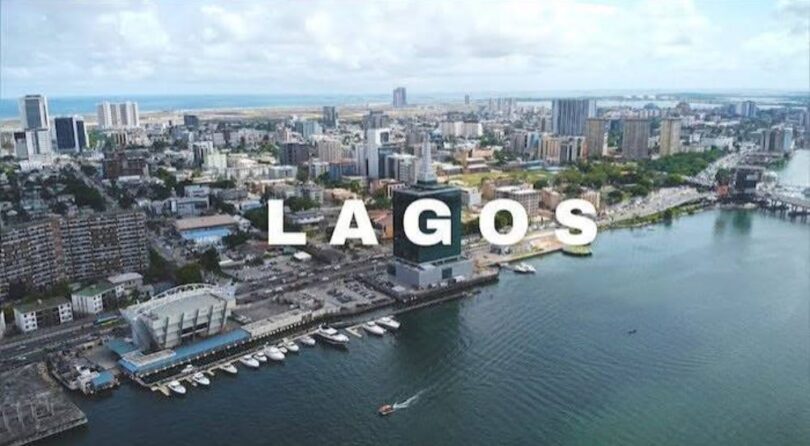
Lagos, Nigeria’s commercial capital, has been ranked among the world’s ten least liveable cities in the Economist Intelligence Unit’s (EIU) Global Liveability Index 2026, underscoring the persistent challenges posed by insecurity, pressure on public infrastructure, healthcare deficiencies and rapid urbanisation.
The annual report, which assessed 173 cities across the globe, placed Lagos 168th with an overall score of 44 out of 100, making it one of four African cities listed among the world’s bottom 10 for urban liveability.
The EIU evaluates cities using five broad indicators, stability, healthcare, culture and environment, education, and infrastructure, to determine how conducive they are for residents and expatriates to live and work.
According to the report, Lagos recorded one of its weakest performances in the stability category, scoring 30, while its healthcare score stood at 38.
The city performed relatively better in infrastructure, where it scored 54, although this was insufficient to offset weaknesses in other critical areas.
The report also identified Harare (Zimbabwe), Algiers (Algeria) and Tripoli (Libya) as the other African cities occupying positions in the global bottom ten.
Among them, Libya’s capital, Tripoli, emerged as Africa’s least liveable city and the world’s second-lowest-ranked city, finishing 172nd with an overall score of 41.
Only Damascus, Syria, ranked lower at 173rd, reflecting the devastating impact of prolonged conflict and political instability.
Zimbabwe’s capital, Harare, ranked 165th with an overall score of 45.
While the city recorded a relatively strong education score of 67, its healthcare score of 33 significantly reduced its overall performance.
Algiers, the Algerian capital, placed 169th with a score of 43.
Although it achieved a comparatively better healthcare score of 54, poor infrastructure, which scored 30, weighed heavily on its overall ranking.
The EIU said the latest rankings highlight how armed conflict, insecurity, governance challenges and underinvestment in public services continue to undermine the quality of life in many cities, particularly across parts of Africa and conflict-affected regions.
For Lagos, the report points to the combined effects of rapid population growth, mounting pressure on transport and public utilities, housing shortages, healthcare constraints and security concerns as key factors limiting the city’s liveability despite its status as one of Africa’s largest economic hubs.
Similarly, Tripoli’s low ranking reflects years of civil conflict and institutional instability, while Harare continues to grapple with economic difficulties and constrained public services.
Algiers, meanwhile, posted mixed results, with stronger healthcare outcomes failing to compensate for weak infrastructure.
Outside Africa, other cities occupying the bottom ten include Tehran (Iran), Kyiv (Ukraine), Port Moresby (Papua New Guinea), Karachi (Pakistan), and Dhaka (Bangladesh), illustrating that conflict, economic pressures and infrastructure deficits remain major determinants of urban liveability worldwide.
The Economist Intelligence Unit’s Global Liveability Index is widely regarded as one of the leading international benchmarks for assessing living conditions across major cities.
The index is frequently used by multinational companies, governments and expatriate organisations to inform decisions on investment, employee relocation and hardship allowances.
Beyond economic indicators, it measures the quality of healthcare and education, safety and security, environmental conditions, cultural amenities and the adequacy of urban infrastructure.
The 2026 rankings reinforce the growing need for sustained investments in public infrastructure, healthcare, security and urban planning to improve living standards in rapidly expanding cities such as Lagos.