Secrets Reporters
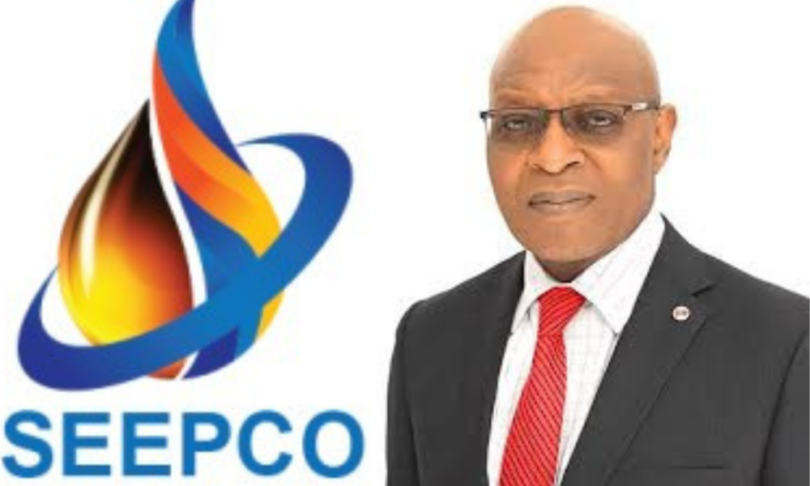
A SecretsReporters investigation can reveal that the man now chairing Sterling Oil Exploration & Energy Production Company Ltd (SEEPCO), Anthony “Tony” Chukwueke, was the Director of the Department of Petroleum Resources (DPR) sacked in 2007 over the improper issuance of oil licenses, the very same DPR whose 2005/2006 bid round handed SEEPCO one of Nigeria’s richest oil blocks despite a signature bonus far below what a rival bidder offered, on terms our sources describe only as decided by “orders from above.”
DPR is now the new Nigerian Upstream Regulatory Commission (NUPRC), which regulates the upstream sector and Nigerian Midstream and Downstream Petroleum Regulatory Authority (NMDPRA), which regulates the midstream and downstream sectors (formed alongside the defunct PPPRA and PEF)
The prize was OML 143, the block that produces Okwuibome, a low-sulphur, sweet crude grade so prized by European and American refiners that it commands a premium of about $2 above the price of Brent – one of the finest grades of crude oil coming out of Nigeria today. The block sits above the village of Okwuibome in Kwale, Delta State, and was carved out of what Shell (SPDC) once held as OML 143 before it was converted to an Oil Prospecting License, OPL 280, and put up for bid.
Our investigation found that in the 2005/2006 licensing round, SEEPCO put in a signature bonus bid of $57 million, against what our findings put as the true benchmark value of the bonus at $210 million.
A rival bidder offered a figure closer to that true value. SEEPCO won anyway. There is no documentary trail, obtainable by our reporters or by the company’s own public disclosures, of any prior track record in the oil and gas industry that would explain why a company with no history and the weaker bid was preferred over a stronger one. SEEPCO became the only company handed fresh acreage by the DPR in the 2005–2007 window; a distinction that, on its own, several DPR insiders told our investigation should have triggered scrutiny long before now.
The regulator who was sacked, reinstated, and later made SEEPCO’s chairman
Public records reviewed by our investigation show that Anthony Chukwueke served as Nigeria’s Director of Petroleum Resources head of the DPR, the very regulator that ran the 2005–2007 bid rounds from 2005 to 2009. In 2007, in the middle of that same bidding window, he was dismissed from the position over concerns involving the improper issuance of licenses to petroleum companies. He was later reinstated, without any public explanation of how or why. In 2018, more than a decade after presiding over the regulator during the very rounds that produced SEEPCO’s contested license, Chukwueke became Chairman of SEEPCO itself, the company that walked away from that regulator’s watch with one of the richest oil blocks in the country.
The man dismissed from Nigeria’s oil regulator in 2007 for improperly issuing licenses to petroleum companies is today the Chairman of one of the companies that got one of those licenses.
A mystery shareholder with no oil and gas history
Buried inside the ownership structure of OPL 280 is a company called Allenne Energy Limited, RC 653161, a name with no visible footprint in Nigeria’s oil and gas industry, yet holding a stake in the very license that produces one of the country’s most valuable crude streams.
Corporate filings reviewed by our reporters list three names behind Allenne Energy: Iyabo Rotimi Adeoye, Aminat Mary Jimoh, and a legal entity, KCU Legal, represented by one Babundo Omordia as deponent. None of the three has any documented background in petroleum exploration or production — raising the question of whose interest, exactly, Allenne Energy was set up to protect.
The fugitive who owns the company Chukwueke now chairs
SEEPCO is a Nigerian arm of the Sterling Biotech Group, a conglomerate built by the Sandesara family of India, with Nitin Sandesara as its scion and ultimate owner.
In April 2021, the Indian newspaper The Hindu reported that the Sandesara family are fugitives from Indian law over allegations of bank fraud running into hundreds of millions of dollars, a case in which a special Indian court declared Nitin Sandesara, his brother Chetan Sandesara, Chetan’s wife Dipti Sandesara, and an associate, Hiteshkumar Narendrabhai Patel, fugitive economic offenders in September 2020. Chukwueke’s chairmanship sits atop a company whose beneficial owner Indian courts will not let set foot in India.
The same report detailed a case brought before India’s Supreme Court by one Captain Sukhpal Singh, seeking an order to seize Okwuibome crude – oil produced thousands of kilometres away in the Nigerian creeks, on the grounds that it forms part of the movable and future assets of the Sterling Biotech Group.
Captain Singh’s petition alleged that between January 2018 and roughly April–May 2020, shipments worth close to ₹5,435.43 crore which is over $1 billion were received from SEEPCO in Nigeria by Indian buyers including the Indian Oil Corporation Limited, Bharat Petroleum Corporation Ltd and Hindustan Petroleum Corporation Ltd, routed through a UK-based intermediary. According to the same filing, at least three more shipments landed in India’s Vadinar and Paradeep ports even after the Sandesaras had already been declared fugitives.
A company owned by a man India’s courts have declared a fugitive economic offender is still exporting Nigerian crude to Indian refiners’ years after that declaration, chaired, since 2018, by the same regulator once sacked for improperly awarding oil licenses.
A minister’s signature and a ship with no oil meter
Our investigation also traces how SEEPCO’s export infrastructure secured official Nigerian government backing at a critical moment, years before Chukwueke’s chairmanship began.
In October 2011, the company obtained a Federal Government Gazette. signed off under then-Minister of Petroleum Resources Diezieni Madueke, now under investigation over separate corruption allegations, designating a vessel named Tulja Bhavani as a floating storage and offloading facility with the capacity to hold 1,762,445 barrels of Okwuibome crude and to perform tanker-to-tanker discharge at sea. That Gazette, issued under the Oil Terminal Dues Act of 1965, turned Tulja Bhavani into an official Federal Government export terminal – one that, our findings show, has operated for over a decade without a single functional oil meter to independently verify how much crude passes through it, a gap that has persisted through Chukwueke’s own tenure as chairman
This was not SEEPCO’s first brush with disqualification
What makes the 2006 award harder to defend is that SEEPCO’s bidding conduct had already been flagged once before. The Federal Government reversed the award of a separate block, OPL 226, to two Indian companies namely SEEPCO and Essar Exploration and Production Ltd during the 2007 bid round, after both were found not to have met the pre-qualification requirements to participate, and neither had formally bid for the blocks they were controversially handed.
That a company disqualified in one bid round for failing basic pre-qualification could, in the very same window, be sitting on a far more valuable license elsewhere is the kind of contradiction that our investigation believes only a full, independent probe of the DPR’s 2005–2007 bid files and of Chukwueke’s own role inside the regulator at the time can resolve.
Nigeria disqualified SEEPCO from one oil block in 2007 for failing to meet basic bidding rules, in the same year its future chairman was sacked from the regulator that ran the process while the company was already sitting on the license for one of the richest crude blocks in the country.
The Five Laws broken
Petroleum Act 1969 (the law governing oil licence awards at the time, since repealed by the Petroleum Industry Act 2021) – the Act required licences to be awarded through a fair, merit-based process at the Minister’s discretion; a company with no track record winning a block with a signature bonus far below a rival’s bid, with no documented justification, is inconsistent with the due-process standard the Act was meant to enforce.
Code of Conduct for Public Officers (Fifth Schedule to the 1999 Constitution) and the Code of Conduct Bureau and Tribunal Act – these prohibit a public officer from using his position in a way that creates a conflict of interest, or from placing himself in a position where his personal interest conflicts with his duties. A DPR Director who oversaw the licensing rounds that produced SEEPCO’s licence, and who later became that same company’s Chairman, sits squarely inside the conduct these provisions exist to prevent.
Corrupt Practices and Other Related Offences Act 2000, Section 19 (using office or position for gratification) applicable if Chukwueke’s regulatory position was used, directly or indirectly, to benefit a company he would later chair.
Companies and Allied Matters Act (CAMA) beneficial ownership disclosure requirements (now Sections 119, 120 and 868 of CAMA 2020, with equivalent nominee-shareholder disclosure obligations under the predecessor CAMA 1990) breached by Allenne Energy Limited’s opaque shareholding, with no named individual showing any real oil and gas background.
Oil Terminal Dues Act 1965 says designating a vessel (Tulja Bhavani) as an official government export terminal without a functioning oil meter defeats the verification purpose the Act’s terminal-dues regime is built on.
This report is Part 1 of SecretsReporters investigation into Sterling Oil Exploration & Energy Production Company Ltd (SEEPCO) and its Nigerian oil operations.