The claims were published in Al-Naba, an Islamic States’ weekly propaganda magazine published on Thursdays.
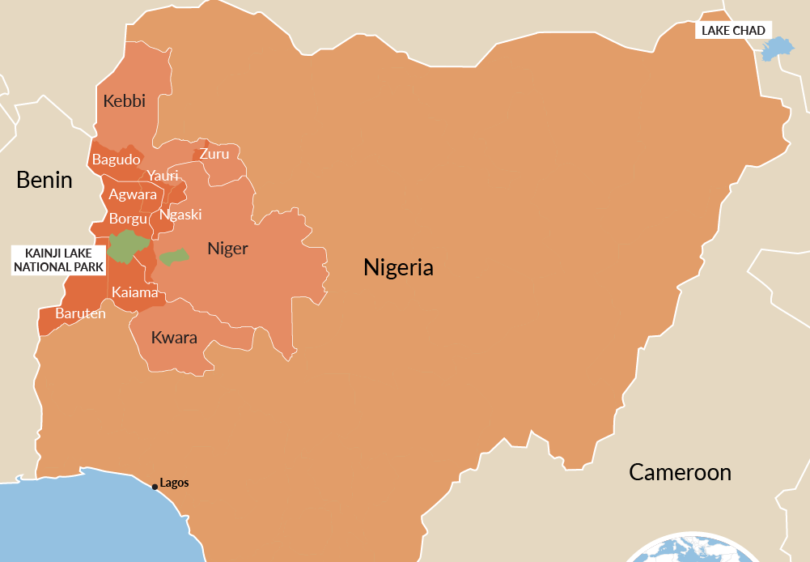
The Islamic State Sahel Province (ISSP) has claimed what appears to be its first reported attacks in North-west Nigeria, in which 18 soldiers and a police officer were killed in Kebbi and Sokoto states.
The claims came about six months after United States President Donald Trump ordered airstrikes against those he described as Islamic State elements in the North-west, following his claims of Christian genocide in Nigeria.
However, analysts and security observers remain divided over the footprint of Islamic State in the North-west region.
According to Al-Naba, ISSP fighters ambushed a patrol team of the Nigerian Army on 28th of Dhul Qadah (15 May) near Runji village in Illela Local Government Area of Sokoto State.
Islamic State claimed that the attack led to a gun battle involving machine guns, during which seven soldiers were killed while others sustained injuries and fled the area.
The terror group added that its fighters burnt a military vehicle and seized eight rifles as well as three machine guns during the encounter.
In Kebbi State, the group said ISSP fighters carried out another ambush earlier in May near Giro Masa village, killing 11 soldiers and a police officer, while injuring others.
According to the Al-Naba publication, the troops were allegedly attacked while attempting to track the fighters in the area.
It also claimed that two military vehicles were destroyed and weapons carted away during the attack.
The claims by the extremist group could not be independently verified as of press time, while Nigerian military authorities are yet to officially comment on the allegations.
However, similar attacks were recorded mid-May in Illela LGA, Sokoto, and Shanga LGA, Kebbi. Both attacks were blamed on Lakurawa, a terror group that has been operating in the region for years.
The latest claims are expected to renew the debate around Lakurawa’s affiliation.
Analysts hold differing opinions regarding the group’s ideological and operational affiliation. While some believe Lakurawa is aligned with an al-Qaeda franchise operating across the Sahel, others argue that the group may instead be operating as a local affiliate of the Islamic State.
The uncertainty surrounding the group’s allegiance has continued to complicate efforts to clearly define the evolving militant landscape in Nigeria’s North-west, where armed banditry, cross-border insurgency and extremist infiltration increasingly overlap.