The proposed investment, which is expected to focus on the revitalization of the Maigatari Border Free Trade Zone and the establishment of multiple industrial ventures, is yet another major step in Jigawa State’s drive to attract strategic foreign direct investment and accelerate industrialization.
Jigawa State has secured a major investment breakthrough as Hefei Shengwen Information Technology Company Limited of China has indicated strong interest in committing approximately $2 billion toward industrial development projects across the state.
The proposed investment, which is expected to focus on the revitalization of the Maigatari Border Free Trade Zone and the establishment of multiple industrial ventures, is yet another major step in Jigawa State’s drive to attract strategic foreign direct investment and accelerate industrialization.
Speaking at the dinner, Mr Ren disclosed that the company had carefully studied Jigawa State’s investment climate and was impressed by the opportunities available across key sectors.
According to him, the delegation had seen enough to convince them of Jigawa’s readiness for large-scale industrial partnership.
“We have carefully assessed the business environment in Jigawa State and have seen a friendly and promising investment climate,” he said.
“Today, we have already commenced discussions regarding a joint venture partnership with Jigawa State, and this marks the beginning of what we believe will become a very productive relationship.”
“Our company is planning to bring about two billion United States dollars in investment into Jigawa State,” Mr Ren stated.
He explained that the company was particularly interested in investing within the Maigatari Free Trade Zone and had already developed plans to establish seven different industries within the zone and other strategic locations across the state.
Mr Ren further assured the Jigawa State Government of the company’s commitment to building a long-term partnership based on trust, sincerity, and mutual benefit.
“We believe this partnership will be built on trust, sincerity, and mutual benefit, and we are confident that this cooperation will result in a win-win outcome for all parties’” he stressed.
Responding, Governor Namadi described the investment interest as a major vote of confidence in Jigawa State’s economic vision and reform agenda.
The governor said the development was a direct outcome of the state government’s deliberate efforts to market Jigawa’s economic potential to global investors.
He recalled that during the recent investment mission to China, the Jigawa delegation spent nearly ten days visiting five provinces and close to 40 industrial facilities and companies in search of credible investment partners.
“That visit convinced us beyond reasonable doubt that we had found credible and dependable partners. That was why we extended the invitation for you to visit Jigawa State. We are pleased that you have kept your promise and honoured that invitation.”
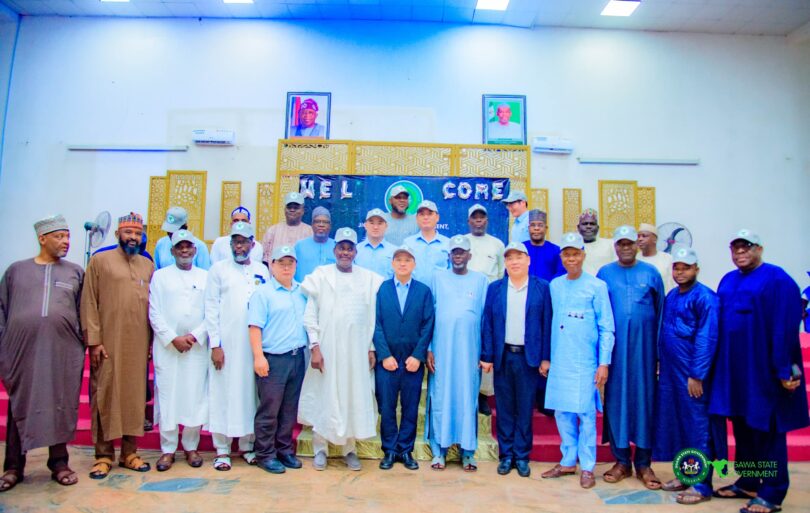
The governor stated that over the past four days, the Chinese investors had toured several critical economic assets across the state, including the Maigatari Border Free Trade Zone, the Maigatari International Livestock Market, Gagarawa Industrial Park, and other strategic sites.
He expressed confidence that the investors had seen clear evidence of the state’s seriousness and readiness to support industrial growth.
“I am sure that by now, you are convinced that the government of Jigawa State is fully committed to revitalizing the Maigatari Border Free Trade Zone. You have also seen firsthand the enormous potential we earlier described during our engagements in China.”
Governor Namadi assured the delegation that the Jigawa State Government would provide the necessary support, transparency, and enabling environment required for the success of the partnership.
He disclosed that both parties were set to sign a Memorandum of Understanding to serve as the operational roadmap for the proposed cooperation.
He also described Jigawa as a strategic gateway for investors seeking access to Nigeria’s domestic market and the broader West African sub-region.