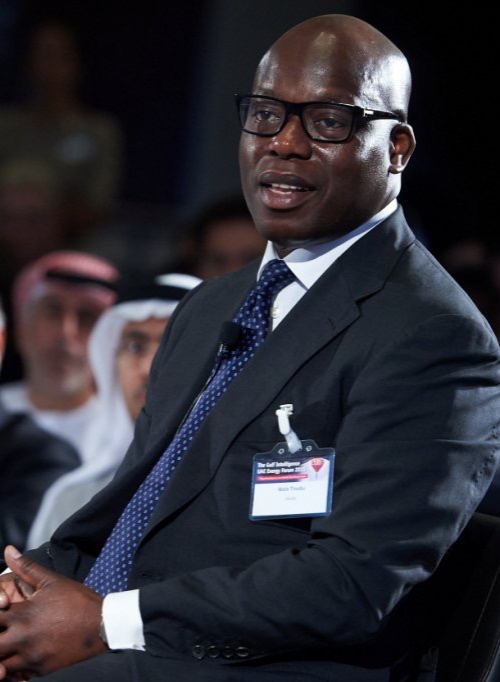
By Adebayo Adeoye
Known for his sharp commercial instincts and ability to execute high-profile transactions, Group Chief Executive of Oando Plc, Jubril Adewale Tinubu CON, has increasingly drawn attention within international business circles. His growing portfolio of investments, extending beyond Africa, reflects an ambition shaped not only by scale but by strategic reach.
As global markets evolve, his business decisions continue to position him among a generation of African executives seeking influence beyond regional boundaries.
For more than three decades Tinubu has occupied a prominent position in Nigeria’s corporate landscape, helping shape one of the country’s most recognizable indigenous energy companies while navigating the complexities of an industry defined by uncertainty, political shifts, and fluctuating global demand.
Tinubu has built a reputation as a businessman willing to embrace calculated risks in pursuit of long-term growth. Since founding the company in the 1990s, he has overseen its transformation from a local petroleum marketing operation into a diversified energy enterprise with interests spanning exploration, production, trading, and energy services.
That transformation did not occur in easy conditions.
Nigeria, Africa’s largest oil producer, presents a uniquely difficult environment for corporate leaders. Businesses often contend with infrastructure deficits, foreign exchange volatility, regulatory uncertainty, and inconsistent policy implementation. For executives in the oil and gas sector, those challenges are amplified by geopolitical tensions and the unpredictability of global crude prices.
Yet Tinubu’s leadership has been defined by persistence through disruption.
Over the years, Oando has pursued acquisitions, corporate restructuring, and strategic partnerships that have helped preserve its relevance in an increasingly competitive market. Industry observers point to Tinubu’s willingness to reposition the company during periods of market stress as one reason it has maintained visibility within the continent’s energy ecosystem.
Colleagues and associates frequently describe him as a disciplined negotiator with a strong appetite for long-term positioning. Known for his commercial instincts and ability to execute high-profile transactions, Tinubu has increasingly drawn attention within international business circles. His investments and interests, some stretching beyond Africa, suggest an executive whose ambitions extend beyond regional influence.
Still, his rise has coincided with broader changes in Africa’s energy story.
As conversations about sustainability and cleaner energy intensify globally, companies operating within traditional fossil fuel markets face mounting pressure to adapt. Nigeria, despite its vast hydrocarbon reserves, continues to grapple with electricity shortages and energy access challenges affecting millions of households and businesses.
Against this backdrop, Oando appears to be entering another phase of reinvention.
According to market analysts and people familiar with the company’s strategic direction, the firm is increasingly positioning itself within the renewable energy and broader power sectors, signaling a shift that could redefine its role in Nigeria’s evolving energy economy. While details remain closely held, expectations are growing that the company may deepen investments aimed at improving energy access and supporting cleaner alternatives.
For Tinubu, the transition represents both a challenge and an opportunity.
Executives who built fortunes in oil are increasingly being asked to rethink how energy companies remain competitive in a lower-carbon future. Success will depend not only on capital and infrastructure but on the ability to anticipate changing markets before competitors do.
As Tinubu approaches his 59th birthday, supporters see a businessman still firmly focused on the future rather than past accomplishments. In private conversations, associates often describe him as someone reluctant to treat milestones as endpoints.
For now, the next chapter of Oando’s evolution — and Tinubu’s place within Africa’s changing energy landscape — may depend on whether the company can successfully convert ambition into execution in a sector where reinvention is becoming less an option than a necessity.