The Federal Government has announced plans to institutionalise the National Learning Assessment (NLA) every three years as part of efforts to address learning poverty and improve the quality of education across Nigeria.
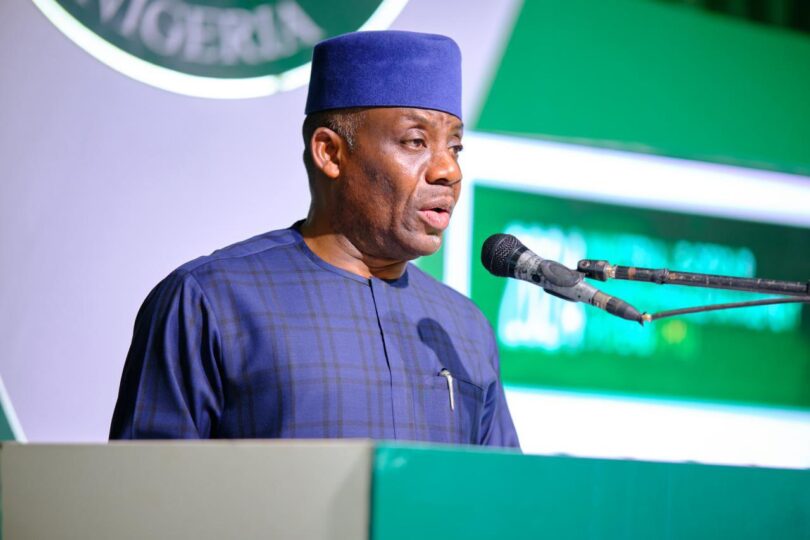
Minister of Education, Dr Tunji Alausa, disclosed this on Friday in Abuja after monitoring the ongoing 2026 National Learning Assessment in selected public and private schools within the Federal Capital Territory (FCT).
During the inspection, Alausa visited Government Secondary School (GSS), Kuje; Junior Secondary School (JSS), Kuje Central; and Topaz Model School, Kuje, to assess the conduct of the nationwide exercise.
He explained that the assessment targets pupils in Primary Three and Primary Five, as well as students in Junior Secondary School (JSS) Two and Senior Secondary School (SSS) Two. According to him, the exercise is designed to measure literacy, numeracy and cognitive abilities across the different education levels.
Alausa said the assessment would now become a regular exercise every three years, adding that the Universal Basic Education Commission (UBEC) had been directed to include funding for it in its budget beginning from 2029.
He described the assessment as a critical tool for evaluating the effectiveness of teaching and learning across the country.
“The importance of learning assessment is that we need to know the quality of education we are providing to pupils and students at the primary, junior secondary and senior secondary levels and determine whether they are actually learning,” he said.
“It is a standard instrument that enables us to evaluate education outcomes across different school levels. The last assessment was conducted by UBEC in 2023, while the previous one was carried out by the Federal Ministry of Education in 2019. Going forward, it will be conducted every three years.”
The minister said the assessment had become increasingly necessary due to Nigeria’s persistent learning poverty, noting that available data showed many children were unable to read age-appropriate texts by the age of 10.
According to him, previous reports estimated that more than 42 million Nigerian children were learning poor, although the figure was based on older data.
He expressed confidence that the Federal Government’s ongoing education reforms would improve learning outcomes, adding that the latest assessment would provide updated data to guide evidence-based policy decisions.
“We need accurate data to benchmark literacy and numeracy levels and design targeted interventions that will improve learning outcomes across the country,” Alausa said.
The minister further revealed that the Federal Government had harmonised the various learning assessment frameworks previously used into a single national assessment system to ensure consistency and allow for effective comparison of learning outcomes over time.
He said the initiative forms part of the Nigeria Education Sector Renewal Initiative and aligns with President Bola Tinubu’s education reform agenda aimed at strengthening human capital development and national growth.
Speaking on the role of private schools, Alausa commended their contribution to expanding access to education, noting that they had helped keep many children enrolled who might otherwise have been out of school.
However, he stressed the importance of stronger regulatory oversight to ensure that private schools comply with minimum educational standards.
“Private schools have helped us keep many children in school. We need to encourage them, but we must also regulate them effectively and ensure they maintain the required standards,” he said.
The minister also praised the learning environment in both the public and private schools he visited, describing the facilities as clean, conducive and supportive of effective teaching and learning.