*Says, Endless Adjournments Erode Public Trust
The Chief Justice of Nigeria, Justice Kudirat Kekere-Ekun, has warned judges of the superior courts of record that delays in the administration of justice are weakening public confidence in the judiciary.
She urged judges to take firmer control of proceedings, enforce timelines and ensure that cases are concluded within reasonable time.
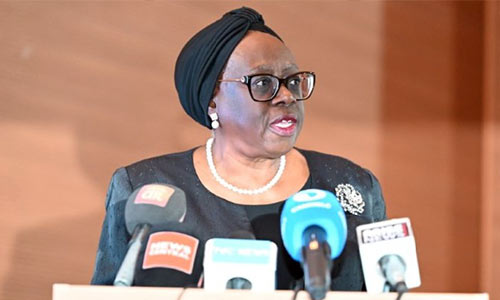
Justice Kekere-Ekun gave the charge on Monday in Abuja while declaring open the National Workshop on Case Management for Judges of the Superior Courts of Record, organised by the National Judicial Institute.
The CJN, who was represented by Justice John Inyang Okoro of the Supreme Court, said the judiciary can no longer be assessed only by the quality of its judgments, but also by the speed, efficiency and fairness with which cases are determined.
She expressed concern that repeated adjournments, abuse of procedure, poor scheduling and weak docket control continue to clog the courts, frustrate litigants and weaken confidence in the justice system.
“To the ordinary litigant, justice delayed often translates into justice denied,” she said.
Justice Kekere-Ekun noted that delays in court proceedings do not affect litigants alone, but also create uncertainty for businesses, discourage investors and undermine confidence in the rule of law.
According to her, Nigeria’s rising commercial activities, increasing constitutional litigation and growing public expectations have placed heavier demands on the courts, making continuous reform and stronger procedural discipline necessary.
The CJN urged judges to enforce strict timelines, make effective use of pre-trial procedures, control their dockets and prevent parties from using technicalities or avoidable applications to delay proceedings.
She also called for wider adoption of technology in court administration, including electronic filing, virtual hearings, digital case-tracking systems and automated scheduling tools.
Justice Kekere-Ekun said modern justice delivery requires efficiency without sacrificing fairness.
She noted that jurisdictions such as the United Kingdom, Singapore and South Africa have shown that structured case management and active judicial leadership can reduce delays and improve public trust in the courts.
The CJN said the three-day workshop was designed to equip judges with practical tools on docket control, scheduling, judgment timelines, electronic case management and other measures needed to improve justice delivery.
She urged participants to use the workshop to examine existing practices, identify procedural bottlenecks and embrace reforms that would make the judiciary more responsive, efficient and worthy of public confidence.
Earlier, the Administrator of the National Judicial Institute, Justice Babatunde Adejumo, said modern case management requires judges to go beyond merely adjudicating disputes to actively supervising cases from filing to conclusion.
Justice Adejumo said effective case management is now central to access to justice, fairness and public confidence in the judicial system.
He added that judicial education and leadership training remain essential in equipping judges with contemporary skills to deal with court congestion, administrative bottlenecks and unnecessary delays.
He commended the CJN, who chairs the NJI Board of Governors, for her commitment to judicial capacity building.
Justice Adejumo also acknowledged Justice John Inyang Okoro, Chairman of the NJI Education Committee, heads of court and facilitators for supporting the programme.