With only two Olympic slots allocated to Africa, every round carries weight. There is no group-stage cushion, just direct, home and away knockout ties where consistency is non-negotiable
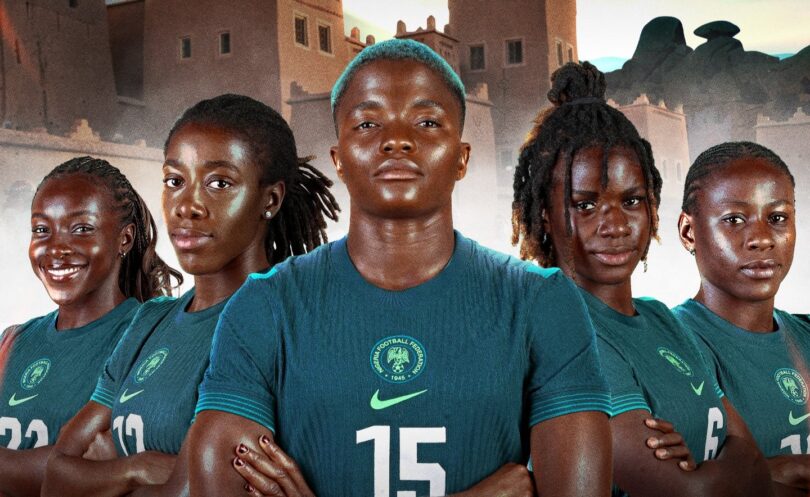
Nigeria’s Super Falcons now know their pathway to the 2028 Summer Olympics, with a second-round clash against either Sudan or Comoros confirmed following Wednesday’s draw in Cairo.
The Super Falcons will face the winner of the first-round tie between Sudan and Comoros, with the fixtures scheduled for 1-9 June. Nigeria’s campaign will then begin between 5-13 October, a window that will mark their first step in what is a long, elimination-heavy qualification journey.
With only two Olympic slots allocated to Africa, every round carries weight. There is no group-stage cushion, just direct, home-and-away knockout ties where consistency is non-negotiable.
A total of 35 nations have entered the race, reflecting the growing depth of women’s football across the continent.
The qualification structure spans five rounds. The six lowest-ranked teams will contest the opening round, with three advancing to join higher-ranked sides, like Nigeria, in the second phase. From there, the field will gradually shrink through successive knockout rounds until only two teams remain.
Those final spots will be decided in the last round scheduled for November–December 2027.
Elsewhere in the second-round draw, several high-profile fixtures underline the competitiveness of the qualifiers.
Tunisia women’s national football team will face Senegal women’s national football team, while Benin women’s national football team take on Mali women’s national football team. Other notable ties include Congo vs Morocco, Cameroon vs Guinea, Côte d’Ivoire vs DR Congo, and Zambia vs Uganda, fixtures that highlight the increasing balance of power across African women’s football.
For Nigeria, this campaign carries both expectation and unfinished business.
The Super Falcons returned to Olympic football at the Paris 2024 Games after a 16-year absence, a significant milestone for the most successful women’s team on the continent. However, their run ended at the group stage after facing heavyweights Japan, Spain, and Brazil.
That experience now feeds into the next cycle.
The target is not just qualification, but progression.
The women’s football event at the Los Angeles Olympics will run from 11 to 29 July 2028, featuring 16 teams, including the hosts, the United States.
For Nigeria, the road is now clear, but demanding.
Starting in October, the task is simple in definition but difficult in execution: win, advance, and reclaim a place among the world’s elite.
Because in a format this tight, reputation counts for little. Performance decides everything.