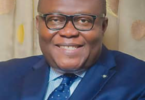
The Lagos State Governor, Mr. Babajide Sanwo-Olu, has formally flagged off the reintroduction of the monthly environmental sanitation exercise.
Governor Sanwo-Olu said the monthly sanitation would kick off in April and will take place every last Saturday of the month from 6.30 a.m. to 8.30 a.m.
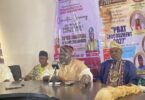
The governor said this at a stakeholders’ engagement on environmental sanitation on Saturday in Mushin, Lagos.
Sanwo-Olu said the initiative was not a political contest but a serious public health and civic responsibility exercise aimed at building a cleaner and healthier Lagos.
The governor said the reintroduced sanitation exercise was designed to reach all parts of the state and deepen environmental consciousness among residents.
He added that government alone could not achieve a clean city without active public participation.
“This morning’s exercise is a very serious one and a defining moment for all of us as Lagosians.
“It is not about politics; it is not about rivalry; it is about our collective responsibility to keep our environment clean, healthy and safe for everyone,” he said.
Sanwo-Olu said the cleanliness of streets, markets, drainage channels and public spaces reflected the daily habits of residents.
He noted that sustainable environmental management must be driven by shared responsibility and not enforcement alone.
“A clean city is not achieved by government alone. It is built every day by the actions of citizens, by what we do in our homes, in our markets, in our communities and on our streets,” the Governor said.
The monthly environmental sanitation in Lagos was officially suspended in November 2016 following a March 2015 Federal High Court ruling.
The court mandated that restriction of human movement from 7 a.m. to 10 a.m. was unconstitutional, violating citizens’ rights to freedom of movement.
The government argued it was impractical for a megacity. Eventually former Governor Akinwunmi Ambode formally announced the cancellation of the monthly, mandatory cleanup exercise in November 2016.
Sanwo-Olu recalled that the monthly environmental sanitation was once a national civic culture observed on the last Saturday of every month, when residents voluntarily cleaned their surroundings as part of a broader commitment to public health.
“Although a court judgement ended the movement restriction that characterised the old sanitation exercise, the responsibility of government and citizens to maintain a clean environment remained unchanged. We respect the rule of law and the authority of the courts. The enforcement mechanism may have changed, but the responsibility to maintain a clean and healthy environment has not changed and will never change,” he said.

Sanwo-Olu said the symbolic flag-off was, therefore, intended to revive the culture of environmental sanitation through awareness, partnership and voluntary participation, rather than relying solely on enforcement or punitive measures.
He assured residents that the state government would continue to strengthen waste management systems, improve training and infrastructure, and support environmental enforcement agencies in sustaining a cleaner Lagos.
“This is about restoring a culture and a consciousness. We will continue to strengthen waste management, improve our training and infrastructure, and support environmental enforcement, but we need citizens to own this process,” he said.
The governor decried the indiscriminate disposal of refuse such as water sachets, plastic bottles and wrappers into drainage channels, warning that the habit was worsening flooding and undermining the state’s road infrastructure.
He said clogged drainage systems often caused roads to fail repeatedly, even after repairs by contractors, because residents continued to dump waste into gutters and canals meant to discharge stormwater.
“When people dump solid waste into drainage channels, the roads will keep failing. You cannot repair roads sustainably when the drainage meant to protect them is clogged with waste every day,” he said.
Sanwo-Olu noted that some roads repaired by contractors, including those handled by major firms, had deteriorated again because drainage channels were blocked by indiscriminate refuse disposal.
He urged community development associations (CDAs), market leaders, youths, religious organisations, political groups, community development committees (CDCs) and other institutions to take ownership of environmental cleanliness in their communities.
“Clean Lagos begins with daily individual choices. We need our market leaders, our youths, our religious institutions, our CDAs and CDCs to see environmental sanitation as a civic duty, not a government slogan,” he said.
The governor emphasised that while political offices and leadership positions were temporary, the health and wellbeing of communities were enduring priorities that should unite all residents behind the sanitation initiative.
“Leadership is temporary, but the life of our communities and the health of our people are permanent concerns. That is why this initiative must be bigger than speeches and bigger than any individual,” he said.