Africa’s energy story is entering a pivotal chapter. The question is no longer whether the continent has the resources or ambition to industrialise, but whether it can build the infrastructure, mobilise investment and forge the partnerships required to turn that potential into sustained economic growth.
That question was at the heart of the 2026 Africa Energy Forum (AEF) in Cape Town, held under the theme ‘Building Africa’s Industrialised Future’.
Bringing together policymakers, investors, developers, financiers and technology leaders, the forum focused on a fundamental challenge: how Africa can move from ambition to execution and from abundant resources to lasting value creation.
For Genesis Energy, the conversations reinforced a view that has shaped its approach to energy development across the continent.
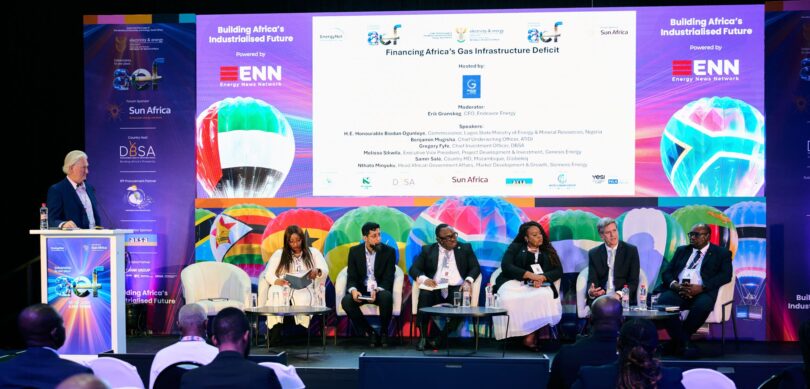
The company sponsored a hosted boardroom on “Financing Africa’s Gas Infrastructure Deficit,” convening senior leaders
including Lagos State Commissioner for Energy and Mineral Resources, Hon. Biodun Ogunleye; Samir Salé, Country Managing Director for Mozambique at Globeleq; and Nthato Minyuku, Head of Africa Government Affairs, Market Development & Growth at Siemens Energy.
Additionally, Genesis also participated in high-level closed-door executive sessions and a panel examining “How has the recent Geopolitics impacted international attitudes to Gas,” bringing a development and investment perspective to the changing global energy landscape.
Across discussions on regional gas infrastructure, energy technology, global market dynamics and integrated energy systems, Genesis Energy executives explored what this means in practice — and what it will take to build energy systems capable of supporting Africa’s next phase of industrial growth.
A main takeaway from AEF 2026 was that Africa’s infrastructure gap is increasingly seen as its most promising investment
opportunity.
The continent’s advantage isn’t just in natural resources but in modern infrastructure above ground. Forward-thinking investors are moving beyond isolated projects.
Maximising Domestic Value with Local Gas Chains
Discussions on natural gas revealed a key shift in the regional narrative. The debate is no longer about whether natural gas plays a role, but how Africa can maximize local economic benefits from its resources.
Melissa Fadzai Sikwila, Executive Vice President of Project Development and Investment at Genesis Energy, emphasized the importance of local value creation saying: “There is an enormous amount of gas in Nigeria, for example, that gets wasted because of a lack of domestic liquefaction plants. The industry has to learn fast and fail forward.”
Processing and using gas locally opens immediate opportunities for power, manufacturing, jobs, and economic independence. Landmark projects like Genesis Energy’s 84MW gas-fired IPP at Port Harcourt Refinery in Nigeria demonstrate how replacing expensive diesel and HFO with cleaner, locally processed gas sustains economic value within host countries.
A key theme emerging from the discussion was that the greatest barriers to scaling energy infrastructure in Africa are no longer just technical, they are commercial, financial, and institutional.
The discussion reinforced that Africa's energy transition will be driven as much by collaboration as by technology. As projects increase in scale and complexity, success depends on creating ecosystems where governments, developers, investors, DFIs, regulators and technology providers work together to structure bankable projects and allocate risk effectively.
While the technology to deliver reliable, clean energy already exists, unlocking investment requires innovative financing, coordinated planning and strategic partnerships. This shift highlights that the future of energy development in Africa is not just about deploying technology—it is about building the commercial and institutional frameworks that enable projects to move from concept to reality.
Turning Energy Potential into Progress
The conversations at AEF 2026 reinforced a conviction that has shaped Genesis Energy’s work across Africa for more than two decades: unlocking the continent’s potential requires more than capital. It requires the infrastructure, partnerships and execution to turn viable projects into reliable energy that powers businesses, communities and economies. This aligns with its vision of: LIGHTING UP AFRICA, ONE COMMUNITY AT A TIME.
From gas-to-power and solar to battery storage and other clean energy solutions, Genesis continues to develop, finance and operate energy infrastructure across the continent.
With more than 300MW in operational and implementation projects and a development pipeline exceeding 4GW, the company remains focused on building the dependable clean energy ecosystem needed to drive Africa’s sustainable growth.