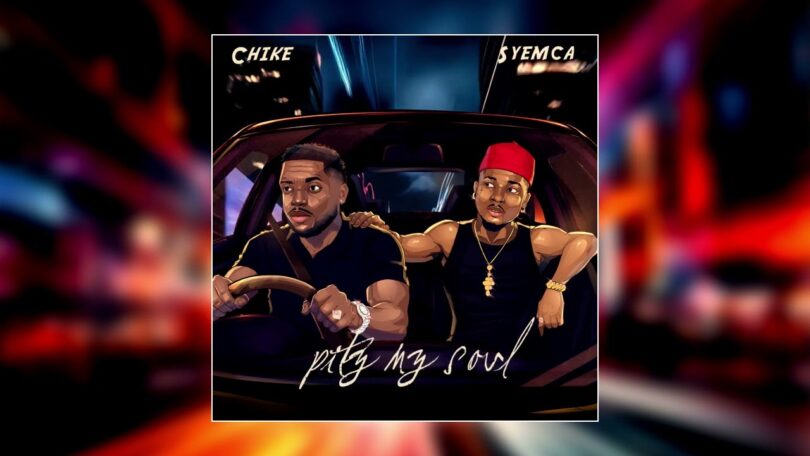
Released at a time of intense online scrutiny, Chike’s ‘Pity My Soul’ blends vulnerability, longing and emotional honesty into a deeply intimate listening experience.
When Chike posted the cryptic words ‘Pity my soul’ on social media, many assumed it was a subtle response to the intense public attention surrounding his alleged connection to the breakdown of Frank Edoho’s marriage.
Released on Tuesday, ‘Pity My Soul’ is an emotionally charged collaboration between Chike and Syemca, produced by DeeYasso.
What first appeared to be a fleeting social media post has become one of Chike’s most vulnerable records to date, a heartfelt plea about love, longing, and the emotional instability that comes when someone you deeply care about is absent.
Few Nigerian artistes understand emotional storytelling as well as Chike.
Since breaking through with songs such as Running (To You), Roju and Ego Oyibo, the singer has built a reputation for crafting deeply personal music that resonates with listeners navigating heartbreak, loneliness and complicated relationships.
That emotional honesty is at the centre of ‘Pity My Soul.’
Its release comes at a moment when Chike has found himself at the heart of online conversations following allegations linked to the divorce of veteran broadcaster Frank Edoho and his estranged wife, Sandra.
Rather than addressing the controversy directly, Chike channels the noise into art.
Whether intentional or coincidental, the timing adds emotional weight to the song.
From the opening lines, Chike sounds emotionally undone.
“Whenever you are not in my corner, I pity my soul.”
The hook is simple, but devastating. It captures the feeling of being so emotionally attached to someone that their absence leaves you feeling incomplete.
This is not just a love song; it is a confession of dependence, loneliness and the fear of emotional collapse.
The title itself carries a distinctly Nigerian tone. “I pity my soul” is a dramatic expression of suffering, one that suggests love has become both a blessing and a burden.
Musically, Pity My Soul stays true to Chike’s signature style.
DeeYasso’s production is smooth and understated, allowing the vocals and lyrics to take centre stage.
Syemca’s contribution adds texture without overwhelming the record, serving as a subtle complement to Chike’s emotionally rich delivery.
There are no excessive instrumental flourishes here. The song relies on mood and sincerity rather than spectacle.
What makes ‘Pity My Soul’ especially compelling is its writing. Chike moves effortlessly between English, Nigerian Pidgin and Igbo, using each language to convey a different layer of emotion.
“Call on me, I go trek from here to Okokomaiko” …..This lyric is one of the song’s most memorable.
Okokomaiko is a distant suburb on the outskirts of Lagos, and in Nigerian popular culture, referring to it often conveys the idea of a long, tiring journey.
By saying he would trek there, Chike emphasises that his devotion knows no limits.
“Water don pass garri”. This familiar Nigerian expression means the situation has become overwhelming.
In this context, his emotions have grown so intense that he cannot contain them.
“My medulla is not in control”
One of the song’s most striking lines humorously suggests that love has disrupted his ability to think clearly. His brain, specifically the medulla oblongata, is no longer functioning rationally.
“Ona mezi mu ka magnet”
Translated from Igbo, this means “You attract me like a magnet.”
It is a vivid and elegant description of irresistible emotional pull.