“Sheikh Jingir has done immense damage to President Tinubu and Vice President Kashim Shettima,” Mr Fani-Kayode said, adding that “I suspect that he is secretly working against them.”
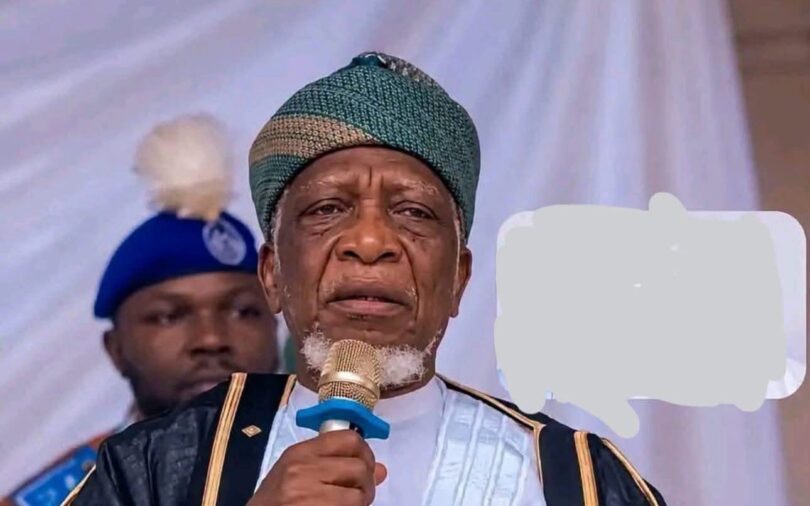
Prominent Islamic cleric, Sani Jingir, has reignited the debate over the APC’s controversial Muslim-Muslim presidential ticket after his remarks in Kano ahead of the 2027 General Election.
Speaking in Hausa, the Islamic cleric affirmed his readiness to keep supporting the Muslim-Muslim ticket in 2027 as he did in 2023.
“I am one of those who raise the flag of Islam,” Mr Jingir said.
“I am calling on people to come and let us do Muslim-Muslim again.”
He also described Nigeria as a Muslim-majority country and criticised those who reject his claim.
“I know this statement pains the unbelievers,” he said.
“I am a Muslim who preaches Islam. If I say Muslim-Muslim, what have I taken away from them?”
He urged Muslims to vote in large numbers, saying the outcome would demonstrate their numerical strength in the country.
“So, here I am calling on you, please, everyone should get their votes ready,” he said, referring to the voter’s card.
“Let us show the world that those unbelievers who claim they outnumber us in Nigeria are lying.”
“When the votes were counted, Allah helped us, and we defeated them,” he said, referring to the APC’s 2023 presidential election victory.
He subsequently reaffirmed his support for the same political arrangement in 2027.
“My vote is for Islam,” he told the gathering.
“What about the votes of Muslim people?” he asked, prompting the audience to respond: “It is for Muslims.”
Kwankwaso condemns remarks.
The comments have drawn criticism from political figures who warned that the use of religious identity as a tool for political mobilisation could further deepen Nigeria’s existing divisions.
Former Kano State governor and African Democratic Congress (ADC) vice-presidential candidate, Rabiu Kwankwaso, was among the prominent politicians to condemn the remarks.
In a statement posted on Facebook on Monday, Mr Kwankwaso said divisive rhetoric should be discouraged at a time when the country requires greater cohesion.
“At this critical moment in our nation’s history, statements that promote division and disunity must be firmly discouraged,” he said.
Mr Kwankwaso said he found the comments particularly troubling because of Mr Jingir’s influence as a religious leader.
“Let it be clearly stated: the good people of Kano do not endorse or support these divisive remarks,” Mr Kwankwaso added.
He urged political and religious leaders to exercise responsibility in their public interventions, stressing the importance of truth, unity and reconciliation.
“Political and religious leaders alike carry a solemn responsibility to uphold truth, foster unity, and advance reconciliation,” he said.
Mr Kwankwaso also framed the 2027 election as an opportunity for Nigerians to assess political performance rather than vote solely based on identity.
He said voters would have the opportunity to “reward good governance with resounding support and to reject poor performance.”
Former Minister of Aviation and Nigeria’s ambassador to South Africa, Femi Fani-Kayode, also criticised Mr Jingir’s comments, describing them as extremist and reckless.
“The extremist rhetoric that he is indulging in is not only unhelpful but is also unacceptable,” he said in a post on Facebook.
Mr Fani-Kayode also lamented the potential negative impact of Mr Jingir’s comments on Messrs Tinubu and Shettima’s bid in 2027, saying it could alienate Christian voters in the country.
“Jingir is not only feeding into that false narrative with his reckless words, but he is also endangering the chances of our candidates in the 2027 presidential election because for us to win, we need both Muslim and Christian votes,” he stated.