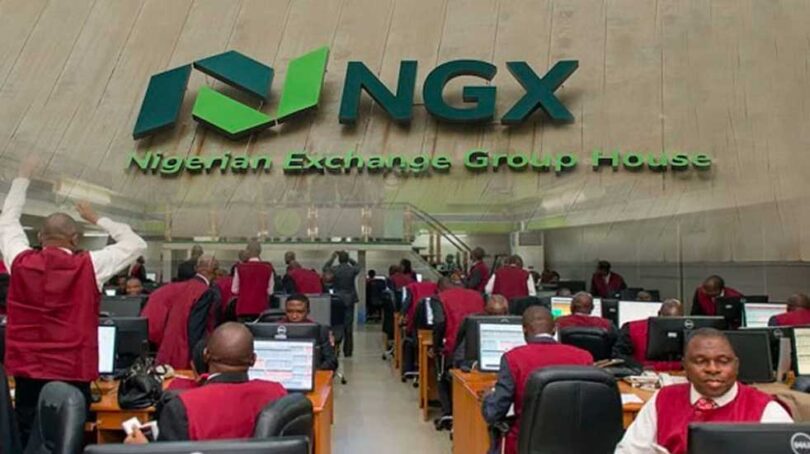
The Nigerian equities market delivered one of its most remarkable performances in recent history in the first half of 2026, generating an estimated N47.84tn in capital gains for investors despite suffering its sharpest monthly correction of the year in June.
Driven by sweeping banking sector reforms, surging global crude oil prices, stronger-than-expected corporate earnings and renewed investor confidence, the Nigerian Exchange Limited (NGX) posted record-breaking gains that reinforced its position as one of Africa’s best-performing stock markets during the period.
Although the market experienced heavy profit-taking in June that erased about N13.29tn from investors’ portfolios, analysts insist the decline represented a healthy correction after months of sustained rally rather than a deterioration in market fundamentals.
Data from the NGX showed that the benchmark All-Share Index (ASI) appreciated by 47.43 per cent in the first six months of 2026, climbing from 155,613.03 basis points at the beginning of January to 229,419.18 points at the close of trading in June.
Similarly, total market capitalisation expanded from N99.38tn to N147.22tn, translating into N47.84tn in wealth creation for investors within six months.
The performance is particularly remarkable considering that the market had to navigate persistent inflationary pressures, elevated interest rates, foreign exchange uncertainties and geopolitical tensions that rattled global financial markets during the review period.
Banking Reforms Ignite Historic Rally
At the centre of the market’s extraordinary performance was the successful completion of the Central Bank of Nigeria’s banking sector recapitalisation programme.
The apex bank had raised the minimum capital requirements for commercial banks to N500bn for international banks and N200bn for national banks, setting March 31, 2026 as the compliance deadline.
The exercise triggered one of the largest waves of capital raising ever witnessed in Nigeria’s financial sector as banks approached the capital market to strengthen their balance sheets.
The recapitalisation programme significantly boosted trading activity, attracted new domestic and foreign investors, improved market liquidity and strengthened confidence in banking stocks.
Tier-one banks emerged among the biggest beneficiaries as investors anticipated stronger balance sheets, improved earnings capacity and enhanced dividend prospects.
The banking sector consequently recorded a 35.77 per cent gain during the first half of the year, with GTCO Plc and other major financial institutions leading the rally.
Oil Price Surge Lifts Energy Stocks
Another major catalyst behind the market’s exceptional performance was the sharp increase in international crude oil prices.
Geopolitical tensions arising from the conflict between Iran and Israel pushed global oil prices higher, significantly improving the earnings outlook for upstream petroleum companies listed on the Nigerian Exchange.
The development transformed the oil and gas sector into the undisputed star performer of the Nigerian stock market.
According to sectoral performance tracked by NEWSNGR as of June 19, the oil and gas index delivered an outstanding return of 111.13 per cent, making it the best-performing sector on the Exchange.
Upstream producers such as Aradel Holdings Plc and Seplat Energy Plc accounted for a substantial portion of the rally as investors rewarded their stronger earnings outlook amid rising crude prices.
The performance once again demonstrated how developments in the global energy market continue to shape investor sentiment on the Nigerian bourse.
Industrial Giants Sustain Market Momentum
The industrial goods sector emerged as the second-best performing segment of the market, recording a remarkable 95.75 per cent appreciation during the review period.
The rally was largely powered by cement manufacturers, particularly Dangote Cement Plc, BUA Cement Plc and Lafarge Africa Plc, whose improved earnings and sustained investor demand strengthened market capitalisation.
Investors continued to view the sector as a long-term hedge against inflation while expectations of increased infrastructure spending further supported buying interest.
The commodities sector also maintained impressive momentum, appreciating by 61.29 per cent.
Companies engaged in agricultural production, including Okomu Oil Palm Plc and Presco Plc, benefited from strong operational performance and increasing investor appetite for agribusiness stocks.
Consumer goods companies recorded a relatively modest gain of 18.14 per cent, reflecting the impact of weak consumer purchasing power and slower earnings growth amid the challenging macroeconomic environment.
Insurance stocks, however, remained the market’s weakest performers, declining by 1.75 per cent during the first half of the year as investors continued to express concerns over low dividend yields and relatively weak shareholder returns.
June Correction Ends Months Of Uninterrupted Gains
Despite the impressive half-year performance, June proved to be the market’s most challenging month.
Following months of uninterrupted gains, institutional and retail investors moved to lock in profits, triggering widespread sell-offs across several blue-chip stocks.
The correction pushed the All-Share Index lower by approximately 8 per cent, while market capitalisation declined by roughly N13.29tn.
Even so, the market regained some momentum during the final trading sessions of the half-year, closing Monday and Tuesday on a positive note.
Although market breadth remained negative, with 19 gainers against 32 losers, analysts viewed the development as evidence that investors were merely repositioning their portfolios rather than abandoning the market.
Fixed-Income Market Tells A Different Story
Unlike equities, sovereign bonds listed on the Nigerian Exchange recorded price declines during the review period.
However, analysts noted that the NGX bond segment no longer represents the broader Nigerian debt market since most fixed-income trading and primary listings now take place on FMDQ Securities Exchange.
The decline in bond prices consequently translated into higher yields, creating attractive reinvestment opportunities for fixed-income investors and enhancing returns on newly acquired securities.